Business & Tech
Local Pharmacy Compounding Potassium Iodide Capsules to Shield Possible Radiation
Residents are looking for capsules to make sure they are protected—just in case.
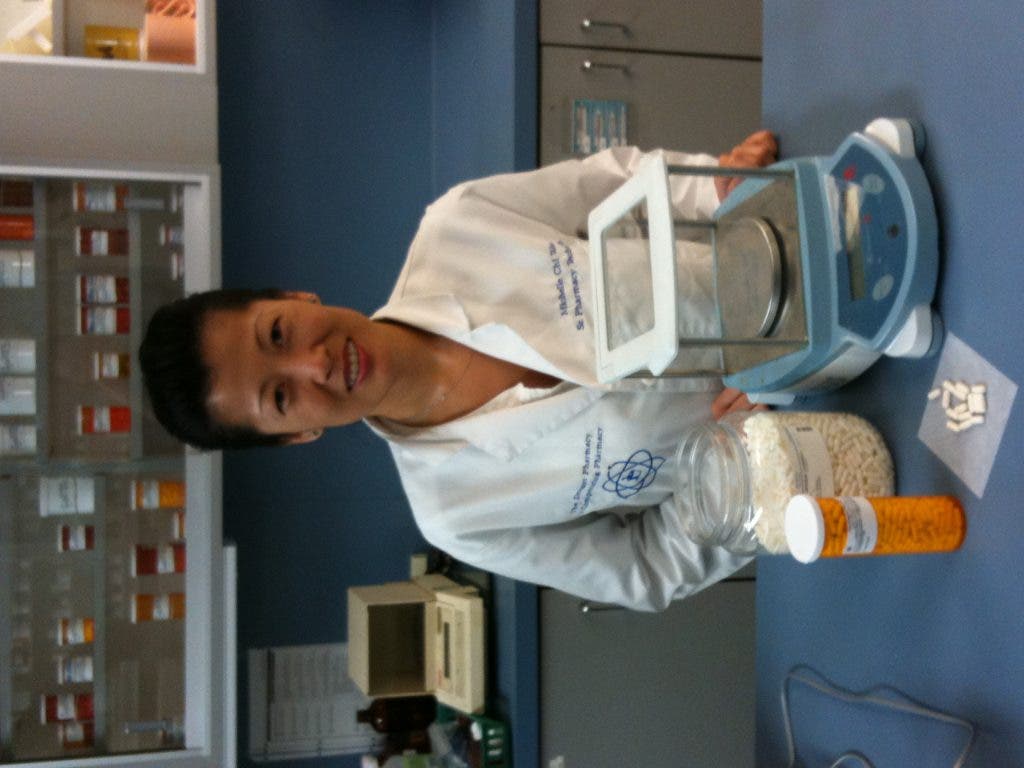

in Laguna Niguel has received more than 100 orders for potassium iodide, a pill that is said to protect against the radiation customers fear could be coming their way from Japan.
“We have received more than 100 requests and filled about half since Tuesday,” said Karen Motske, the owner of the Druggist, a full-service compounding pharmacy in Laguna Niguel. “There has been a lot of concern because of what has occurred in Japan.”
The medication is available over the counter, if it can be found. Local drugstores such as and said they do not have the drug in stock and are referring people to the Druggist. Some cities, including San Clemente and San Juan Capistano, have said they will dispense the medications to their residents, but the city of Laguna Niguel said it will not.
Find out what's happening in Laguna Niguel-Dana Pointfor free with the latest updates from Patch.
"Potassium iodide tablets are available for purchase over the counter, Mostske said. "Customers will want to make certain that the tablets they purchase contain at least 130 milligrams of iodide, as some nutritional supplements may carry a much lesser amount. Potassium iodide capsules that are 'compounded,' or specially prepared, must be prepared under the direction of a physician and, therefore, require a prescription."
iPotassium iodide is a salt, similar to table salt. Its chemical symbol is KI. It is routinely added to table salt to make it "iodized." Potassium iodide, if taken within the appropriate time and at the appropriate dosage, blocks the thyroid gland's uptake of radioactive iodine and thus reduces the risk of thyroid cancers and other diseases that might otherwise be caused by thyroid uptake of radioactive iodine that could be dispersed in a severe reactor accident.
Find out what's happening in Laguna Niguel-Dana Pointfor free with the latest updates from Patch.
According to the Centers for Disease Control, when the pills are ingested, "the stable iodine in the medicine gets absorbed by the thyroid. Because [potassium iodide] contains so much stable iodine, the thyroid gland becomes 'full' and cannot absorb any more iodine—either stable or radioactive—for the next 24 hours."
More Panic
This is not the first time the Druggist has dispensed medications in an emergency situation. Motske said last year, when the H1N1 flu—also known as swine flu—swept across the country, the pharmacy filled more than 1,000 prescriptions for pediatric Tamiflu. Typically, these are tablets for children with the flu, but there was a manufacturer shortage, so the Druggist prepared a liquid form for clients.
After Sept. 11, it also dispensed potassium iodide because there were concerns of possible sabotage of nuclear power plants via terrorist acts to such nuclear plants as San Onofre in San Clemente.
Motske added that whenever there is an earthquake or a drug shortage—locally or nationally—the pharmacy sees an increase in requests for medications, such as the potassium iodide. She said the pharmacy began compounding potassium iodide after it became unavailable as an over-the-counter product from a distributor.
“We decided at that point to compound it ourselves,” she said “Our price is comparable; $14.99 for adults for 14 tablets and $11.99 for children because the dosage is smaller.”
Motske said there are two groups that have been purchasing the prescription: “those who are concerned there will be some fallout from the Japan nuclear plant” and “others who just want to be prepared and have it in their possession in case it does.”
“There is a definite art to compounding medications,” she said. “There is not enough public awareness about compounding medications, but we do feel we fill a need. We customize each prescription under a doctor’s orders.”
The Druggist has been dispensing medications and compounding for 40 years, 30 of those in Laguna Niguel.
Nothing Headed This Way
On March 15, the Nuclear Regulatory Commission and the State Department each issued an update on the ongoing situation at the nuclear plant in question in Japan. They said that after careful analysis of data, radiation levels and damage assessments to all units at the plant, independent experts at the NRC are in agreement with the response and measures taken by Japanese technicians, including their recommended 20-kilometer radius for evacuation and additional shelter-in-place recommendations out to 30 kilometers.
The NRC said in a news release Sunday, March 13, that “weather conditions have taken small releases from the Fukishima reactors out to sea away from the population. Given the thousands of miles from the two countries, Hawaii, Alaska, the U.S. territories and the West Coast are not expected to experience any harmful levels of radioactivity.”
The California Department of Public Health's hotline is (916) 341-3947.