Politics & Government
Animal Care Report - More Flaws
The staff report fails to anticipate the true costs of staying with the County

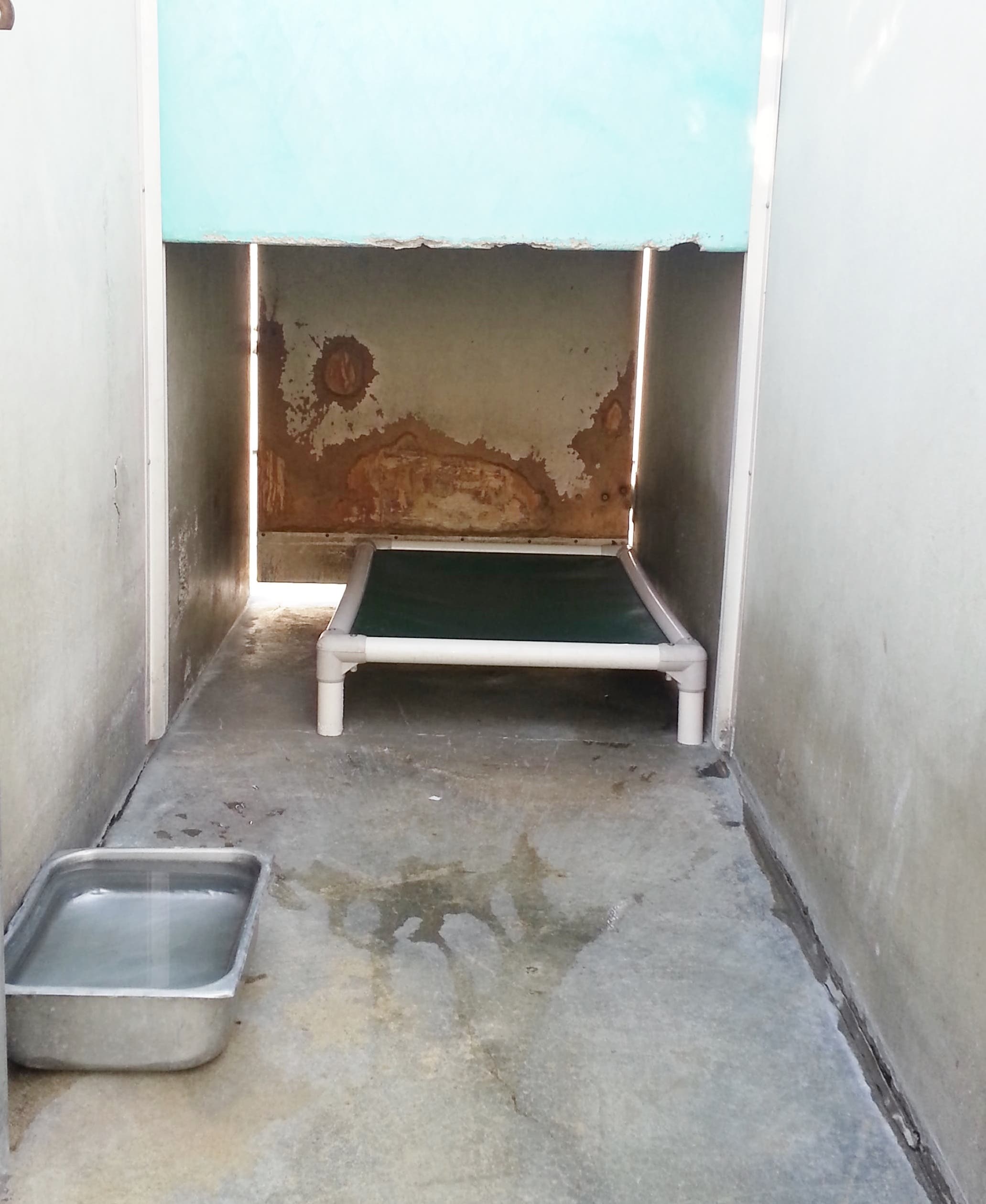
Yesterday we discussed some of the general flaws in the staff report erroneously labeled “animal control” in the Council agenda. These flaws were -
- Failing to discuss the faulty data provided by OCAC and what this implies for signing a 10 year contract with them.
- Failing to discuss the reasons why so many cities have left OCAC and Lake Forest is only one of two cities in Southern Orange County to remain with them.
- Failing to recognize that there is a great deal of discontent with OCAC and pretending that 92% of the City is happy with the service.
- Providing inaccurate information in a comparison between OCAC services and the Scope of Services being proposed, making it appear that the proposed scope does not address many issues addressed by the County. In reality, the scope of services being proposed is far more extensive than the service descriptions in the County’s agreement.
Quite frankly this is a disturbing number of flaws, but they shrink in consequence with the flaws in the report that we discuss today.
Find out what's happening in Lake Forestfor free with the latest updates from Patch.
MIS-REPRESENTING THE CURRENT STATE OF NEGOTIATIONS
The staff report says that only Garden Grove is considering exiting from OCAC, but it has been widely publicized that Huntington Beach is also considering this change. In fact they were scheduled to meet on April 18 but moved the date to May 2. The exit of either Garden Grove or Huntington Beach would put a big dent in OCAC’s plans and, in turn, a big change in the costs of construction and the operating costs for the few cities that remain with OCAC. Why is this never mentioned in the staff report? The report does note that if Garden Grove pulls out the construction costs to Lake Forest go up from $555,539 (original estimate) to $655,460, but they never factor in what happens if Huntington Beach pulls out too. Bear in mind, Huntington Beach is a major user of OCAC services, with 1,420 animals in the shelter and 7,211 field services in 2014 (most recent data available). Lake Forest in 2014 had merely 431 in the shelter and 2,277 field services.
Find out what's happening in Lake Forestfor free with the latest updates from Patch.
IGNORING OPERATIONAL COSTS
More worrisome than the failure to include Huntington Beach as part of the contingency in making construction costs higher, there is no mention at all of how the exit of cities will impact operating costs. Bear in mind we are paying about $600,000 a year and this has been relatively stable over the past 5 years (see Page 5 of the staff report). But this cost has been for poor quality of care. The County is now promising additional staff, additional training, specialists, etc. none of which has been projected into the new operating expenses. The staff report mentions a few of these issues, but lists no associated costs. We may be writing a blank check for $1,000,000 a year in operating expenses, but staff makes no mention of the cost implications of the County’s proposed changes, or the consequences of the exit of the two cities actively considering leaving.
Imagine signing a 10 year contract, paying $555,000 or more for the privilege, and then having no idea how much you are going to pay for the services. Even worse, knowing that you have been spending $600,000 a year for poor care and bad service, you’re now told that you are going to get good care and good service, but no one will tell you what the costs are. Obviously they will be more, most probably very much more, but staff provide no information whatsoever, and don’t even raise this as an issue.
FAILURE TO ANALYZE THE DATA
The staff reports looked at the costs that Lake Forest paid for the 6 year period from 2009-10 through 2014-5. The report notes – “Lake Forest’s costs have remained relatively stable since Fiscal Year 2009-2010. The average percentage increase since that time is 2.5%” (See page 5 of the report).
What the report fails to note is that over this same time period, the number of animals admitted has decreased 10% per year and the number of field services have decreased over 7% per year.
How can admissions and field services be steadily going down year over year while costs are steadily going up? What does this say about OCAC? Staff never bothers to address this important question. We are getting less and less and paying more and more. Why? Will this continue? How can we be asked to sign a 10 year contract with such relevant information being ignored?
BAD ACCOUNTING
Staff project that 2.5 FTEs will be required if the City handles the licensing and program management aspects of the proposal. But they neglect to factor in the current staff time that is devoted to animal care services (e.g., FOAB membership), which means that the 2.5 FTEs are not additive. Moreover they fail to mention that STARS personnel could be used to assist with many of the administrative tasks associated with licensing (e.g., house checks).
(Bear in mind, this is the same staff who estimated that the laundry requirements for housing a handful of animals would require a $15,000 laundry machine and $35,000 worth of consulting fees.)
The staff report claims that 1.5 FTE would be needed to cater to the licensing needs of Lake Forest. Is that true? Mission Viejo recently offered to take over the animal care services for RSM and Laguna Hills. Combined, RSM and Laguna Hills have more licensed dogs than Lake Forest, yet MV budgeted a ¾ position to handle the licensing needs of both these cities. What MV can accomplish with a ¾ position to handle more animals, Lake Forest staff proposes will require twice the staffing. Are Lake Forest workers so much less efficient that those who work in Mission Viejo, or have the staff failed to perform a proper analysis? And bear in mind, MV does not have the added benefit of using STARS personnel to assist with some of the licensing administrative tasks.
SUMMARY
All things considered, there seem to be an awful lot of mistakes being made, either by omission or by commission. Combined with the general flaws listed yesterday, it makes one wonder just what is happening here. Is this the type of report a City Council should receive when it is making life and death decisions about animals, and major economic decisions about future spending and contracting?
Tomorrow I’ll discuss where we are and what we need to do.
ABOUT THE AUTHOR
Dr. Jim Gardner is on the City Council for Lake Forest. You can check him out on LinkedIn and/or Facebook and you can share your thoughts about the City at Lake Forest Town Square on Facebook. His comments are not meant to reflect official City Policy.
Dr. Gardner has office hours every Tuesday from 4 pm to 6 pm at the City Hall. In addition, he holds a Town Hall meeting every quarter. The next meeting will be on August 13 at 2 pm at the Foothill Ranch Public Library.