I was asked to be present at a symposium entitled “Community Policing and Diversity”. Interestingly enough this is an area I worked in when I was teaching at the University of Queensland (Australia) and under contract with the State Police for training at the Academy and with senior Police officials.
But that was long ago and far away, so I thought I’d better tune up so that I could make an intelligent contribution.
We should be doing anything way we can to improve Police services. Though our crime rate is pretty low when compared to the rest of the County, here is South Orange County we have uniformly low rates for everyone, and for Lake Forest, we have a higher crime rate than most of our neighbors. RSM, Aliso Viejo, Laguna Woods, Laguna Niguel, and Mission Viejo all have lower crime rates than we do. And this is not a one year event. For years we have come up at the tail end of the crime rate data when compared to our neighbors. So we can certainly do better, if only to catch up with our neighbors.
Find out what's happening in Lake Forestfor free with the latest updates from Patch.
Could we improve our Police services by having a more diverse Police force? Let’ start by asking some preliminary questions…
WHAT IS DIVERSITY
Find out what's happening in Lake Forestfor free with the latest updates from Patch.
Diversity in law enforcement includes racial and ethnic diversity, sex, national origin, religion, sexual orientation, and gender identity.
WHY DIVERSITY MATTERS
- 1. Diversity conveys a sense of equity to the public, especially to minority communities. Keep in mind that crime can be higher among some minorities, not only with respect to perpetrators but also with regard to victims.
- 2. Diversity increases the probability that, as a whole, the agency will be able to understand the perspectives of its minorities and communicate more effectively with them.
- 3. Diversity may help the organization itself function better.
- 4. Failure to achieve diversity is against the law (Title VII of the Civil Rights Act of 1964)
BARRIERS TO DIVERSITY
- 1. Recruitment
- a. Where you advertise (e.g., online, newspapers)
- b. Method of advertising (e.g., job fairs, community events)
- c. How you advertise (e.g., minority models)
- d. Contact requirements (e.g., e-mail, phone, drop-in)
- 2. Screening
- 3. Selection
- 4. Career Paths
- a. Training
- b. Counselling
- c. Promotion
- d. Attrition
LACK OF DIVERSITY
In 2014 the EEOC received 1,152 charges from “police” agencies. The basis of complaints was
- · Sex (36.5%)
- · Race (34.2%)
- · Disability (29.4%)
- · Age (16.5%)
The form of discrimination was
- · Harassment (34.5%)
- · Discriminatory terms of employment (33.2%)
- · Discriminatory discipline (20.4%)
- · Reasonable accommodation (12.3%)
- · Promotion and assignment were <10% each.
EXAMPLES OF LACK OF DIVERSITY
Irving Texas, 2015 – 70% of city are minorities, 17% are on police.
Hartford, Conn – 84% of city are minorities, 34% are on police.
Ferguson, Missiouri – 67% of city are minorities, 6% are on the police.
Nationwide, 2013 – 269 Police Depts.
Racial minorities under-=represented by total of 24.5%.
- · Hispanics – 10.8%
- · Blacks – 6.4%
- · Asians – 5.2%
- · Other – 2.1%
- · Total – 24.5%
“Agencies least resembling their communities generally serve jurisdictions experiencing major demographic shifts over a number of years. Many of these departments, particularly ones with low turnover, haven’t hired new officers fast enough to keep pace with changes. New Jersey (-39 percentage points), Connecticut (-36 percentage points), California (-32 percentage points) and Nevada (-30 percentage points) recorded the greatest minority underrepresentation, on average, among their police departments reviewed.”
IS LAKE FOREST DIVERSE?
I asked the City about how diverse our City staff was. The City said they keep no records because they are not required to since the City employs less than 100 people. I asked the Chief of Police how diverse our Police staff was, but he had no idea and referred me to OCSD. I sent a request to OCSD but haven’t heard back yet.
I have no data yet, but as far as I can recall, almost all of our Police officers are White men. Yet our population is not so heavily white men. White people are only 67% of Lake Forest’s population, and females slightly outnumber males. Hence, white males constitute about 30% of Lake Forest’s population. Without more definitive data, it looks like we are hardly diverse. Females and racial minorities appear to be significantly underrepresented.
We'll continue the discussion when the data comes in.
ABOUT THE AUTHOR
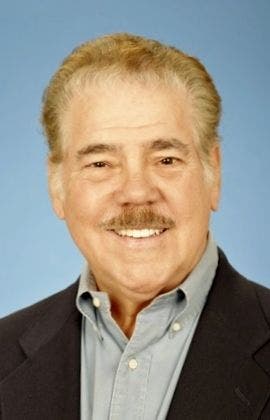
Dr. Jim Gardner is on the City Council for Lake Forest. You can check him out on LinkedIn and/or Facebook and you can share your thoughts about the City at Lake Forest Town Square on Facebook. His comments are not meant to reflect official City Policy.
Dr. Gardner has office hours every Tuesday from 4 pm to 6 pm at the City Hall. In addition, he holds a Town Hall meeting every quarter. The next meeting will be in November at the Foothill Ranch Public Library.