Neighbor News
Prop 13 Split Roll Tax and What it Means For You
Proposed Prop 13 Tax revisions will fundamentally change how California business properties are assessed

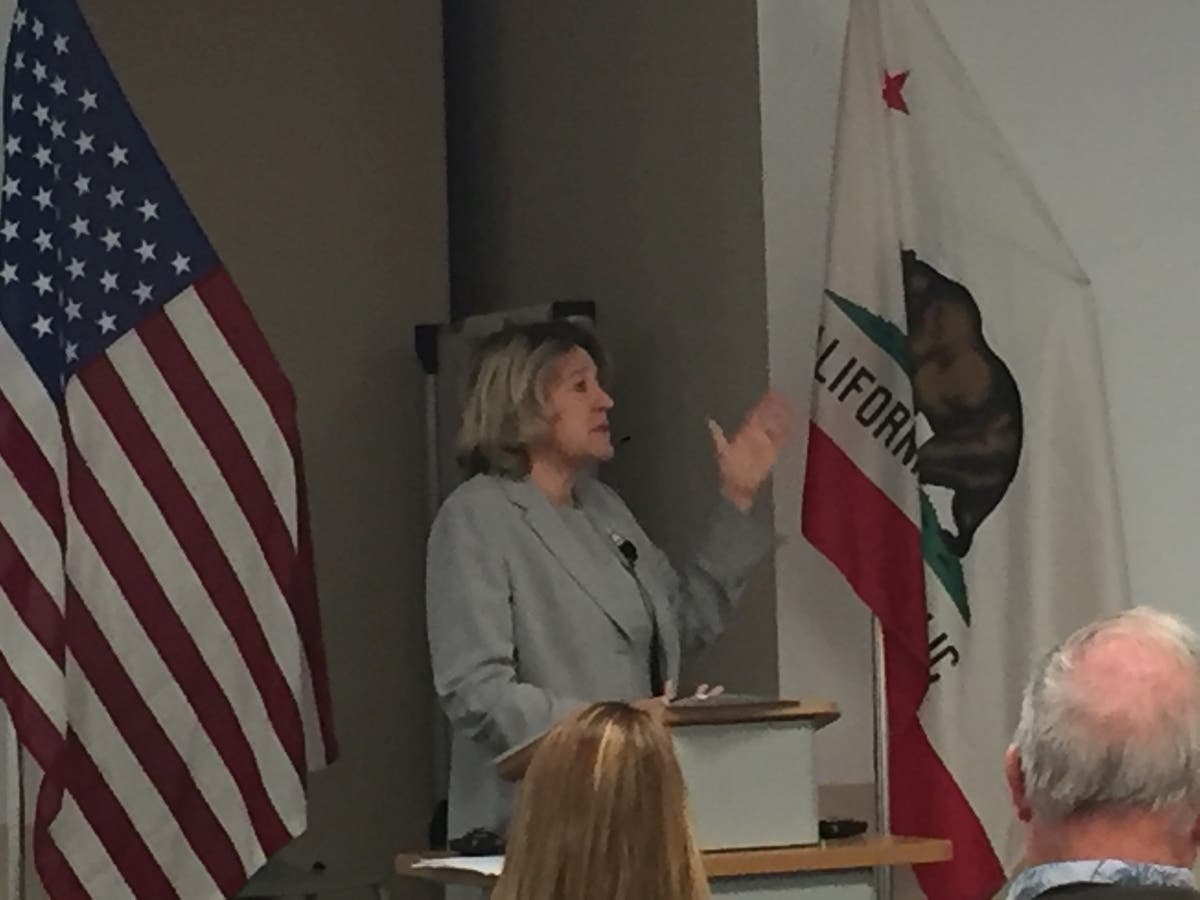

The South OC Economic Coalition presented a series on March 29th to discuss a ballot initiative expected to reach voters at the 2020 election. The ballot initiative plans to split Prop 13 so that business properties will be taxed at a higher rate. The following information was presented by former Mayor of Orange Carolyn Cavecche.
History of Prop 13
Proposition 13 was introduced in 1978 to protect homeowners from quickly rising property taxes. At the time of implementation, California’s assessment on homes was increasing 20-60% due to changing market values. As a result, many residents were on the verge of losing their homes.
Find out what's happening in Lake Forestfor free with the latest updates from Patch.
Prop 13 did the following:
- Set the property tax rate at 1% with an annual increase capped at 2%
- Local tax increases now require a 2/3 vote of the people
- CA state Tax increases require a 2/3 vote of the legislature
- Provided stability for local governments by acting as a “circuit breaker” to stop volatility of market values from affecting the flow of property tax revenues (it’s much easier for a city to plan their budget when property tax revenues are constant).
Split Roll Tax
Find out what's happening in Lake Forestfor free with the latest updates from Patch.
The new proposed “Split Roll Tax” breaks up Prop 13, leaving residential properties and home rental properties alone. The ballot initiative will “require certain commercial and industrial real property to be tax based on fair-market value. Dedicates portion of any increased revenue to education and local services. Initiative Constitutional Amendment.” In effect, it does the following:
- Requires frequent reassessment of business property – the ballot initiative is expected to cause business properties to be reassessed every three years;
- Provides limited Exemptions – exemption is for owner(s) whose collective business properties are valued at less than $2 million. If an owner owns more than 50 commercial properties, their personal home taxes will also be reassessed;
- Removes local control of school funds – it is believed that any funding collected for schools will go to the general fund for Sacramento to decide how it’s allocated.
How This Affects You
As business properties are reassessed, those costs will ultimately filter down to the taxpayer. It will raise the cost of doing business in a state that is already ranked as one of the nation’s worst states for businesses. Most likely, property owners will not be the ones who will ultimately pay these new tax increases. Instead, property owners will pass the costs down to their tenants through what is known as a “triple net lease”, making the tenant responsible for paying property taxes. The end result will be fewer jobs, reduced wages / hours, and an increase in the cost of goods. It would be like going in to your favorite Starbucks, and instead of being met with a friendly barista, your new interface is a computer kiosk, and your $3.95 cup of joe is now $4.95. This has far-reaching ramifications, and it will negatively impact lower income families the greatest.
Does our State Need More Money?
California’s 2019-2020 General Fund Budget is $144.2 billion, which is a $20 billion increase over prior year. Since the passage of Prop 13, state tax and fee revenue has increased 717%. During this time 15 major tax increases were approved by lawmakers with a 2/3 vote or passed by voters. Since Prop 26 was passed in 2010 requiring a supermajority to approve tax increases, local governmental tax and fee revenue has increased by 36.9%.
What You Can Do
Looking at this logically, it’s easy to see that once the door is open to break down part of the Prop 13 tax protection, the next step will be to target small landlords and then ultimately do away with Prop 13 altogether.
“Education is the most powerful weapon which
you can use to change the world.” – Nelson Mandela
We have one year to educate ourselves, our neighbors and friends.