Arts & Entertainment
My Gentle War On Weeds
Joe returns with some insight into the adversarial relationship gardeners have with some supposedly misplaced plants.
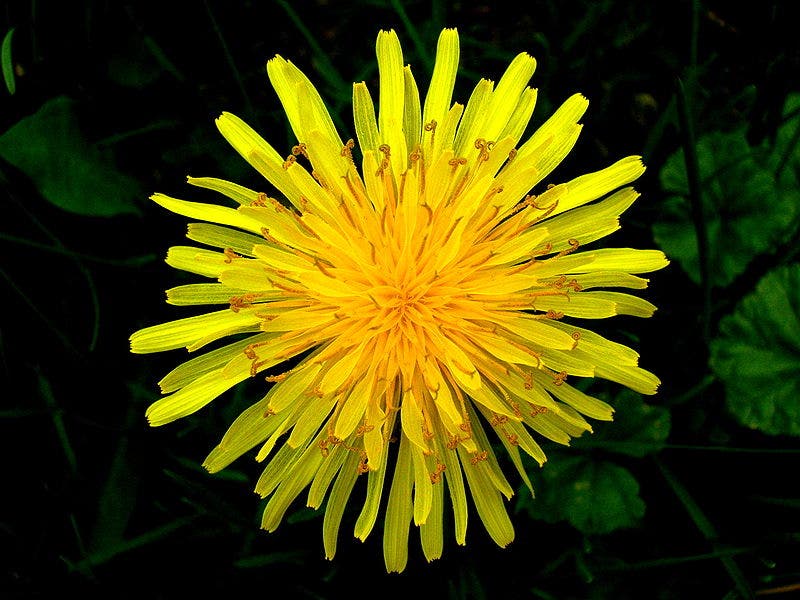

I've spent most of my working life among weeds, trying to kill them. It's nothing personal, just business. When I'm walking in the hills I actually admire them.
Though I'm not haunted by the ghosts of my herbaceous victims, I sometimes have misgivings.
Occasionally, as I'm ripping up the roots of some tough, unsightly plant, I find myself marveling at the way weeds manifest life's tenacity and adaptability, and I ask myself: What am I doing? And just the other day I found myself on my knees, mindlessly clearing a patch of a low-growing, little plant called spotted spurge when I noticed several varieties of insects running for cover. I was eliminating not just some weeds, but an entire habitat. Again, what was I doing? Sometimes I wonder what the consequences will be of all this clear-cutting. Farmer/poet Wendell Berry has said, "we can't know what we're doing unless we also know what we're undoing." I seem to be undoing a lot.
I suppose the answer must lie among the prehistoric weeds when humans first began imposing their pattern on the natural world by clearing a spot to plant a seed. At that moment the battle of gardening began and each whack of the hoe establishes my place in a long list of would-be conquerors. It's not a role I relish. As an organic gardener who wants to disturb the natural order as little as possible, I'd much rather cooperate than dominate. But if it's true, as Jared Diamond has written, that agriculture was the worst mistake in human history, we gardeners/agriculturalists, having chosen the hoe and plow as our instruments of survival, may be tragically cursed to perpetuate that mistake until the last bit of denuded soil blows into the sea.
I hope not. I've been seeking a middle way, somewhere between impossibly idyllic hunting-gathering and impossibly destructive industrial agriculture and its domestic variant. I'd like to believe it's possible to sustain our gardens and keep weeds in check by maintaining an awareness of the way all things are hooked together and by restraining our ultimately self-destructive urge to dominate. I'm not sure that such efforts will lift the curse, but finding a kinder, gentler way to treat the inhabitants of this planet might soften what could be a very hard landing.
I've heard it said that a weed is a plant in the wrong place. But it seems to me our gardens are made up almost exclusively of plants in the wrong place. That's why it takes so much work to keep them alive and looking the way we want. The lilies of the field keep marching on our garden and they have all of nature backing them. And what do we have? A hoe, a digging fork, some fertilizer, a sore back. If we throw in hybrids and petrochemicals, we may get what appears to be a temporary boost, but the payback takes the form of soil loss, polluted aquifers, species extinction, desertification, and vast oceanic dead zones. Weed species that a few years ago keeled over and died when hit with Round-up recently have developed resistance. And just when we thought we were winning...
So, if we insist on putting plants where they don't belong, how do we resist the hordes of incoming lilies and still avoid the collateral damage that comes with chemical/mechanical warfare?
My answer next time. Hint: it has something to do with attention, prevention, and self-restraint.