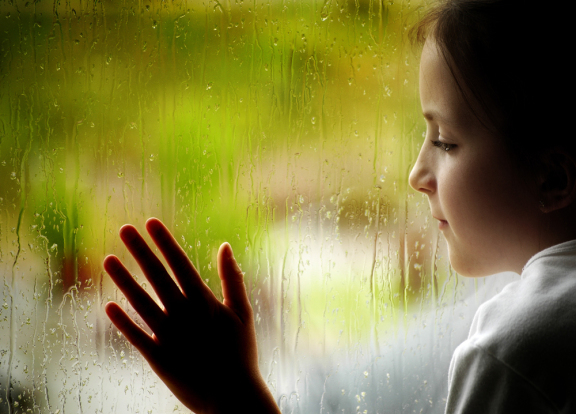
Nothing breaks my heart more than to hear a daily report from my 9 year-old “Aspie” son, that he sat on the bench again during school recess. He feels that his peers don’t want to play with him, that they mostly ignore him, and some even make fun of him.
I realize that they just don’t understand him and are at an age where they don’t accept differences.
Sometimes it really tests my patience when I have to shout at my son in the car to stop him from shouting and hitting his sister in the back seat because she is humming a tune quietly to herself. While I easily block it out, those small noises create some kind of noise frequency over-load for him that he can’t handle. I can only imagine how all that pencil-tapping and clock-ticking sounds cause distraction and disruption for him at school and how his typical peers or educators might view him when he wigs out about small things.
Find out what's happening in Lamorindafor free with the latest updates from Patch.
Many children on the ‘spectrum’ commonly exhibit some form of social awkwardness’s such as:
- lack of understanding of social cues and gestures
Find out what's happening in Lamorindafor free with the latest updates from Patch.
- lack of attentiveness in a topic that doesn’t interest them
- difficulties in initiating interactions with others
- frustration and aggression when play doesn’t go their way.
- difficulty in processing all the information that is thrown at them.
Even though many children with ASD (Autism Spectrum Disorder) may show a lack of interest in connecting with others and prefer isolated play, I am certain that it is far from reality.
Dr. Pamela Wolfberg, (Professor of Special Education at SFSU, and founder of the Autism Institute on Peer Socialization and Play & the Integrated Play Groups ® model), says, “The biggest struggle I hear most from parents is for their children with autism to share in the joy and benefits of play and friendships with other children. Parents often tell me that their children indeed have a strong desire to socialize with peers and siblings, but do not yet know how to do so on their own.”
Normally, when a situation at the park or playground arises from playmate miscommunication or lack of understanding, I would do my best to interject and calmly walk him through the situation and explain to the other children about his reaction. But when situations turn badly, it feels like laser-beams of disapproving eyes are hot on my back. No parent should ever feel like they have to explain to an angry parent about their child and defend against claims that autism is over-diagnosed and an excuse for ‘poor parenting’.
Because of experiences like these, felt by parents all over, it can become easy to isolate and protect your child, and stop trying altogether.
However, nothing lifts your burden more than to finally come into contact with another family in the same situation that really understands and doesn’t judge you or your child. It feels comforting to share experiences and to realize you are not alone and are not the only one who feels helpless.
But even more so, it heals my heart when my son makes a connection with another child with ASD as they realize they share similar challenges. These experiences are nothing short of magic and a blessing!
While play between two ASD children is beneficial, in order to integrate them into an unfamiliar world, Nina Bhatty, an Autism Specialist & Behavioral Consultant in the Bay Area said, “There is a need for social integration for children, teens, and adults, where skills can be introduced and practiced in loosely structured environments. Having Typical peers and child-centered (following the child's lead) focus is essential in building and integrating social programs in a safe, accepting, and natural play-based atmosphere. “
That is where a social play and development center for children with ASD begins to come into the picture. I founded The Friend Tree, which would provide a safe, sensory friendly environment where children can come and play at their own pace and practice social skills with other ASD and typical peers and siblings. It is my mission to bring the best programs from the Bay Area to the center and offer enrichment and accelerated programs that cater to, and challenge students where their most intense interests lie. The Friend Tree would provide a supportive space for parents to come and network and realize they are not alone - a place where they can make friends too. Along with support groups, drop-off ‘PlayCare’, and respite services so mom or dad can run errands, this center will prove to be valuable to parents’ as they know their children, (siblings too), are well cared for while they take a break.
While The Friend Tree is still in its early stages of development and fundraising, there has been a lot of interest from parents within the Bay Area and surrounding communities, such as Jamie Mount of Moraga, CA, parent of an 8 year-old child with autism, who said, “A place designed for ASD kids where people understand them, is so important! These kids are intelligent – they need to be with others like themselves, so they can learn to interact with their peers.”
The added stress of taking care of a special needs child and not having anyone to talk to, has led to an almost double higher-rate of divorce among families with a child with special needs, especially Autism, according to a Waisman Center, University of Wisconsin, study. (Hartley et al (J Fam Psychol. 2010 Aug. 24)
Even for families receiving services and help, according to the Autism Society 2012 California Survey, parents indicated their overall dissatisfaction with the difficulty in navigate the system to receive services, long-waiting lists once approved, distrustful or declining respite options, and the overwhelming sense that their child’s needs were still not being met.
Alicia Sweet of Lafayette, who has an 8 year old son with autism said, “Although we are lucky to have been given access to many beneficial services over the years through the Regional Center, their case loads and demand for services have increased, making it more difficult on families to actually access those services.”
Alicia continues, “But in the end, what I really want for him is to have friends who don’t judge him and be able to take him to a safe place where he can be himself.”
Suzette Barnachie of Alameda, whose 2 & ½ year old son was diagnosed last September, worries about her sons’ ability to be socially accepted in public schools as he gets older due to his lack of verbal skills and seemingly preferred isolated play. “I think a center like this would be beneficial to the children and their families; we need a place where we can feel accepted and understood and offered a variety of low-cost services,” said Suzette.
Not only are more families seeking different avenues and solutions, but many more parents, like myself, are taking matters into their own hands and creating the services we feel our children really need, and making it easier to take advantage of.
For those parents and supportive schools who wish to see a Play & Development Autism Center benefit their community, they need only ask how they can help and then act!
For more information about The Friend Tree Autism Center, visit www.TheFriendTree.org.