Neighbor News
US Nuclear Weapons Modernization: Implications for the Global Ban Treaty
Recently, the UN convened negotiations on a legally binding treaty to prohibit nuclear weapons, leading toward their total elimination...

Nuclear Ban Daily, a regular publication during the nuclear weapons ban treaty negotiations from the Women’s International League for Peace and Freedom/Reaching Critical Will
Find out what's happening in Livermorefor free with the latest updates from Patch.
Find out what's happening in Livermorefor free with the latest updates from Patch.
Volume 1, Number 3, March 29, 2017 DAILY
US NUCLEAR WEAPON MODERNIZATION: IMPLICATIONS FOR THE BAN TREATY
By Ralph Hutchinson
When the Trump Administration released its “skinny budget” in early March, nuclear weapons programs received the largest percentage increase of any federal agency, an 11.3% increase, indicating an acceleration of the ongoing program to modernize the US nuclear stockpile and production infrastructure.
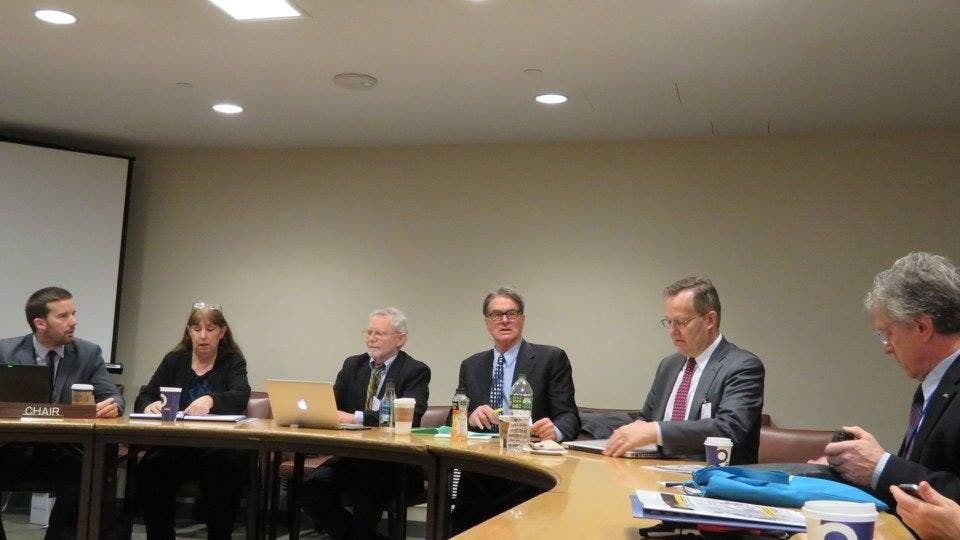
Those numbers set the tone for the presentation by members of the Alliance for Nuclear Accountability (ANA) on the second day of the ban treaty conference. Rick Wayman of the Nuclear Age Peace Foundation moderated a panel that included ANA members Marylia Kelley from Livermore, CA; Jay Coghlan from Albuquerque, NM; Ralph Hutchison from Oak Ridge, TN; they were joined by Matthew McKinzie of the Natural Resources Defense Council and Hans Kristensen of the Federation of American Scientists.
Kelley began by explaining that the US is currently modifying warheads under the “Life Extension Program,” rapidly creating a stockpile “rife with novel military capabilities.” Plans to modify the [W80-4] warhead to ride atop a cruise missile will result in a weapon former Secretary of Defense William Perry calls “uniquely destabilizing.”
The ongoing program of modifying existing weapons introduces new elements to the design, which in turn threatens a resumption of underground nuclear explosive tests. Kelley noted influential voices in the Trump Administration have long advocated a return to testing.
Coghlan said that responsibility for pit fabrication shifted to Los Alamos National Lab in the late 1980s, but repeated efforts to establish full-scale (80 warheads/ year) production capacity have failed. The Trump Administration and a Republican Congress are likely to advance funding for new pit facilities at Los Alamos. “All of this is in the name of Stockpile Stewardship,” said Coghlan, “which is a fig leaf to disguise new weapons design.”
Hutchison reported on efforts to build a new bomb plant, the Uranium Processing Facility, in Oak Ridge, Tennessee. The UPF, dubbed the “tip of the spear” of modernization, would produce thermonuclear secondaries for US weapons for generations to come. Thus far, the US has spent $3 billion on the design of the UPF bomb plant.
McKinzie and Christensen reprised their article in the recent edition of the Bulletin of Atomic Scientists on the technical changes made to the W-76 warhead in the fuzing mechanism. This modification, McKinzie said, increases the “certainty of success”—of a warhead destroying its target—significantly. Kristensen noted that enhancement to warhead capabilities allows reductions in the number of warheads in the stockpile without sacrificing destructive capacity.
More information on US modernization plans can be found in the Alliance for Nuclear Accountability’s Trillion Dollar Trainwreck report.
For the full report, see http://trivalleycares.org/new/...