Health & Fitness
CA Health Care Workers With No-Symptom COVID-19 May Work [SURVEY]
The state is allowing infected health care workers to stay on the job as short-staffed hospitals brace for a cascade of COVID-19 patients.


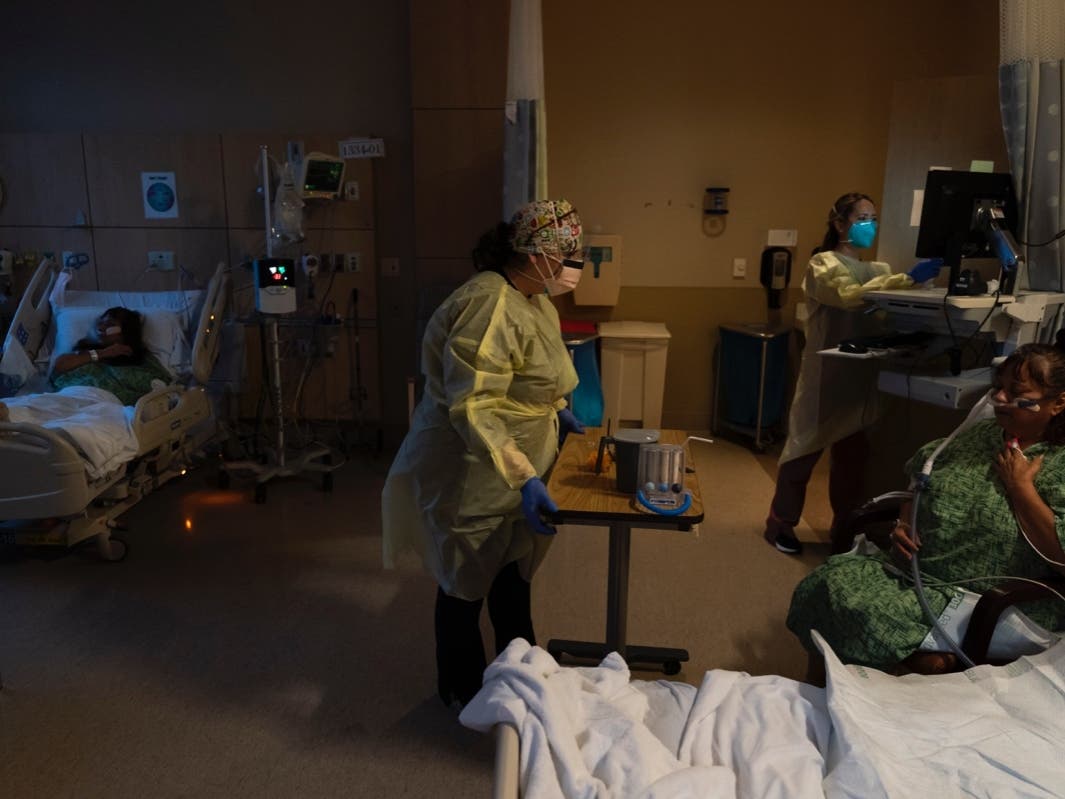
CALIFORNIA — California's understaffed hospitals braced for a massive onslaught of COVID-19 patients, and authorities took the extraordinary step of allowing nurses and other health workers to stay on the job if they tested positive but were asymptomatic, according to the state.
Health care workers who were infected and continued to work were advised to wear N95 masks and to interact mainly with COVID-19-positive patients, according to the new guidance.
Dr. Mark Ghaly, the state's health secretary, said the new guidelines should not be viewed as a mandate and will hopefully expire on Feb. 1.
Find out what's happening in Los Angelesfor free with the latest updates from Patch.
"This is in no way a requirement," Ghaly told KCRA in a conference call. "Nobody at the state is requiring health care workers to come back who are infected or quarantined. It really is meant to give added flexibility to systems as we enter in or continue in a period of significant demand."
The omicron variant of the coronavirus hammered California over the holiday season, severely bedeviling the COVID-19 testing and health care infrastructure. Some 40 percent of the state's hospitals expected critical staff shortages, and some reported as much as one quarter of their staff out for virus-related reasons, said Kiyomi Burchill of the California Hospital Association.
Find out what's happening in Los Angelesfor free with the latest updates from Patch.
Next month, California's top health officials expected to reach a record-high number of COVID-19 hospitalizations, Newsom said on Monday.
READ MORE: CA COVID-19 Hospitalizations Expected To Reach Record High
Even as hospitals faced staffing shortages amid the surge, the 100,000-member California Nurses Association came out against the decision and warned it will lead to more infections.
Newsom and other state health leaders "are putting the needs of health care corporations before the safety of patients and workers," Cathy Kennedy, the association's president, said in a statement. "We want to care for our patients and see them get better — not potentially infect them."
"For us to go to work knowing that we are infected with the virus even if we do not have the symptoms. We know that we can potentially infect our patients, and that is not right," said Zenei Triunfo-Cortez, president of the California Nurses Association, according to ABC7.
Meanwhile, the governor previewed a $2.7 billion coronavirus response package over the weekend, which called for new legislation to reinstate COVID-19 paid sick leave policies.
California's previous supplemental paid sick leave law — which required employers with 26 employees or more to provide 80 hours of paid COVID-19 sick time — expired on Sept. 30.
"No worker should be forced to choose between earning a paycheck or going to work sick," the California Labor Federation tweeted Monday. "That's why [Newsom] is right to call for COVID #PaidSickDaysNow."
The state's Department of Public Health said the decision to allow infected health care workers to keep working was prompted by "critical staffing shortages." It asked hospitals to make every attempt to fill openings by bringing in employees from outside staffing agencies.
"We did not ask for this guidance, and we don't have any information on whether hospitals will adopt this approach or not," said Jan Emerson-Shea, a spokesperson for the California Hospital Association. "But what we do know is that hospitals are expecting many more patients in the coming days than they're going to be able to care for with the current resources."
Emerson-Shea said many hospital workers have been exposed to the virus and are either sick or caring for family members who are.
Many employers created strong sick leave policies at the beginning of the pandemic, but many of those have since been scaled back following the rollout of vaccines. But the omicron variant has managed to drive up breakthrough cases in the vaccinated, creating a crisis for California's workforce and hospital systems.
In San Francisco, medical first responders urged residents to call 911 only in dire situations.
"Only call 911 or go to the emergency [department] for life-threatening medical emergencies," the San Francisco Department of Emergency Management tweeted over the weekend. "Keep medics available for life-threatening situations."
COVID-19-related hospitalizations were expected to increase to 23,000 by Feb. 2, Newsom said, beating out last January's record of nearly 22,000 such hospitalizations.
"It's manageable, but it's challenging," Newsom said.
The Associated Press contributed to this report.
Get more local news delivered straight to your inbox. Sign up for free Patch newsletters and alerts.