Health & Fitness
CA COVID-19 Hospitalizations Expected To Reach Record High
Hospitalizations inched up nationally, and the Golden State braced for a wave of serious illness that could buckle the state's care system.


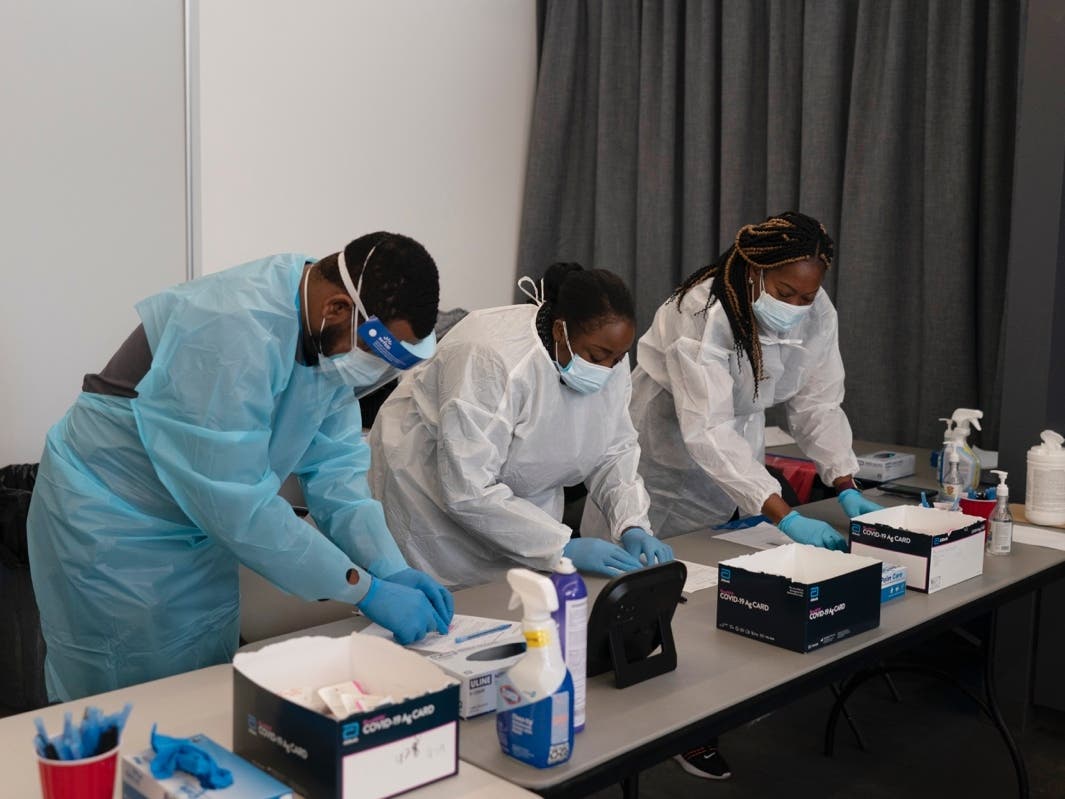
CALIFORNIA — COVID-19-related hospital admissions in California have gradually crept up as the omicron variant of the coronavirus continued to broadside the Golden State. They were expected to peak early next month, Gov. Gavin Newsom said Monday.
The new variant hammered California over the holiday season, severely affecting the COVID-19 testing and health care infrastructure. Some 40 percent of the state's hospitals expected critical staff shortages, and some reported as much as one quarter of their staff out for virus-related reasons, said Kiyomi Burchill of the California Hospital Association.
Find out what's happening in San Franciscofor free with the latest updates from Patch.
Next month, California's top health officials expected to reach a record-high number of COVID-19 hospitalizations, Newsom said this week, according to The Sacramento Bee.
In a matter of days, California was forecast to see all hospitalizations exceed last year's peak of 53,000 people, which occurred during the state's disastrous 2021 winter surge. That number included both COVID-19 patients and non-COVID-19 patients.
Find out what's happening in San Franciscofor free with the latest updates from Patch.
SEE ALSO: How To Access Your CA COVID-19 Vaccination Card Online
COVID-19-related hospitalizations were expected to increase to 23,000 by Feb. 2, Newsom said, beating out last January's record of nearly 22,000 such hospitalizations.
"It's manageable, but it's challenging," Newsom said at a news conference Monday.
The omicron variant appeared to cause less serious disease but was much more contagious than other variants, which could drive hospitalizations up at a rate similar to that of delta.
"While the numbers maybe percentagewise are smaller, the totality of those getting this variant are such that it’s going to put tremendous strain on our hospital system," Newsom said.
Around 4.5 percent of people infected with the variant will end up hospitalized, Newsom said. Those patients will remain in a hospital bed for about 3.6 days on average, he said.
Some 11,815 patients were hospitalized with COVID-19 on Tuesday, up 6.9 percent from the previous day.
Last week, Dr. Mark Ghaly, the state's health secretary, highlighted his concern that cases would exceed last winter's peak of COVID-19 admissions.
"We are concerned about the level of admission," he said. "We are trying to work through exactly how many patients are there with COVID ... and those who are incidentally picked up with COVID, who are hospitalized for another condition. We think that that data is very important."
In San Francisco, medical first responders urged residents to call 911 only in dire situations.
"Only call 911 or go to the emergency [department] for life-threatening medical emergencies," the San Francisco Department of Emergency Management tweeted over the weekend. "Keep medics available for life-threatening situations."
Nationally, the U.S. reported 1.34 million coronavirus cases Monday, according to an NBC News tally. The staggering number came as the nation reported soaring COVID-19 hospitalizations.
The seven-day average reached 135,574 nationally on Monday, up 83 percent in the last two weeks, NBC News reported.
For the week started Monday, 140,472 patients were hospitalized with COVID-19, according to the Johns Hopkins Coronavirus Resource Center.
Meanwhile, California's health authorities took the extraordinary step of allowing nurses and other health workers infected with the coronavirus to stay on the job if they tested positive but were asymptomatic, according to the state's health department.
Health care workers who tested positive and continued working were advised to wear N95 masks and to work with COVID-19-positive patients, according to the new guidance.
The new guidelines should not be viewed as a mandate and will hopefully expire on Feb. 1, Ghaly said.
"This is in no way a requirement," Ghaly told KCRA in a conference call. "Nobody at the state is requiring health care workers to come back who are infected or quarantined. It really is meant to give added flexibility to systems as we enter in or continue in a period of significant demand."
California in September boasted the lowest per-capita case rate in the U.S. But the state experienced a dramatic rise in cases due to the omicron variant, as did the rest of the nation.
The state's testing positivity rate on Tuesday was 22.4 percent, up from 2.7 percent a month earlier.
More California COVID-19 Data As Of Tuesday
- 166.3 new cases per 100,000 Californians.
- 76,564 deaths since the start of the pandemic.
- 11,815 COVID-19 hospitalizations statewide.
- 1,813 ICU patients statewide.
- 6,086,557 confirmed cases to date.
- 66,518,035 total vaccines administered.
- 179,723 people a day receiving COVID-19 vaccination.
- 80.3 percent of the eligible population (5+) vaccinated with at least one dose.
READ MORE:
- Newsom Aims To Renew COVID Sick Pay For Californians
- CA’s Massive Budget, Health Care For All Immigrants Unveiled
- Should CA Kids 12+ Be Given Booster Shots? Readers Weigh In
- CA National Guard Activated Amid COVID-19 Testing Shortages
The Associated Press contributed to this report.
Get more local news delivered straight to your inbox. Sign up for free Patch newsletters and alerts.