Community Corner
Capacity Strained At Care Center Treating Influx Of Sick Sea Lions
A partnership with LAUSD will allow the Marine Mammal Care Center to treat an additional 20 sick sea lions affected by toxic algal bloom.


LOS ANGELES, CA — Veterinarians and staff at the Marine Mammal Care Center celebrated Tuesday after a partnership with the Los Angeles Unified School District allowed the center to expand its care area to treat sick sea lions affected by a toxic algal bloom.
The partnership between the two entities allowed the center to use an additional 500 square feet of space from LAUSD to create an additional triage area. This area will allow the center to treat about 20 more animals, stretching the MMCC's original capacity of about 113.
LAUSD Superintendent Albert Carvalho said the idea to join forces came about when he was hiking in San Pedro a few weeks ago and he saw a sea lion in distress.
Find out what's happening in Los Angelesfor free with the latest updates from Patch.
"It was clear that this sea lion was lethargic and was not really moving. Every once in a while he would slowly and painfully lift its head look at me, look away [and] put the head back down," Carvalho said.
The toxic algal bloom along the coast of Southern California is more widespread than it has been before, affecting an unprecedented span of the coast from the Central Coast down to San Diego according to MMCC Hospital Director Lauren Palmer.
Find out what's happening in Los Angelesfor free with the latest updates from Patch.
For about two weeks now, sick sea lions have been washing up on shores suffering from the effects of Domoic Acid, which affects the sea lion's brain and changes its behavior and its ability to react in its environment.
Sea lions affected by Domoic Acid can experience dehydration, seizures and even death if left untreated.
One sea lion in care at the MMCC was picked up in Hermosa Beach just after giving birth to a newborn pup. She was found on the shore completely unresponsive and unable to produce the milk needed to nurse her baby.
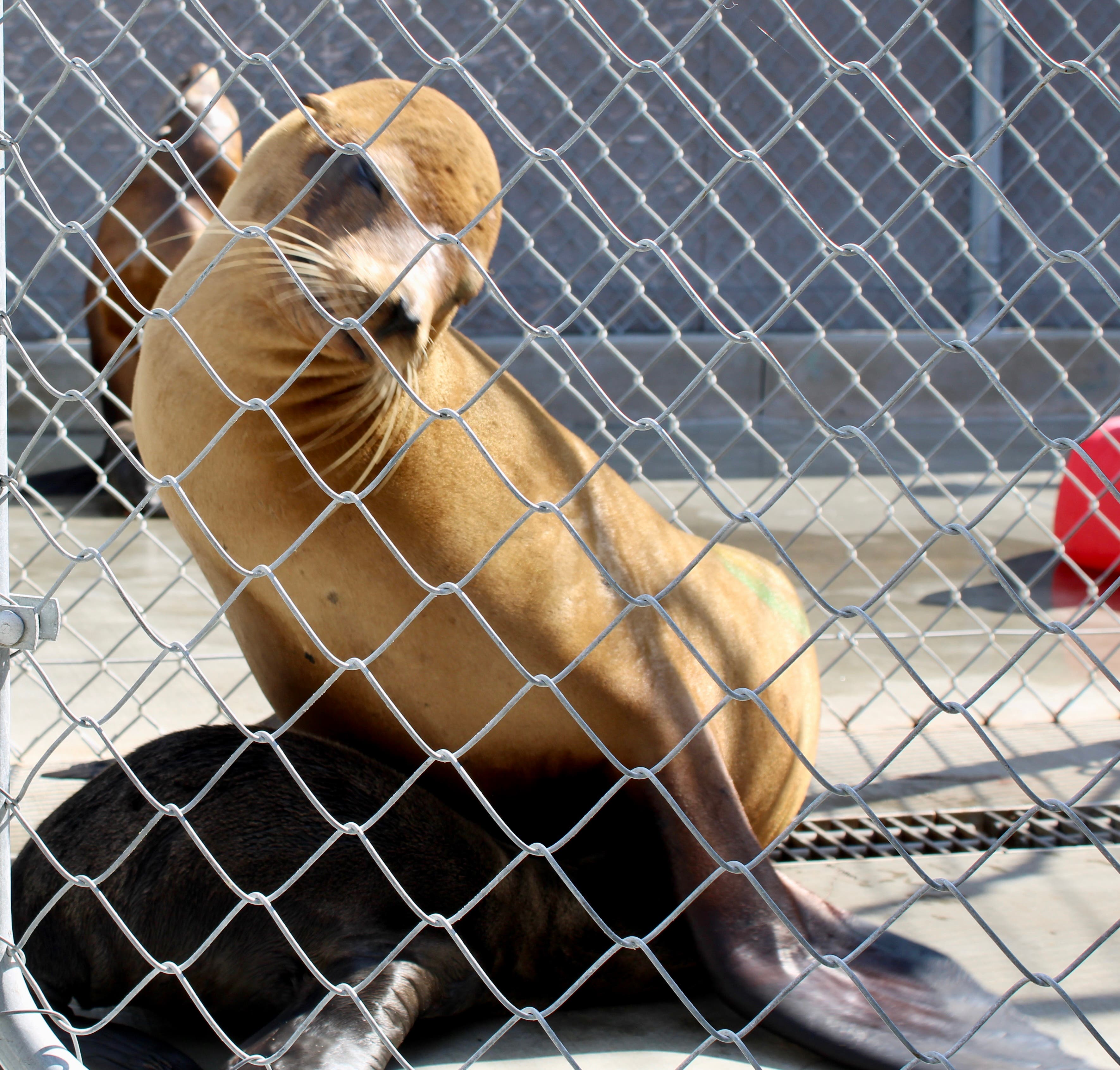
Palmer said this is not the first time a toxic algal bloom has popped up along the coast of Southern California, but usually the cases are limited to individual towns rather than a large stretch of the coast. The bloom could take anywhere from four to six weeks to go away, Palmer said.
"While the bloom is still in place, the animals would be at risk of becoming re-intoxicated because it's in their food chain, so as long as it exists there, they're at risk for that. We will try to hold on to them as long as we can, given our space capacity," Palmer said.
Currently, the center is holding 113 animals on site with 63 affected by domoic acid. After the expansion due to the partnership with LAUSD, an additional six patients were taken in Monday night according to MMCC CEO John Warner.
Those interested in donating to support the treatment of sick sea lions and research at the MMCC can visit the care center's website.
"The superintendent and LAUSD's swift action will save so many more marine mammals in distress right now, and will protect the public by helping us get sea lions back here to our facility instead of on our beaches as they are right now," Warner said.
Get more local news delivered straight to your inbox. Sign up for free Patch newsletters and alerts.