Politics & Government
LA Council Delays Olympics Minimum Wage Hike
The delay comes as proponents withdrew a ballot initiative aimed at eliminating the city's business tax.
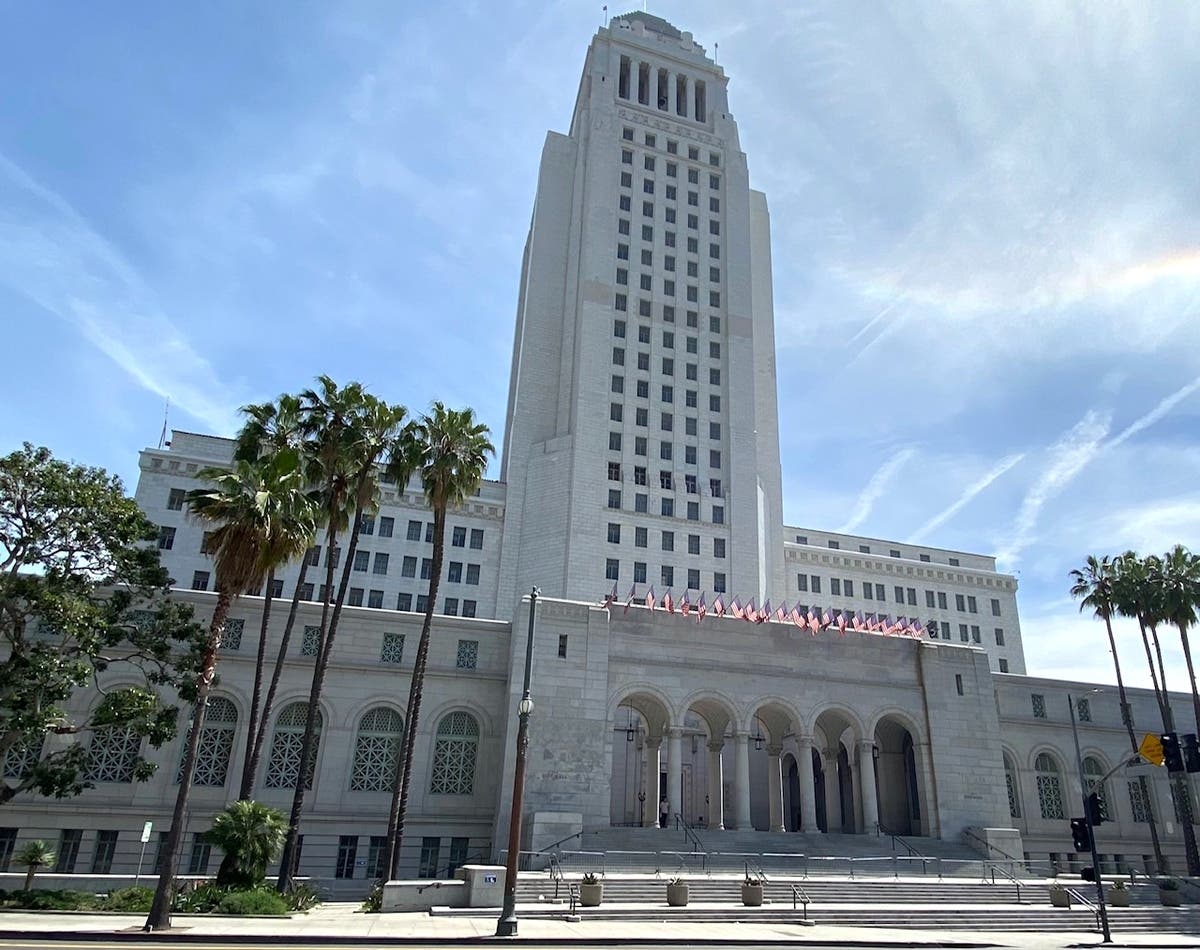
LOS ANGELES, CA — The Los Angeles City Council Tuesday approved an ordinance to delay wage increases for certain hotel and airport workers as proponents withdrew a ballot initiative aimed at eliminating the city's business tax.
The council finalized changes to the so-called Olympic Wage Ordinance in an 11-3 vote Tuesday. The city formally altered the schedule for when future raises take place, with workers expected to earn $25 per hour starting on July 1, 2027, then $27.50 by July 1, 2028, $29 by July 1, 2029, and $30 by July 1, 2030.
Under the original ordinance, workers were expected to reach $30 per hour by the 2028 Olympic and Paralympic Games.
Find out what's happening in Los Angelesfor free with the latest updates from Patch.
In exchange for the delay, the council also unanimously approved a resolution, which served as formal notification that a ballot initiative to repeal the $800 million-plus business tax has been withdrawn.
The council's most leftist bloc — Eunisses Hernandez, Hugo Soto- Martinez and Ysabel Jurado — voted against the wage-hike delay. Councilman Tim McOsker was absent during the meeting.
Find out what's happening in Los Angelesfor free with the latest updates from Patch.
It was approved with no prior council discussion.
Last week, council members gave preliminary approval and several of them had plenty to say.
"To be in this place, it is sad. It is enraging," Soto-Martinez said on May 19. He led the effort to approve the Olympic Wage Ordinance in 2025, which also enshrined other worker protections and boosted healthcare credits.
Members of Unite Here Local 11, who advocated for the wage increase, criticized the council and business leaders for delaying pay increases they fought so hard to secure. Several union members called the decision a "betrayal."
Councilwoman Imelda Padilla addressed the crowd in Spanish, criticizing the labor union for "creating" the issue in the first place.
"The business community has us by the neck," Padilla said on May 19. She said the entire situation could have been avoided if the union would have allowed council members to ask questions and negotiate better.
Meanwhile, Central City Association President Nella McOsker, Tim McOsker's daughter, insisted the success of business owners and workers is linked. She said it is possible to ensure the expansion of wages and benefits while realizing the economic realities of hotels being empty and closing.
"It is reasonable to ask us to partner together, and to be on the other side of the table and negotiate, but it is not OK to do so without that process," McOsker said on May 19.
In response to the city approving the ordinance last year, a coalition of businesses called The LA Alliance for Tourism, Jobs and Progress collected and submitted more than 73,000 signatures for their ballot initiative in February, seeking to eliminate the city's business tax.
In late March, the Los Angeles County Registrar-Recorder/County Clerk announced that the measure had qualified for the ballot.
The coalition includes all three major Los Angeles business groups — the Central City Association, LA Chamber of Commerce and the Valley Industry Commerce Association — along with other organizations and individuals representing trade associations, small businesses and others.
The effort was also backed by United Airlines and the American Hotel and Lodging Association.
Top city analysts said if voters approved the ballot initiative it would have devastated Los Angeles.
But critics of the Olympic Wage Ordinance argued it would force businesses to eliminate jobs, reduce hours and increase prices to cover the new wages. They also claimed it would further impact tourism as costs would dissuade travelers from shopping or traveling.
"This proposal is a common sense solution. No one is saying repeal the wage, just asking it to be spread out a little longer to help businesses be able to brace for that impact," said Stuart Waldman, president of the Valley Industry and Commercial Association.
By Jose Herrera, City News Service