Politics & Government
Police Union Claims Foul Play In LA City Charter Reform Proposal Process
"They screwed up," LAPPL President Ricky Mendoza said.
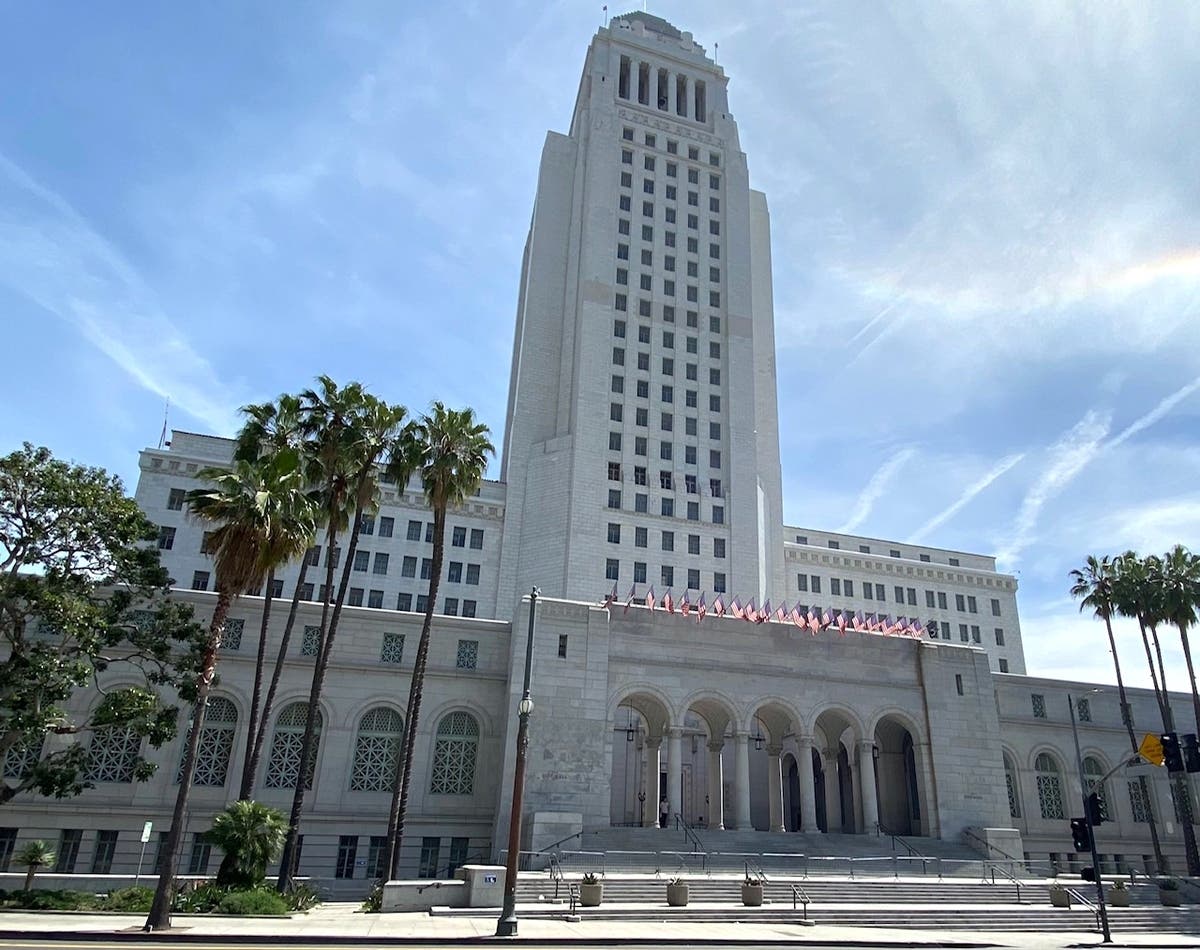
LOS ANGELES, CA — The Los Angeles Police Protective League Wednesday urged the City Council to immediately suspend efforts to place any proposed city charter amendments affecting its members on the November ballot.
In a 12-0 vote Wednesday, the City Council directed the City Attorney's Office to draft ballot language for a variety of proposals to improve city governance. One of those items seeks to give the City Council more oversight over the Los Angeles Police Department.
A proposal allowing the City Council to veto policy decisions set forth by the five-member mayoral-appointed Los Angeles Board of Police Commissioners, and another recommendation to give the chief of police the ability to terminate officers for misconduct — while protecting their right to appeal the decision — were referred to committee for further discussion and study.
Find out what's happening in Los Angelesfor free with the latest updates from Patch.
The commission oversees and sets policy for the department. The City Council can only recommend changes to the department, but the power lies with the commission.
Another proposal would mandate the police chief to ensure the department protects the constitutional rights of all city residents was also sent to committee.
Find out what's happening in Los Angelesfor free with the latest updates from Patch.
Any changes to the City Charter require voter approval.
But the LAPPL, which represents LAPD officers rank lieutenant and below, sent a letter to City Council Wednesday criticizing its actions for failing to "meet and confer" with them, as required under their labor contract.
"Somebody within the city administration and/or the Employee Relations Group did not follow the law and did not formally contact us to meet and confer over potential changes to our city charter. They screwed up," LAPPL President Ricky Mendoza said in a statement.
"They need to own up to their mistake, correct the record with the City Council and follow the law. It's that simple."
Under a California Supreme Court decision, known as the "Seal Breach ruling" and collective bargaining laws, the city is mandated to properly notify, and to meet and confer on issues impacting officer representation, according to the LAPPL.
In their letter, the LAPPL said after a thorough review of communications between the city there was nothing specific on reforming police oversight, police discipline or any other matter about the LAPD.
The union said the city reached out via email on Feb. 23, March 4 and May 19 to discuss LAPD-related charter proposals.
They also received a fourth "Last, Best, and Final Offer" email on June 11, which was not mentioned to City Council members, union officials said.
During City Council's three-and-a-half hour discussion on charter reform proposals, members questioned which measures they could take action on.
City Administrative Officer Matt Szabo said the city sent invitations to bargain on multiple occasions, as well as after the release of the City Charter Commission's report in late March-early April.
"That report was sent to all employee representatives with an invitation to bargain on any issue that they felt was important to them as it relates to the specific issues in front of you," Szabo said.
"The remaining issues, our position is that those are matters of policy within the jurisdiction of this body and although we did invite the employee representatives in this case to bargain on and to comment on these issues, as they were included in the charter reform report, we don't believe that was required," Szabo added.
Councilman Tim McOsker noted that if the city's emails or other communications to the LAPPL did not detail specifics about hours, working conditions and wages of sworn officers the union's lack of response wouldn't seem to be a refusal to bargain.
Szabo emphasized proposed charter amendments were "wide ranging," some of which were directly related to hours, wages and working conditions that clearly involve a meet and confer requirement. Other issues did not require bargaining, he added.
Szabo urged the council to tread the conversation carefully as Szabo received a number of letters that there may be litigation.
McOsker, in turn, directed the City Attorney's Office to provide a confidential analysis to answer the question regarding the meet and confer requirement.
Councilman Bob Blumenfield said the city should have had a more vetted process.
"I feel like we should hear these things out. Do police reform as a charter issue, but not just kind of shoe-horning it in here," Blumenfield said.
Councilman John Lee opposed any changes to LAPD's governance, noting the department has spent more than three decades performing and strengthening accountability.
"The city has seen meaningful progress that should not be overlooked," Lee said. "We should always be striving to be better, but I just want to caution about fundamentally altering long-standing guardrails governing LAPD, and not just because you know a few council members are upset that those safeguards are put in place that don't allow them to politicize this process."
Councilwoman Eunisses Hernandez, who supported the measures, said the council has had issues in the past getting LAPD Chief Jim McDonnell and the department reporting to it.
She raised concerns about the department's actions amid heightened federal immigration activity. Hernandez said she would have liked to have seen officers telling residents to stay indoors and inform them of their rights.
Councilwoman Monica Rodriguez argued the council already has procedures in place to hold the department accountable, noting it confirms mayoral appointees to the police commission and oversees the department's budget.
Hernandez disagreed, contending department officials walk over them.
"We tried, and we hit concrete wall after concrete wall, and that's why this change is so important," Hernandez said, referring to the proposal granting City Council oversight over the LAPD. The proposal would not involve decisions related to staffing, assignments, or operation tactics, according to the councilwoman.
"It doesn't even change the law; it just provides clarity for the BPC (Board of Police Commissioners) and other entities to know that this body can make policy recommendations that are general," Hernandez said.
City News Service