Community Corner
Starving Seabirds Wash Ashore As California Rescuers Fear New Wave Of Deaths
As hundreds of starving seabirds overwhelm rescuers, a second species is arriving in alarming numbers, raising fears of a difficult winter.


CALIFORNIA — Many have barely begun their lives. By the time they wash ashore, they are starving, exhausted and sometimes so desperately weakened that even the people fighting to save them know there may be little hope.
For those fortunate enough to reach a wildlife rehabilitation center alive, the first 24 hours can mean the difference between survival and death. Others have already suffered damage from prolonged starvation that even intensive medical care cannot reverse.
And just as an unprecedented influx of distressed seabirds along California's Central Coast appears to be easing, rescuers are confronting another alarming development.
Find out what's happening in Los Angelesfor free with the latest updates from Patch.
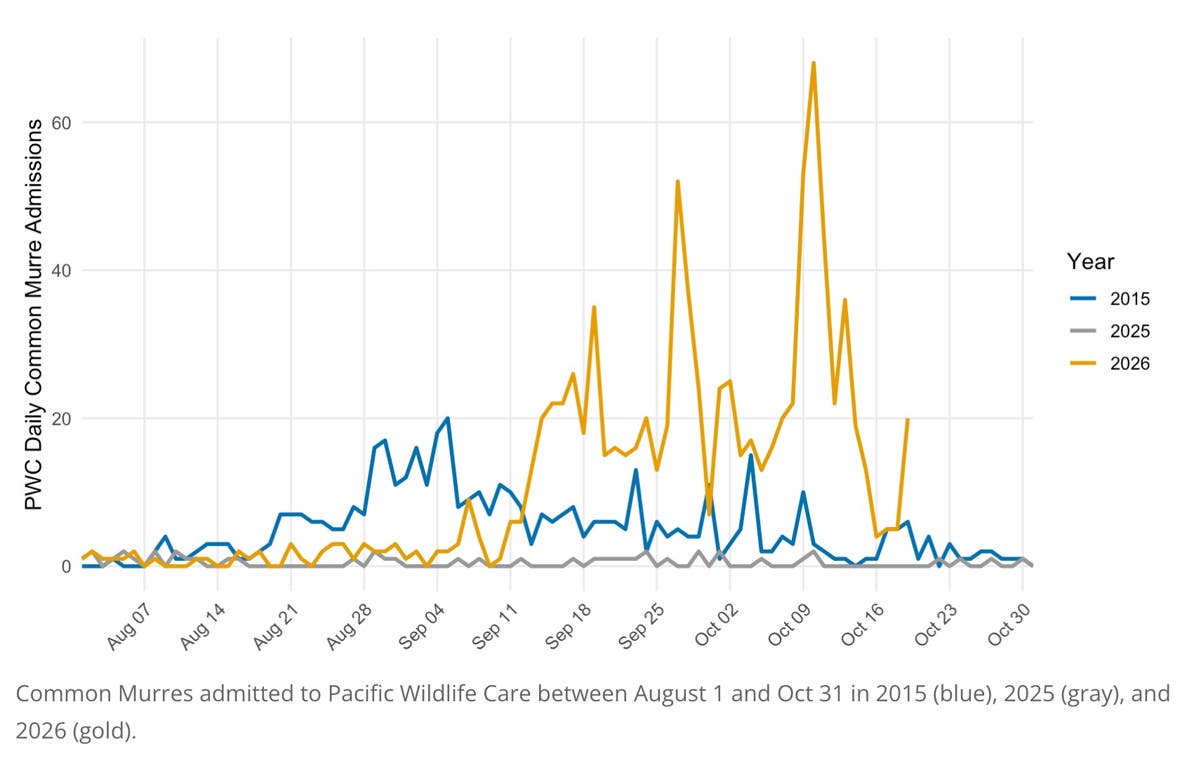
Pacific Wildlife Care, a nonprofit rehabilitation organization in Morro Bay, admitted 927 common murres between Sept. 1 and Nov. 9, compared with just 24 during the same period last year, development coordinator Kelley Boland told Patch in an interview Tuesday.
But while the number of newly admitted murres has slowed dramatically, another species is arriving in extraordinary numbers.
Find out what's happening in Los Angelesfor free with the latest updates from Patch.
The organization has admitted 123 western grebes since Oct. 1, compared with just one during the equivalent period in 2025. Of those, 79 arrived during the first nine days of November alone.
"This is the most unusual event that we've seen," Boland said.
For an organization that has spent more than four decades rescuing wildlife, the scale and duration of the emergency have been unlike anything its team has experienced.
The First 24 Hours
Common murres are black-and-white seabirds that spend most of their lives on the open ocean, diving beneath the surface to catch fish. Although they resemble small penguins, murres can fly.
Most arriving at Pacific Wildlife Care are juveniles in their first year of life, and nearly all are starving.
Some may have been struggling to find sufficient food for days or weeks before reaching shore, Boland explained. By then, prolonged starvation can cause serious organ damage, leaving even experienced rehabilitation specialists with few options.
"The first 24 hours are really critical for these animals," she said. "If we can make it through and stabilize them in the first 24 hours, they have a much better chance of recovering."
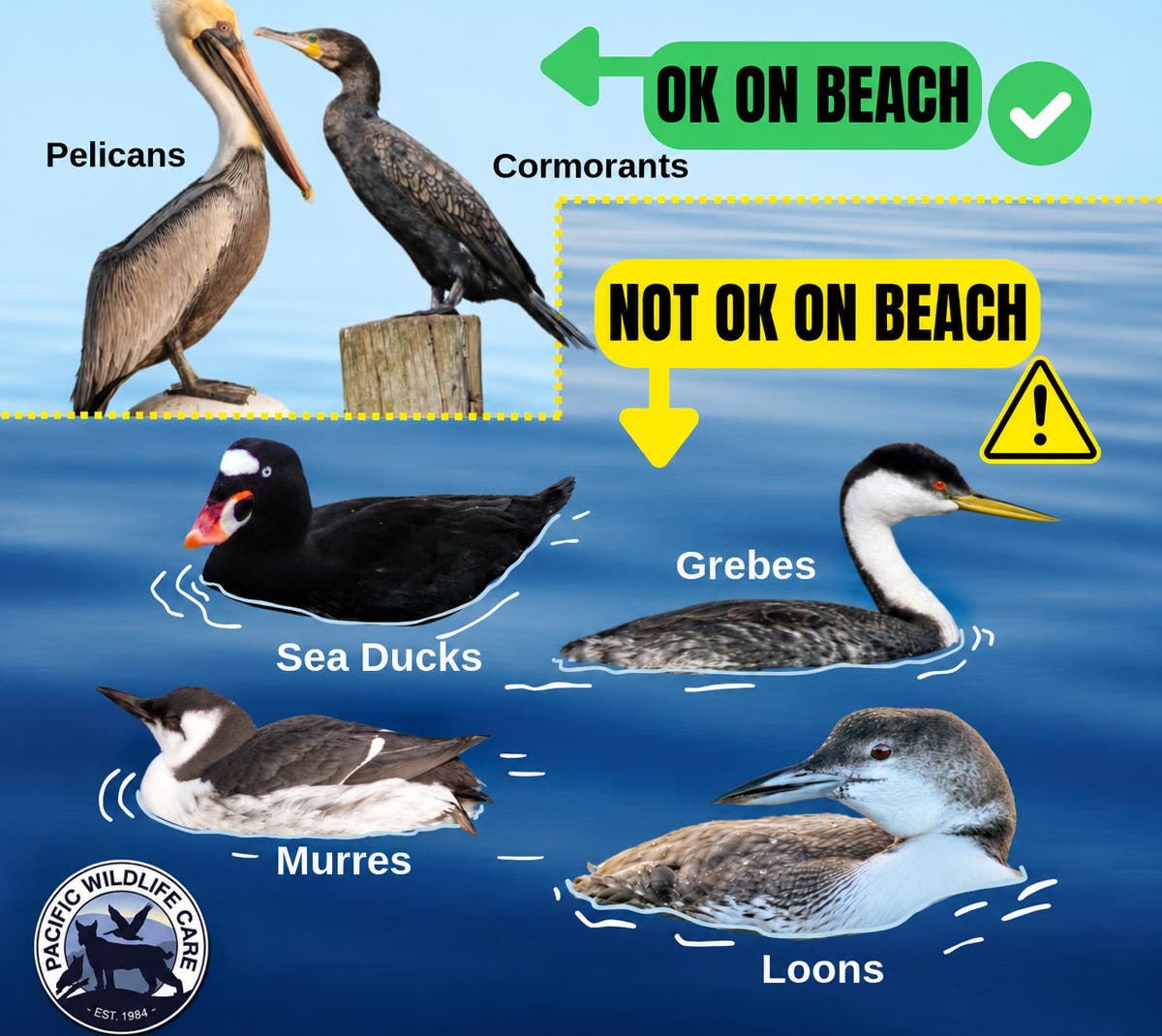
Those that survive can require two or three weeks of intensive care, including warmth, fluids, medication and nutritional support. The work is painstaking. Severely weakened murres can lose the waterproofing that ordinarily protects them from the cold ocean, forcing staff to alternate their recovery between heated drying areas and temperature-controlled pools.
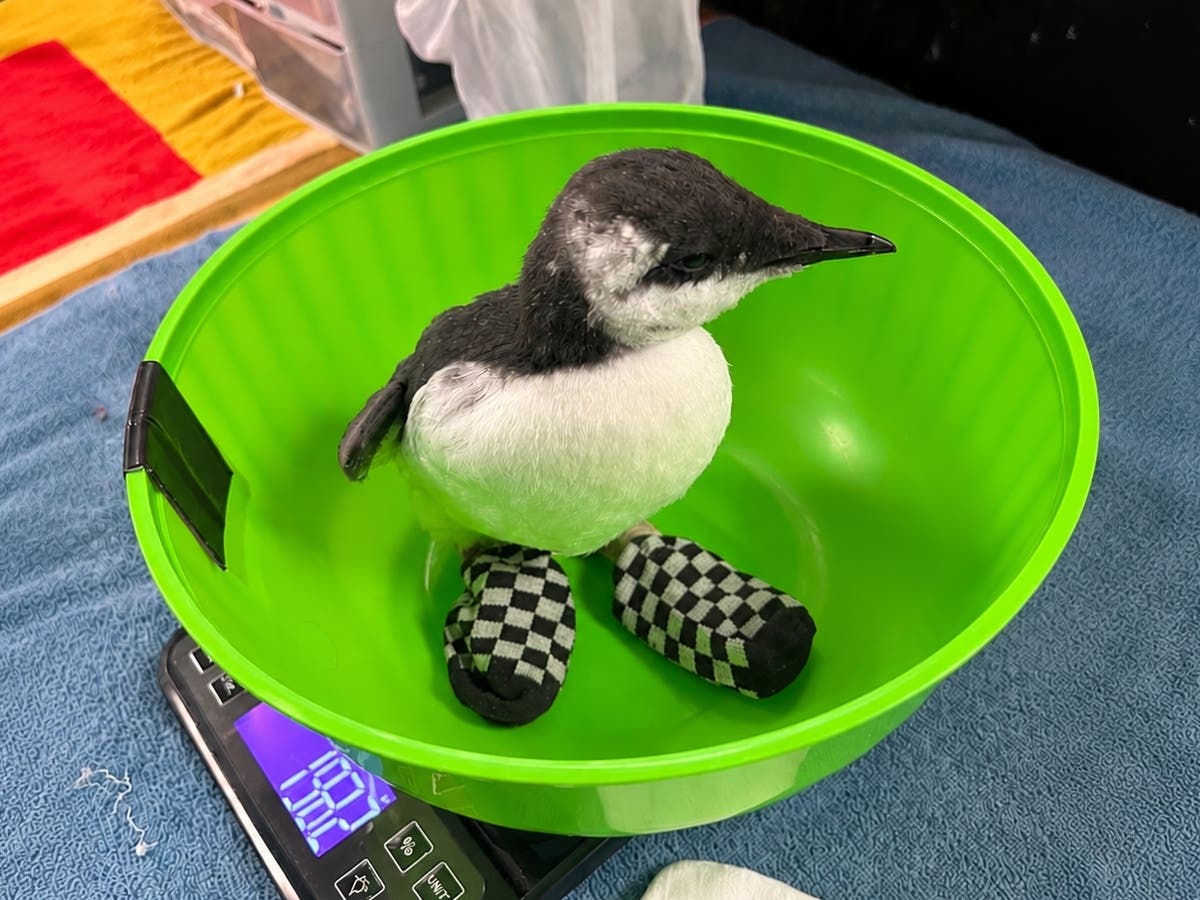
Even time spent on land carries risks. The birds can develop painful pressure sores on their feet, so rescuers fit them with tiny protective socks while they recover. But not every bird can be saved. Some arrive in such poor condition that recovery is impossible, and euthanasia may be necessary to prevent further suffering. For others, however, there is a second chance.
Working with Morro Bay Harbor Patrol and Lost Isle Adventures, rescuers transport rehabilitated murres offshore, searching for healthy wild flocks that offer the birds an opportunity to rejoin their own species. After weeks of medical care, nourishment and painstaking rehabilitation, the survivors can finally return to the ocean.
An Ocean Growing Too Warm
Scientists are investigating how unusually warm ocean temperatures may be disrupting the marine food web, potentially making the fish that seabirds depend upon harder to find. The National Oceanic and Atmospheric Administration's California Current Marine Heatwave Tracker documents unusually warm ocean conditions, while a developing El Niño threatens to intensify the pressures on marine ecosystems.
The precise causes of the current starvation event, however, have not been conclusively established. Boland emphasized that Pacific Wildlife Care can speak with certainty about the condition of birds entering its hospital, but not every environmental factor contributing to their decline.
Common murres face particularly demanding conditions at this time of year. Young birds are still learning to feed themselves, while their parents expend considerable energy catching fish. Adults also undergo a seasonal molt that temporarily leaves them unable to fly. Their nutritional requirements are extraordinary. According to research cited by Pacific Wildlife Care, murres may need to consume food equivalent to approximately 56% of their body weight daily to meet their energy requirements.
Searching deeper or farther for fish can create a dangerous imbalance between the energy they expend and the nourishment they obtain.
"If there's just not quite enough food for all of these birds, then that can really be a problem," Boland said.
The circumstances resemble a devastating marine heat wave in 2015, when millions of common murres died across the northeastern Pacific. Pacific Wildlife Care admitted 463 murres between August and October that year, according to its records. This year's emergency has surpassed even that extraordinary influx.

A New Crisis May Be Emerging
There is one encouraging development: The influx of common murres may finally be slowing. Boland said Pacific Wildlife Care had admitted only about seven murres since Nov. 1, after experiencing the worst of the emergency between mid-September and late October.
Yet the rapid increase in western grebe admissions has raised fresh concerns about what lies ahead. Western grebes breed on inland freshwater lakes before migrating to coastal waters for the winter. Their arrival is seasonal, but the number now requiring medical attention is anything but ordinary.
The 123 admitted since Oct. 1 have predominantly arrived emaciated, Boland said. Over the previous decade, the organization recorded between zero and 18 western grebes during comparable periods. As additional fish-eating birds migrate to California's coast, rescuers fear they could encounter similar difficulties finding sufficient food.
Storms associated with El Niño could create additional hazards, including powerful swells and petroleum from naturally occurring offshore oil seeps coating seabirds.
"It's shaping up to potentially be a tough winter for seabirds," Boland said.
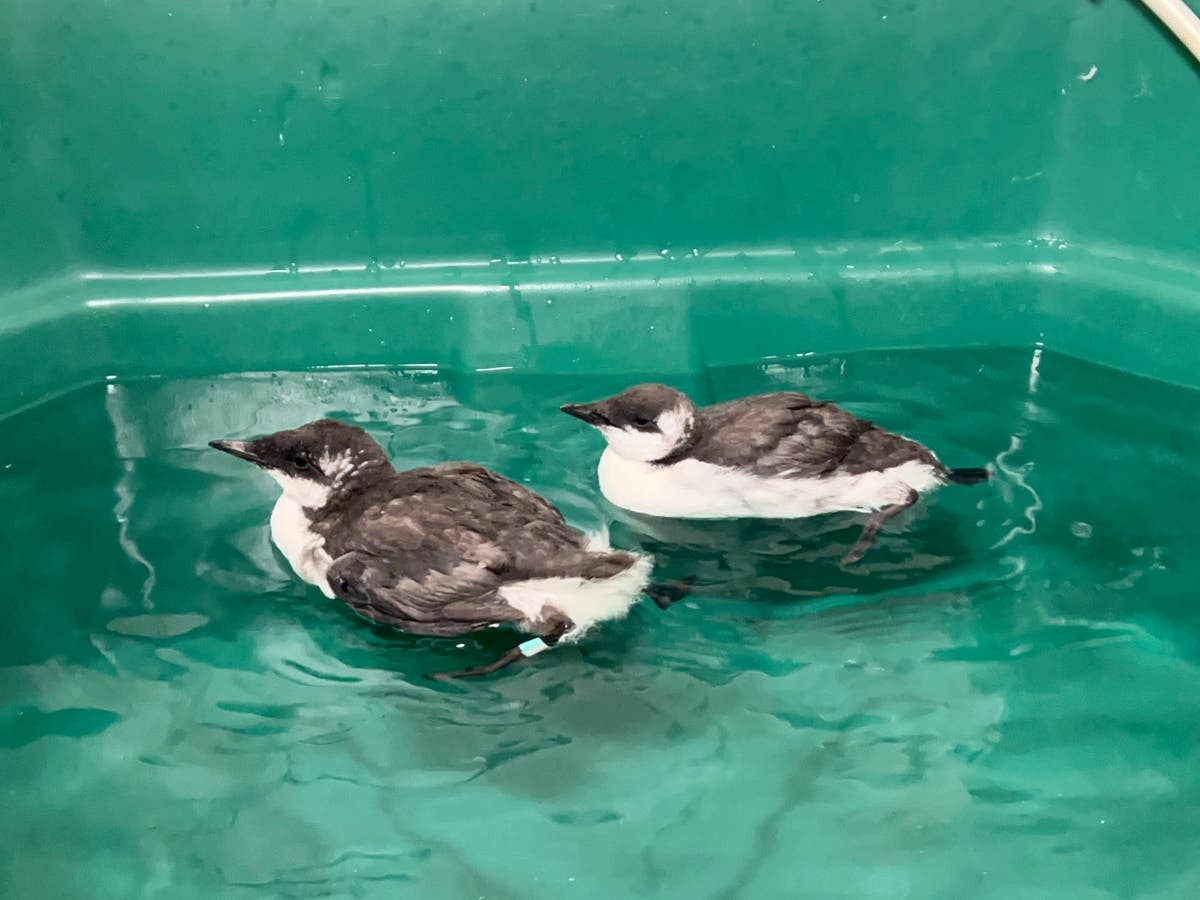
Common murres have been reported washing ashore from the Bay Area south toward Santa Barbara, while other fish-eating seabirds, including brown pelicans and Brandt's cormorants, have also been affected farther south. Boland could not confirm how many common murres have been found along Los Angeles County beaches.
Hundreds Of Volunteers, Thousands Of Fish
Behind the admission figures is a small rehabilitation team supported by more than 300 volunteers, working to give as many birds as possible another chance. By late October, Pacific Wildlife Care's hotline volunteers had answered more than 2,000 calls over two months, while rescue and transport volunteers traveled across the region collecting distressed wildlife.
The surge has required additional staffing, while the demand for fish, medical supplies and other resources has placed considerable pressure on the nonprofit.
"We're going through fish like nobody's business," Boland said. Yet she spoke warmly of the staff and volunteers whose shared determination has helped them endure the emergency.
"We're here to support each other and our community and these wild animals," she said.
The organization relies heavily on individual donations and is seeking additional volunteers. Information about supporting its work is available through Pacific Wildlife Care's website. Anyone encountering a sick or distressed seabird should keep children and pets away and contact a local wildlife rehabilitation organization for guidance.
In San Luis Obispo County, Pacific Wildlife Care's wildlife hotline is 805-543-9453.
A Warning From The Pacific
For Boland, the implications extend far beyond the hundreds of birds arriving at her organization's doors. The sight of starving seabirds, she believes, offers a troubling indication of how changing ocean conditions can reverberate through entire ecosystems.
"I think that this is a glimpse into what our future holds with warming ocean temperatures," she said. While rescuers can save individual birds, the larger environmental forces threatening their survival remain beyond the organization's control.
That makes every successful release especially meaningful. For a bird that arrived starving and barely able to survive, returning to the ocean offers another chance at life. For the people who cared for it, the moment is a reminder of why they continue, even as more distressed seabirds arrive.
But Boland hopes the crisis will also prompt Californians to consider what is happening beneath the surface of the Pacific — and what it might mean for the wildlife that depends upon it.
"This is probably part of a bigger, overarching story," she said.
One that is still unfolding, as rescuers prepare for what could be another difficult winter.
Get more local news delivered straight to your inbox. Sign up for free Patch newsletters and alerts.