Community Corner
Video: First Wolf In More Than A Century Returns To LA County
Wolves were killed off in California over a century ago. But they've slowly returned.


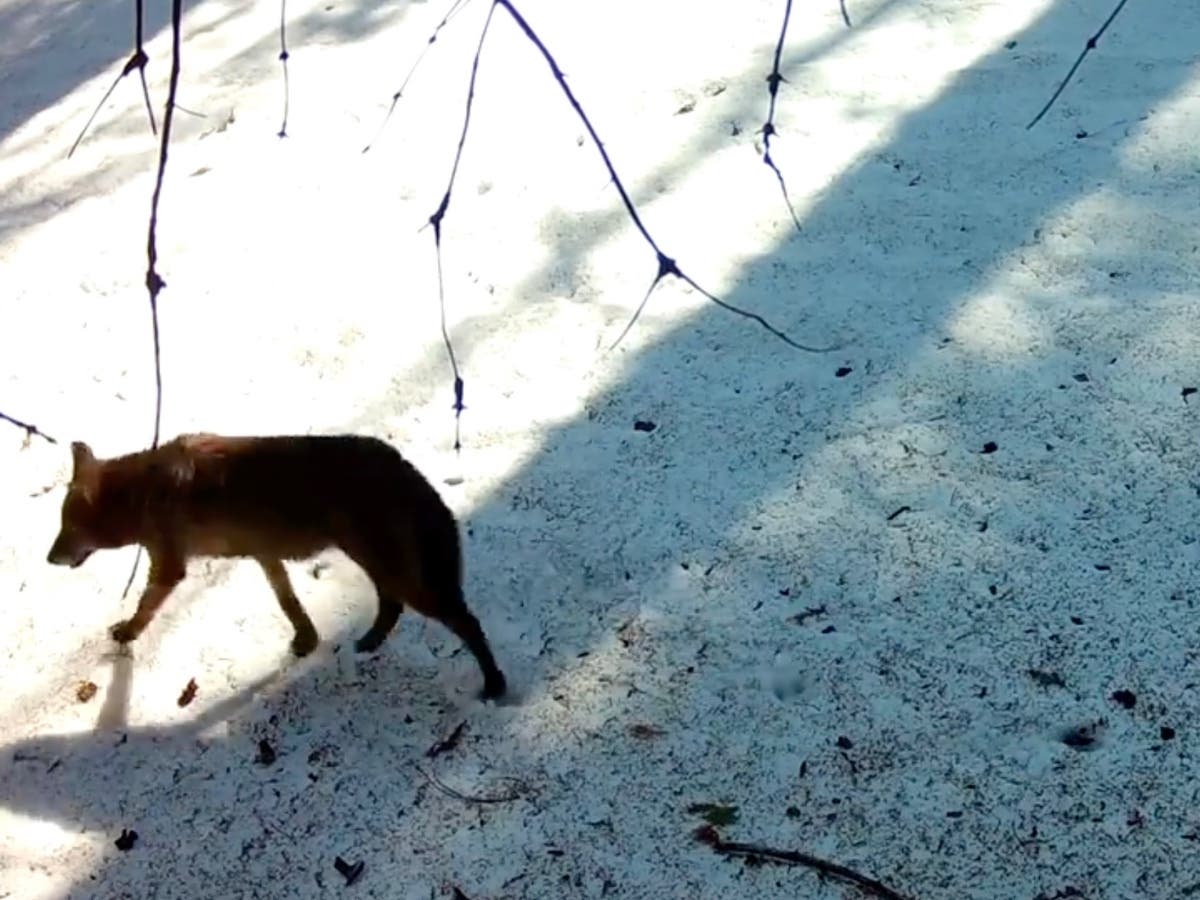
A wolf arrived in Los Angeles County over the weekend, marking the first time a member of the species has been documented in the area in at least a century, according to state wildlife officials.
The 3-year-old female gray wolf reached the mountains between Santa Clarita and the Antelope Valley at around 6 a.m. Saturday, according to data from her GPS collar.
Native to California, the gray wolf was believed to have been killed off in the state in 1920s. They've slowly been returning to California from other states following repopulation efforts: they've been recolonizing the state since late 2011, according to the California Department of Fish and Wildlife.
Find out what's happening in Los Angelesfor free with the latest updates from Patch.
The arrival of the she-wolf in LA County on Saturday marks a major milestone: It's the farthest south a gray wolf has been documented since the species was reintroduced with human help into Yellowstone National Park in Idaho in 1995, LAist reported.
"She came into LA County, in the southwest corner of the county, on Saturday morning. She moved around the western portion of the county in the mountains and appears to have bounced into/avoided I-5 and kept moving north," Axel Hunnicutt of the California Department of Fish and Wildlife told Patch Monday. "As of this morning she is further north, just over the border in Kern County."
Find out what's happening in Los Angelesfor free with the latest updates from Patch.
Hunnicutt, the gray wolf coordinator for the department, said such movement is "expected behavior."
"It's the breeding season for wolves and long-unpaired wolves are dispersing long distances in search of a mate," he said.
The wolf was born into a pack in Plumas County in 2023. Wildlife officials captured her to fit her with a tracking collar in May 2025 in Tulare County; she's known as BEY03F.
The collar allowed wildlife officials to track her journey across the state.
"She’s traveled nearly the entire length of the Sierra Nevada and now across the Tehachapi into the western portion of the San Gabriels," Hunnicutt said.
SEE ALSO:
Get more local news delivered straight to your inbox. Sign up for free Patch newsletters and alerts.