Politics & Government
Ballona Wetlands: Environmental Justice from the Great Park Project
The Project will Create 10 Miles of New Bike Trails and Footpaths, Providing Health Benefits and Environmental Justice to 2.8 Million People

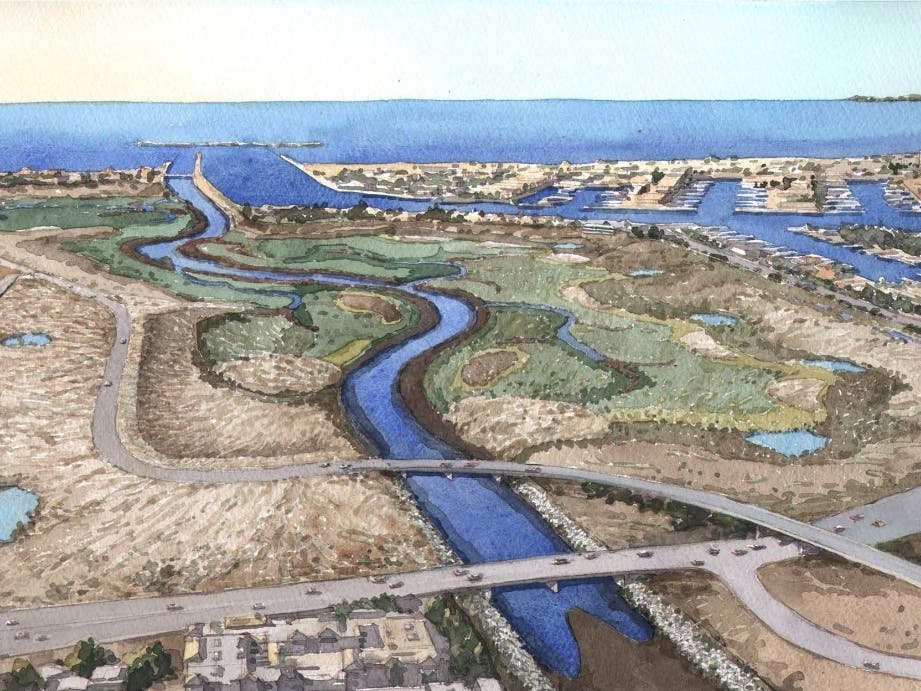


The California Department of Fish and Wildlife (CDFW) is beginning early work on the Ballona Wetlands Restoration Project near Marina Del Rey. Planned for more than a decade, the project will create, enhance and restore fish and wildlife habitat over nearly 600 acres of Marina-adjacent land, and would add nearly ten miles of new bicycle path and foot trail access, and parking near Fisherman's Village.
State certification of the Final EIR marked a major Project milestone. CDFW considered and addressed around 8,000 public comments as part of finalizing the EIR.
The EIR analyzes potential environmental impacts of the proposed project. These analyses will inform other public agencies, such as the California Coastal Commission, which must approve various permits before the project may be constructed. The Ballona Project EIR is being challenged in court by opponents who do not want the wetlands that were buried by Marina construction to be exhumed and restored, because that effort will require large scale excavation and grading (aka, bulldozers).
Find out what's happening in Marina Del Reyfor free with the latest updates from Patch.
Once covering 2000 acres, less than one third of the Ballona’s original wetlands remain. Of the remaining lands presently in state ownership, almost half are severely degraded. The CDFW project will correct this.
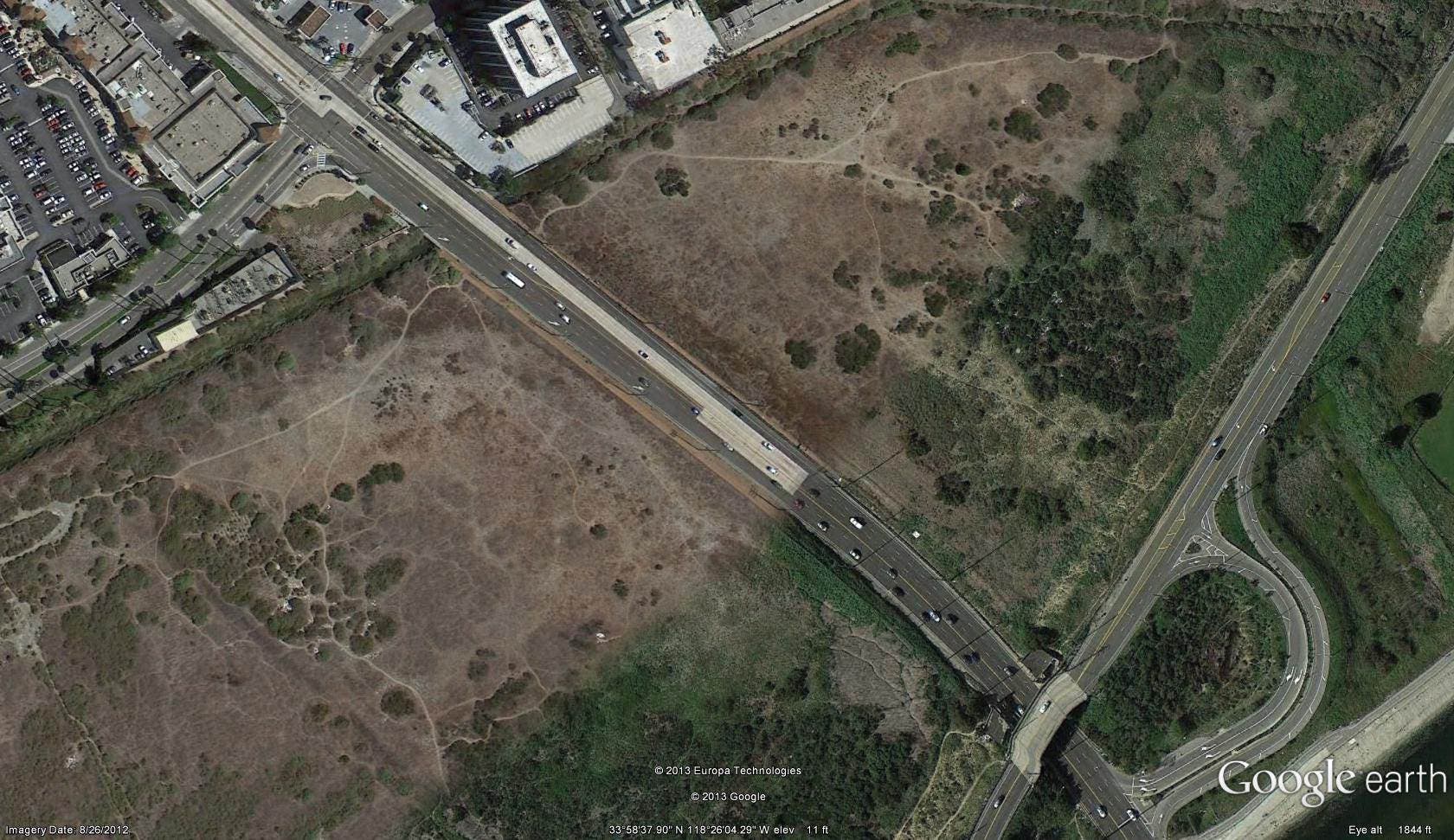
Above Photo: The weedy, dry area south of Fiji Way used to be wetland, but was buried under 12-17 feet of soil during Marina Del Rey construction. The restoration project will dig out all this dirt and reuse it for vegetated flood control berms, which will replace the concrete Ballona Creek Channel, and support the new trails network.
Find out what's happening in Marina Del Reyfor free with the latest updates from Patch.
This ecological shot in the arm is possible only with bulldozers, scrapers and excavators, the only feasible means to dig out and relocate over 3 million cubic yards of fill dumped on the northern half of Ballona during Marina del Rey’s construction. These earth moving methods were employed successfully to undo similar damage at scores of large tidal restorations along our state coastline, including Malibu Lagoon and at San Elijo Lagoon in northern San Diego County.
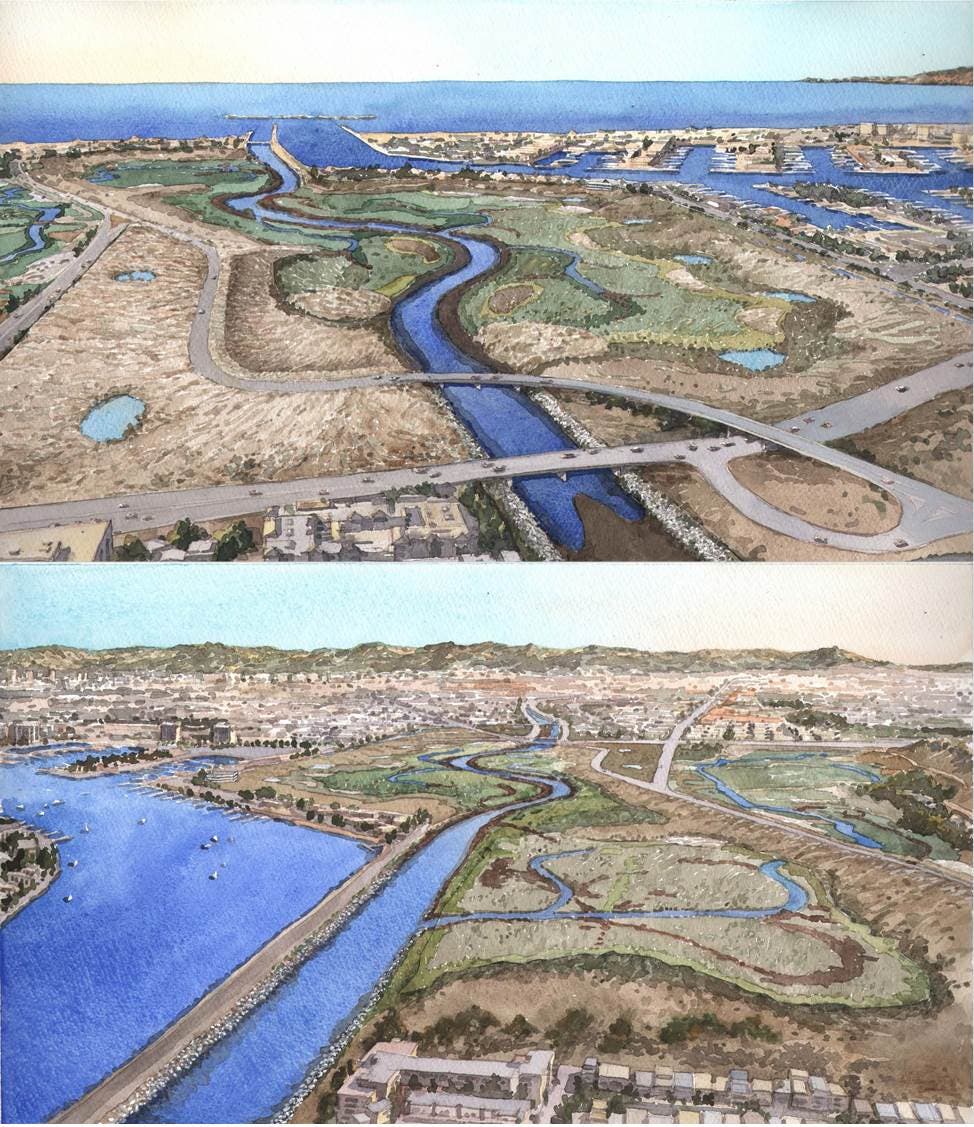
Above: Renderings of a completed Ballona Wetlands Restoration Project.
The earth excavated to restore wetlands at Ballona will be reused to construct vegetated knolls east of Lincoln Blvd. and berms along Culver Blvd.
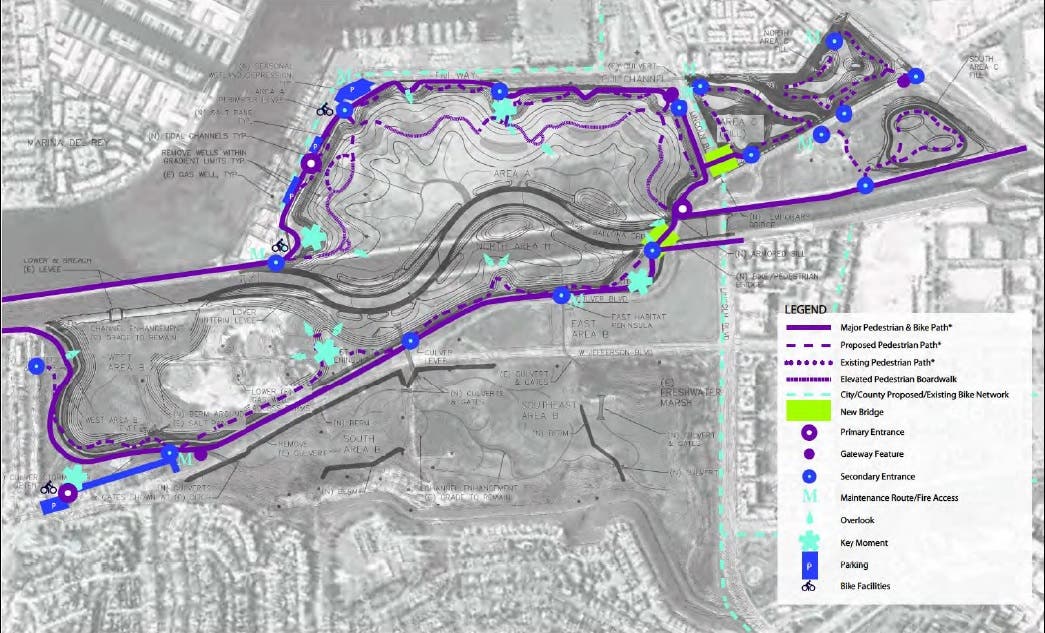
Above: Trails plan for the project. All trails parallel existing roads.
Atop these knolls and berms, the ten miles of new bicycle and foot trails will expand public outdoors access and give visitors close-up views of wildlife, as well as improved access to the existing coastal bike path.
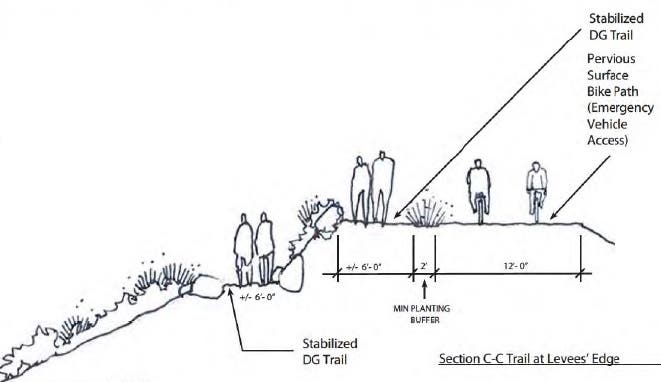
Above Diagram: Proposed bicycle and foot trails atop flood control berms, constructed with fill dirt removed from the severely degraded area south of Fiji Way.
The trails network proposed for Ballona will create the second largest public open space natural area in the City of Los Angeles – second only to Griffith Park. The trails will also provide a critically important societal benefit, above and beyond the recreational pleasures we typically enjoy at nature reserves. Adjacent to the underserved families within the Del Rey neighborhood, the Ballona Project will help address the public health challenges prevalent in lower income areas.
In a new UCLA report by Professor Jon Christensen, a study of California children showed living within 500 meters of a park was associated with gaining significantly less body mass by age 18, making them less likely to develop health problems down the line. Another study surveyed 80,000 California households and found living near a green space significantly lowered levels of distress, regardless of socioeconomic status. Physical and mental health concerns are increasing for all Californians, and the problems are worse in low-income communities, especially for youth.
Christensen applied his same study methods to the state's Ballona project, and found that the proposed trails system will be within bicycling distance of more than 2400 youth living below the poverty line in the Del Rey neighborhood alone. Within a 13-mile driving distance of Ballona live nearly 200,000 additional impoverished youth, according to year 2000 census data (see below). A total of 2.8 million people live within easy driving distance of Ballona, including 616,809 youth under 18, more than half of them in severely disadvantaged households.
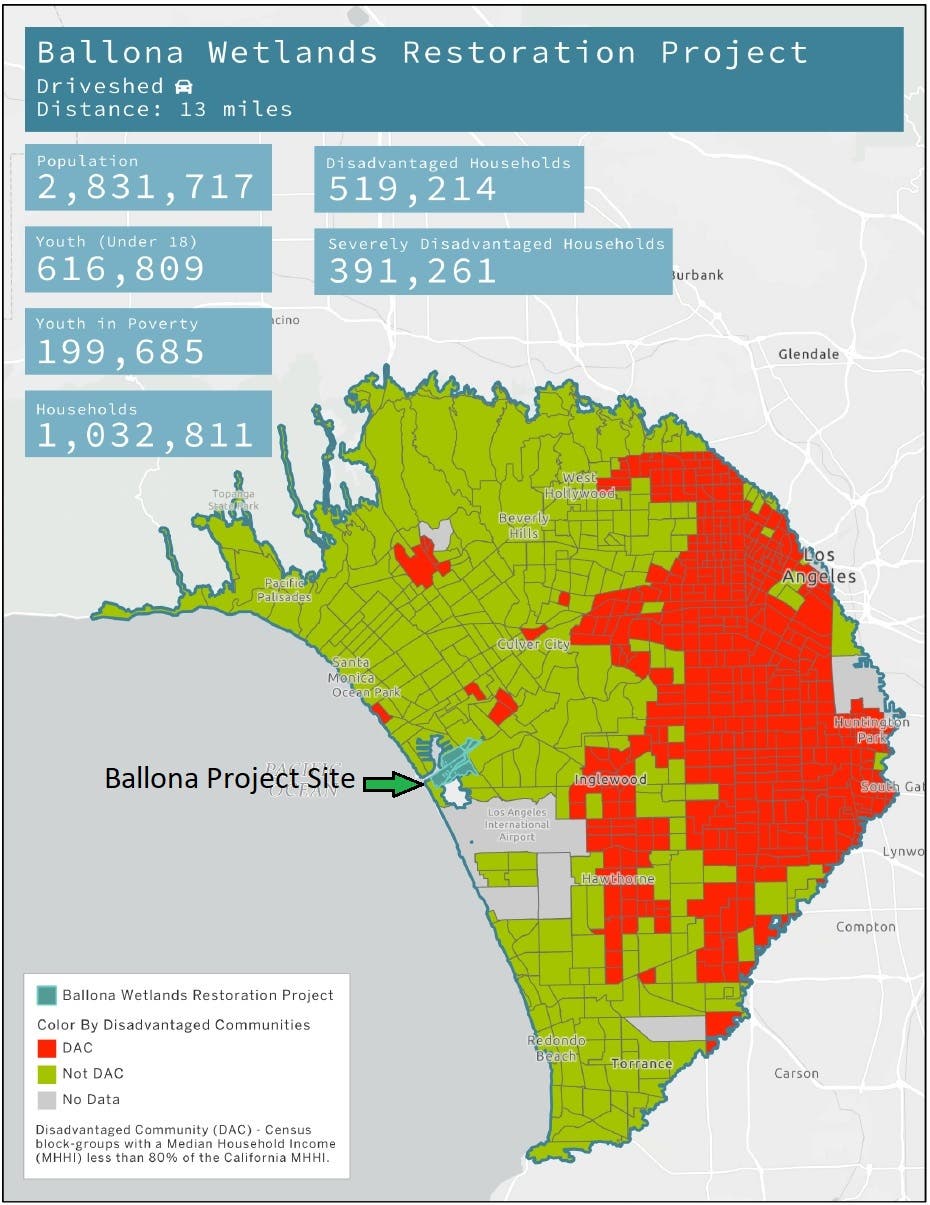
Above: Census data map for neighborhoods within a 13-mile driving distance of the Ballona Project. Courtesy of Jon Christensen, UCLA Institute of the Environment and Sustainability.
Christensen writes, "As the state continues to grapple with growing health concerns, we must look at opportunities to invest in solutions right at our fingertips. We must push policies, and projects, to increase outdoor experiences and improve health outcomes, especially for our underserved youth." The Ballona Wetlands Restoration Project is one such investment, with the added benefit of reclaiming a small but important piece of our natural resource heritage unintentionally damaged through past development.
Enjoy your Ballona Wetlands!
References:
CDFW. 2019. Final Environmental Impact Report, Ballona Wetlands Restoration Project. State Clearinghouse No. 2012071090. December 2019. https://www.wildlife.ca.gov/Regions/5/Ballona-EIR
Jon Christensen and Rachael Norton. 2019. Parks are a Public Health Solution Waiting on our Doorstep. Capitol Weekly, October 1, 2019. https://capitolweekly.net/parks-are-a-public-health-solution-waiting-on-our-doorstep/
California State Parks: A Valuable Resource for Youth Health. UCLA Institute of Environment and Sustainability. https://www.ioes.ucla.edu/project/youthoutdoors/
The Exceptional Public Access Plan for the Ballona Wetlands. Marina Del Rey Patch, October 2018. https://patch.com/california/venice/exceptional-public-access-plan-ballona-wetlands