Politics & Government
Ballona Wetlands Restoration: Our Long Road Trip Together, Part Three
A Five-Part Series On the Ballona EIR in Plain English, Part Three: The Car We Choose is Critical; It's Key to a Successful Road Trip

Recall from Parts One and Two that our road trip destination - California's long-established purpose, need and regional goals for Ballona - are that Ballona shall be restored and that an abundance of high quality, productive wetland and upland habitats shall be created, enhanced or preserved, accessible by regulated public access. Our Department of Fish and Wildlife examined twelve possible ways to reach that goal, and their Draft EIR narrowed that down to three finalist plans.
The best plan - Alternative No. 1 - maximizes Full Tidal wetland habitat at Ballona and restores plants and wildlife that graced the area a century ago. This long, ambitious road trip requires that our means to travel must be large scale mechanized excavation and grading to remove millions of tons of dirt dumped on top of historical wetland back when Marina Del Rey was built, and that kind of work has some people concerned.
Nothing informs better than experience, and Californians now have vast wetland restoration know-how. One lesson repeatedly learned from hundreds of tidal wetland restoration projects statewide is that wetland plants and animals recover very quickly after the land has been disturbed, even after complete excavation and grading, provided proper construction and restoration techniques are used.
Find out what's happening in Marina Del Reyfor free with the latest updates from Patch.
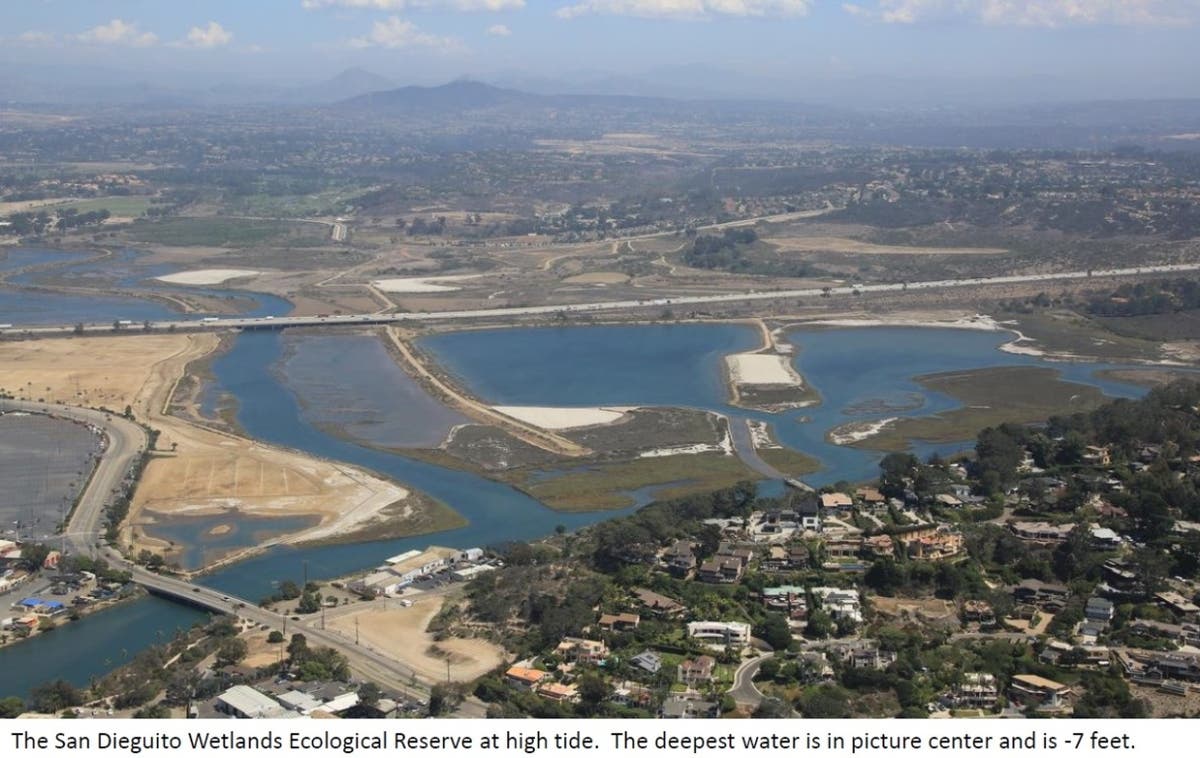
Using the San Dieguito example near Del Mar (cover photo), hundreds of acres of upland and degraded wetland habitat were essentially scraped bare by many large bulldozers and excavators, and massive volumes of dirt were relocated. However, wetland plants and the rich soil beneath them were first carefully salvaged, preserved and propagated in a nursery while the landscape re-shaping proceeded. Then, salvaged soils and prepared plant cuttings, along with thousands of nursery-reared plants, were carefully replaced on the new, reshaped land surface so ocean high tides would touch much more land than before (166 acres of tidal wetland, to be exact).
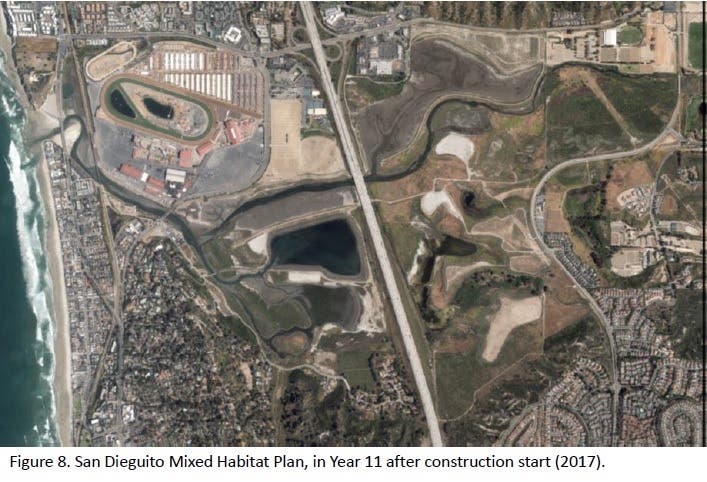
The results have been no less than astounding (Figures 8-14). Just one year after the end of construction, the San Dieguito project had already met most of the very stringent performance standards required by the Coastal Commission. Today, residents and local governments consider San Dieguito a crown jewel in the regional park of north San Diego County.
Find out what's happening in Marina Del Reyfor free with the latest updates from Patch.
See for yourself next time you drive that way. Just exit the I-5 at Via De La Valle in Del Mar, turn east, and then right at San Andres Drive to the end. You can’t miss it.
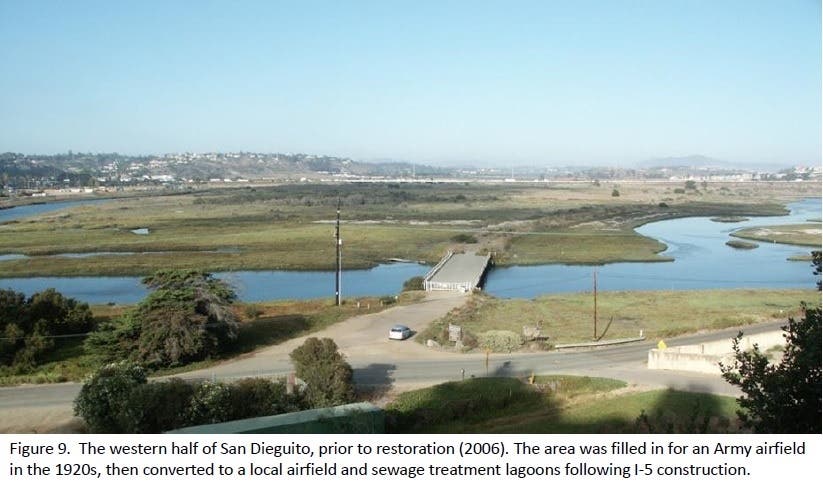
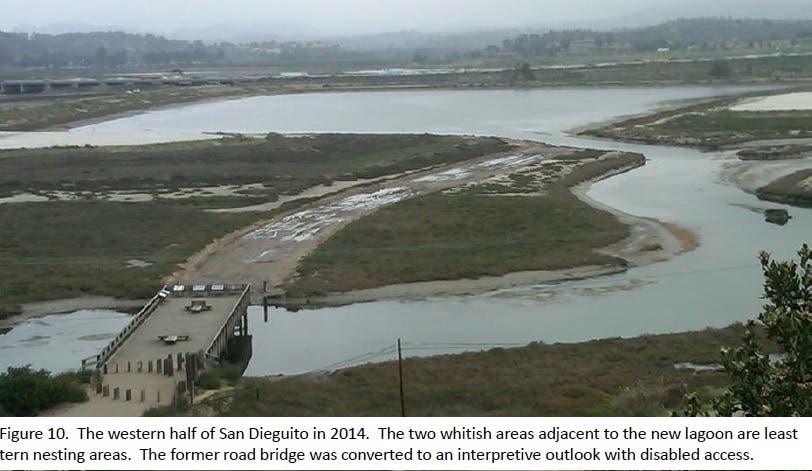
Figures 9 and 10 show how the western half of San Dieguito, initially filled in with dirt over decades just like the northern half of Ballona, was transformed into a 40-acre subtidal lagoon with adjacent Least Tern nesting areas. The lagoon bottom is now entirely covered with eelgrass, a highly valued fish reproductive habitat. The eelgrass was not planted - it just floated in with the tides and found a home.
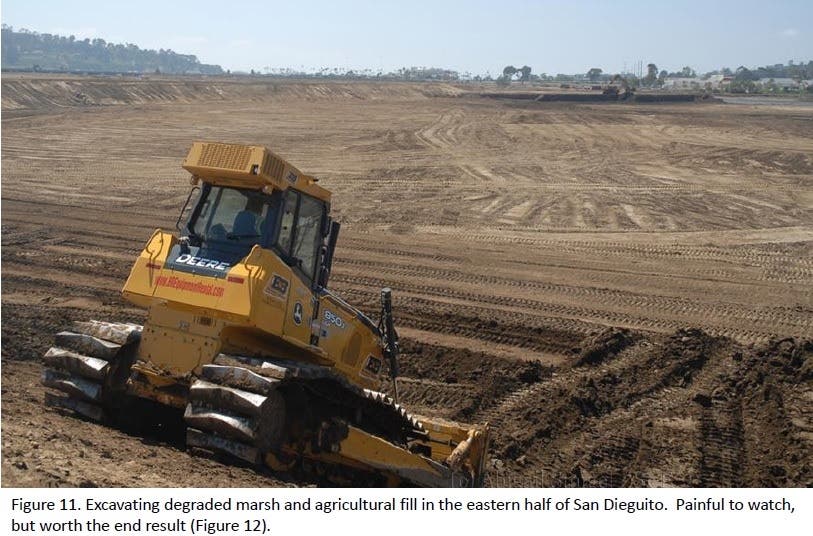
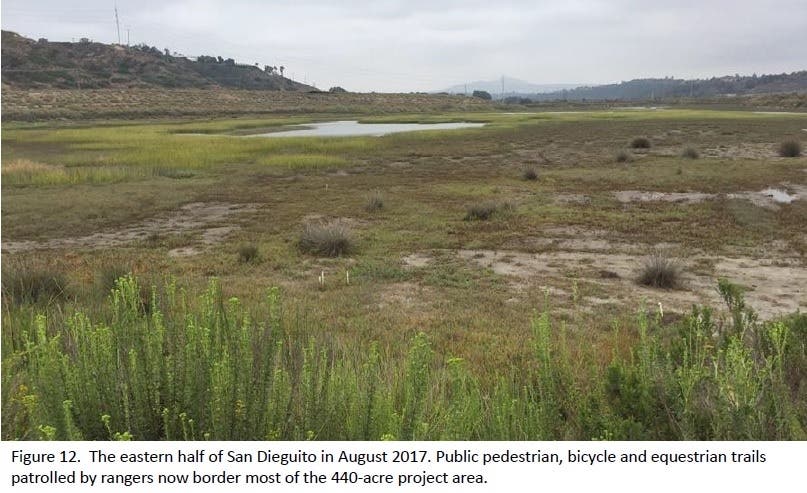
Figures 11 and 12 show the eastern half of San Dieguito’s transformation. Historically filled in for agriculture and grazing, like the eastern parts of Ballona, this 75-acre pasture was excavated to allow ocean tides to flow in and wash over the land. Ballona’s weed-infested northern area nearest Marina Del Rey would be transformed in a similar fashion. The excavation stage at San Dieguito looks apocalyptic (Figure 11), but the end result is beautiful (Figure 12). High-value cordgrass, which serves as nesting habitat for the endangered Ridgway’s Rail (a bird), now covers the low marsh areas. Public trails and viewing platforms ring the restored wetlands.
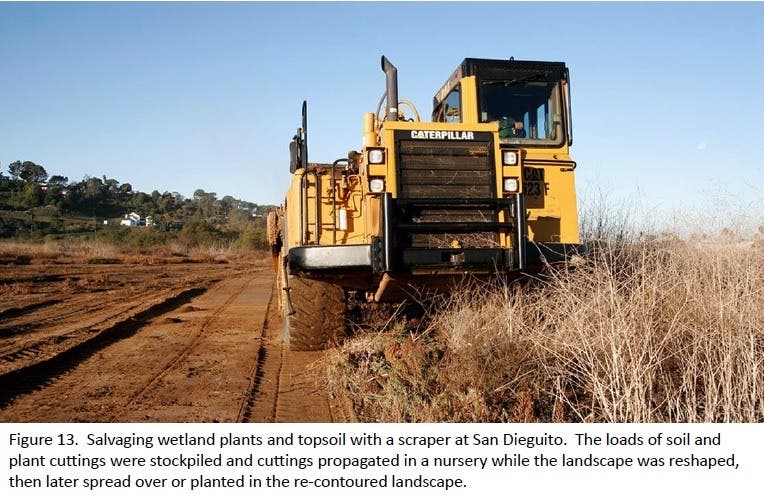
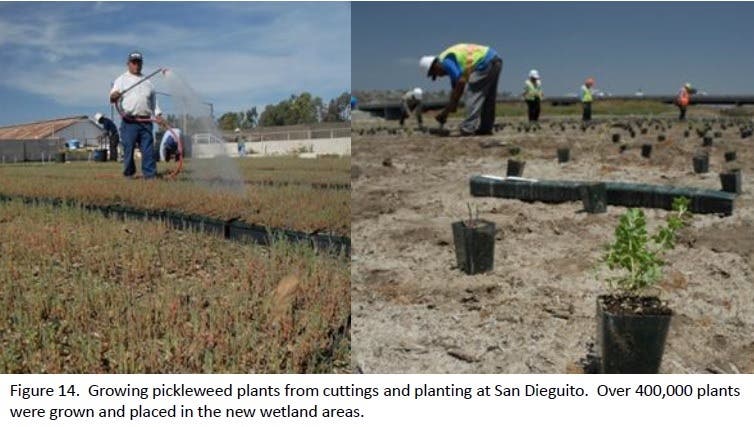
Figures 13 and 14 show how wetland plants and topsoil were salvaged with a scraper at San Dieguito. Loads of rich soil and plant cuttings were stockpiled and cuttings propagated in a nursery while the topography was restored to pre-historic elevations, then later spread over or planted in the reshaped landscape. This will need to be done only in a few areas of the southern Ballona Wetlands, to create narrow tidal channels. Salvaged and propagated vegetation can be planted in new wetland areas created in the northern half of Ballona.
The goal at San Dieguito, as it is for Ballona, was to create, restore or enhance wetland habitat in order to produce a full tidal system supporting a variety of wetland and upland habitats, including some designed to support endangered species. The fact that large scale, mechanized excavation and grading was the car chosen for the road trip had little bearing on reaching the final destination, other than the time taken to get there. Without bulldozers, scrapers and excavators, the job would literally take forever, and the California Coastal Act does not allow that.
Local opponents of a comprehensive Full Tidal Restoration at Ballona will attempt to incite emotional public opposition by grossly exaggerating the construction impacts to plants and wildlife. Don’t fall for their carnival barking and fake facts! Mitigation measures in the DEIR and required by permitting agencies always minimize such temporary impacts. Most small animals residing on the affected land can be easily trapped and relocated during the summer preceding construction, and nesting birds can be avoided completely by simply starting construction in the fall after bird nesting and foraging typically ends. These are just two of numerous widely used mitigation measures found in the DEIR to ensure impacts to existing wildlife are reduced to the smallest amount possible. It only costs money. We taxpayers spent $140 million to acquire the Ballona reserve lands. Why would we restore them on the cheap?
San Dieguito could never have been restored to its present configuration in a hundred years with volunteers and hand tools, and neither will Ballona. The idea spread by Ballona opponents that large numbers of “community” volunteers could be recruited to construct habitat on this scale is either pure fantasy or deliberate propaganda. At San Dieguito, the regional River Park organization is to this day unable to recruit occasional groups to effectively weed small upland areas. At Ballona, a dedicated twice monthly weeding effort by the non-profit Friends of Ballona Wetlands took 25 years to make 2 acres of dune habitat suitable for the endangered El Segundo Blue Butterfly. Invasive iceplant removal by Ballona volunteers during the past few years has also made very little progress, relative to the size of the iceplant infestation.
The Ballona restoration will cover an area nearly 35% larger than San Dieguito, and in such a densely populated area where high quality habitat is so scarce and the public benefit so badly needed, we should not settle for anything less than a rapid, comprehensive restoration. Mechanized excavation and grading must be the car chosen for our road trip, or we will be pedaling down the highway forever on our bicycles, never reaching our road trip destination in our lifetimes, or before our tires wear out for that matter.
In Parts Four and Five, I’ll discuss Litigation, our Third Branch of Government, and the Big Dig, Construction! Stay Tuned.
See Parts One and Two at the links below:
https://patch.com/california/marinadelrey/ballona-eir-part-two-our-road-trip-begins
About the author: Dr. David W. Kay earned Bachelors, Masters and Doctorate degrees in biology and environmental science from UCLA and CSUN, and has worked professionally in environmental management at Southern California Edison for 33 years. He served on the Board of Directors of the non-profit Friends of Ballona Wetlands from 2007-13, and as its Board President from 2012-13. In 2006-12, he managed the comprehensive restoration of the 440-acre San DieguitoWetlands complex in northern San Diego County on lands historically infilled by an airfield, waste treatment lagoons and agriculture. Dr. Kay lives in Playa Vista.