Community Corner
Poetry and Death at Shelter Bay
With adulation, publication and prize money after a 43-year silence, poet Landis Everson got something we all could use: a second chance. And then he killed himself four years ago today at the lagoon at Shelter Bay.

The gun shot echoed across Shelter Bay, startling the gulls and sending them into nervous peregrinations overhead. A man walking his young daughter snatched her up and raced along the eastern edge of the lagoon, a shallow tidal appendage off Richardson Bay in Mill Valley. Hearing the boom rebound across the water, two boys on bicycles stopped, straining to see what had caused the commotion.
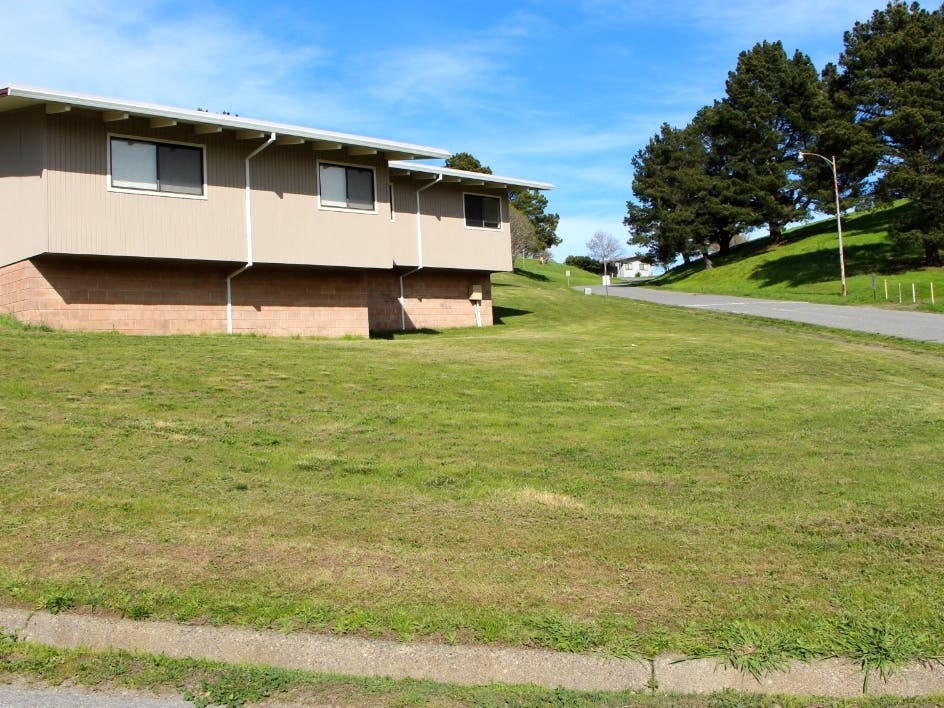
On the lagoon’s western edge, inside the window-walled Mediterranean waterside apartments, a Shelter Bay resident had noticed the frail, pale, elderly man who had been sitting upright with legs crossed on the park bench 500 feet across the water. To observers, he seemed to be enjoying the birds and sun on his face. He had been sitting in that spot for more than an hour, seemingly lost in thought.
When the shot rang out, Shelter Bay resident Kelley Park realized the small dark object that the old man had been toying with was a gun. Seconds later, she had picked up her binoculars and focused on the man as he slumped forward, blood pouring down from a head wound, and pooling underneath the bench.
Find out what's happening in Mill Valleyfor free with the latest updates from Patch.
Park called 911. Others, including the man walking with his daughter, also reported the incident and police cars quickly converged on the parking lot next to the lagoon. The 911 operator asked Park to hold on, switched lines and a minute later came back, confirming that “yes the gentleman has shot himself.”
The official response was similarly business-like. The man was loaded into an ambulance and taken to Marin General Hospital while Mill Valley police cordoned off the bench and blood-stained walkway. The man was pronounced dead at the hospital and within hours employees of a nearby restaurant had hosed down the bloody spot. The bench was removed, replaced by a steel bicycle rack that remains to this day.
Find out what's happening in Mill Valleyfor free with the latest updates from Patch.
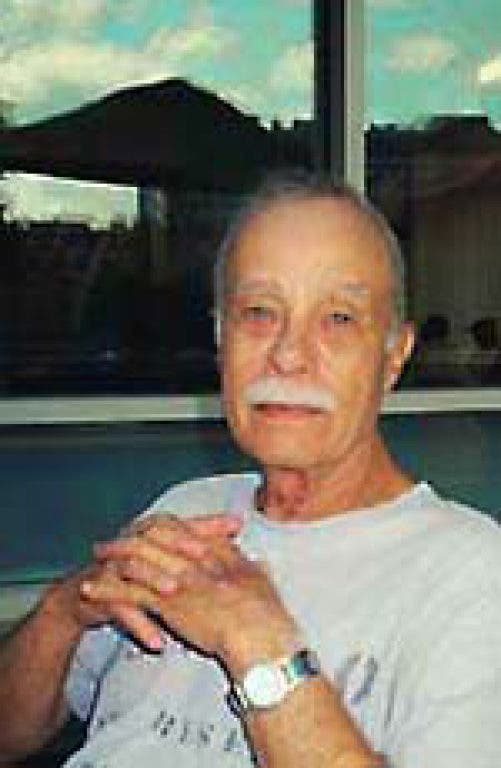
The suicide on Nov. 17, 2007, four years ago today, would have remained a sad-but-forgotten tale except that the man, Landis Everson, had been a mid-20th Century poet whose work had once been mentioned in the same breath as Wallace Stevens, William Carlos Williams and even William Blake. He had been a muse to a generation of local poets but also a mercurial soul who happily put down his pen for 43 years before being rediscovered in his late 70s. In the early 2000s, Everson won adulation, publication, prize money, a worshipful young editor and a 2005 New York Times profile titled “Poet 79, Wins Prize and New Audience.”
The day following Everson’s death, Kelly Park had kept an eye out on the lagoon, watching, she said, “to see if anybody came by the spot.” When she noticed two men walking along the lagoon carrying flowers and votive candles, she realized that they were in the wrong place, down from a local restaurant rather than on the spot from where the bench had been removed. Feeling the need to do something, Park drove over, introduced herself, consoled and exchanged addresses, telling the two that if they’d like, she’d “be glad to share more details when they were ready.”
One of the two was Everson’s son, Lawrence, who was living with his father in one of Shelter Bay waterside apartments. They spoke about how lovely the previous day had been in the midst of Northern California’s celebrated Indian summer. Park told the men that, from a distance at least, she thought Everson “had seemed contented.” Lawrence told her about how his mother had died, leaving the elderly man alone in San Luis Obispo, and in a too-often repeated sign of the aging process, had forgotten a pot of food cooking on the stove. The elder Everson had also suffered a stroke, following which the son convinced him to move to Shelter Bay, where he could enjoy the lagoon and its shore birds.
The son conceded that his father had mentioned suicide, and did, in fact, own the World War II service pistol used in the suicide, but tried not to leave him alone for long periods of time. The previous day, he acknowledged, had been an exceptional, perhaps fatal, exception. It was a thought that, Park thought, “seemed odd to me.” She stayed while they arranged the flowers, lit memorial candles and spoke about Landis. She stopped them again as they walked around the lagoon to Shelter Bay but let them go, recognizing that they wanted the time to themselves.
In similar fashion, Boston area poet and critic Ben Mazer could not bring himself to be interviewed about Landis Everson, a man Mazer called “my best friend," because of the "anguish over my loss." It was Mazer who had virtually single-handedly brought Everson back to critical attention and acclaim. Mazer originally had been looking for forgotten poetic gems by the post-war American poets who called themselves “the Berkeley Renaissance,” who preceded the better-known "Beats" like Lawrence Ferlinghetti and Allen Ginsberg by a decade.
The Berkeley Renaissance included along with Everson, the vastly under-appreciated Jack Spicer, Robin Blaser, Robert Duncan and others, and tended to be more button-downed, self-consciously intellectual and socially correct than the “Beats.” The Beats were tagged by the San Francisco Chronicle’s Herb Caen with a nickname that became world-renowned, and helped start the “Beatnik” tidal wave that washed across the nation but left the “Berkeley Renaissance” somewhat high and dry.
Less dogmatic than his friends, Everson found the Berkeley Renaissance label “pretentious,” but admitted in an interview that, “when [Michael] McClure and [John] Wiener and the other young East Coast poets came, I admit I did feel they were butting into what had always seemed our territory.”
The more deeply Mazer dug into the work of this group, the more deeply-impressed he was with the somewhat less critically regarded Everson over better-known “Berkeley Renaissance” figures like Spicer, Blaser and Duncan.
Everson's Berkeley roommate Duncan wrote “Venice Poem,” which was regarded as something of an artistic retort to Allen Ginsberg’s Howl. Like many of the other members of the Berkeley Renaissance, Duncan was said to have had a crush on Everson. In a remarkably naked 2004 interview with poet/critic Kevin Killian in the poetry forum Jacket2, Everson called Duncan the “number three influence in my life.” In the interview, Everson admitted, “I tried to be like Duncan, but it just made my poetry worse.” Killian described the striking, debonair Everson’s effect on the Berkeley Renaissance poets who in “their tightly wound circle,” made him “the idol, the golden boy they all wanted.” A jealous Spicer even spat a jealous wad at Everson in the poem, “Orpheus’ Song to Apollo” in which Everson was clearly Apollo:
"This is almost goodbye.
You,
Fool Apollo
Stick
Your extra roses somewhere where they’ll keep.
I like your aspiration
But the sky’s too deep
For fornication"
Unlike his austere and academic compatriots, Everson, who had grown up in breezy, upper-class Southern California, was an easy-going voluptuary, a young-Marlin Brando lookalike, whose mere appearance gained him easy access to what was then the predominantly gay world of American poesy. He was also highly sensitive and admitted to being overcome by Spicer’s cruel verse. In “These Friends of Yours,” he seems to answer Spicer:
"These friends of yours are hard to understand.
They shatter sense like stained glass likeness"
Even though he had many poems published by the upper crust of literary magazines like the Hudson Review, Kenyan Review, Poetry and others, Everson felt overshadowed and insecure in the often-catty, post-war New York literary hustle. He returned to Berkeley and became a teaching assistant in the English Department, meeting regularly with his Berkeley Renaissance friends and practicing a structure they called “Serial Poetry.”
As in New York, things did not go well for Everson at Berkeley. It left him, he admitted in an interview, realizing “I was not a scholar by temperament.” He did, however, continue to participate in the Saturday Afternoon “Serial Poetry” sessions with Spicer, Blaser, Duncan and others that led to the publication of a slim, ingenious booklet of verse called “Postcards from Eden.” By this time, Everson had moved north to Stinson Beach where he was practicing the trade of home renovation. It was a craft that would pay the bills for much of the next 40 years. Not particularly relishing the long ride to Berkeley, Everson also began spending less time on his poetry. “I can’t write poetry if there is no audience,” he admitted to Mazer, “consequently, I stopped writing.”
Jack Spicer died in 1965, tragically only in his 40s, and the Berkeley Renaissance faded. By then, Everson had moved to San Luis Obispo largely because, he later told the New York Times, “I didn’t know anyone there.”
Everson worked full-time on his home renovation and his painting. As an artist, he possessed the same lucky ease that characterized his poetry. His canvases proved good enough to be shown in topnotch galleries in San Francisco and Santa Fe and hung in the homes of celebrated actors and socialites. By then, Everson was both an ex-poet and a former gay man who married and had children. He remained in San Luis Obispo for more than four decades, far more interested in his brush strokes than his meters. By the mid-1990s, Everson gave up his renovation business, and, as he told the Times, “I was waiting to die, very patiently, very agreeably, when the phone rang.”
It was 2004 and it was Mazer, who had been working on an anthology of the Berkeley Renaissance for the literary magazine Fulcrum 3. Everson’s work captivated Mazer, who asked him if he had any unpublished work he’d like to show. Everson, it turned out, did. What happened then was a poetic whirlwind, a literary resurrection of the first water. Beginning in 2004 under Mazer’s tutelage, Everson rediscovered his voice and found his work being published in America’s blue chip literaries including Poetry, the New Yorker, The New Republic, London Review of Books and others. Editors marveled at the rediscovery of a poet who had been on the literary lam for more than 40 years and had returned.
In 2005, Mazer submitted pieces from Everson’s rapidly expanding oeuvre to the Chicago-based Poetry Foundation. The well-financed Foundation, in turn, awarded the sensational Everson the first Emily Dickinson Award for unpublished poets over 50 years old. The prize was $10,000 and with it came a contract for a book to be published by St. Paul’s Greywolf Press. Mazer handled the editing and in 2005, Everything Preserved, Poems 1955-2005, was published. The book was divided into two parts - the old and the new - and invited comparisons between Everson's work from before and after his "silent" years.
"The later poems are the real gold … everything came together in them,” Mazer said, remarking that “they leave me almost speechless.”
Everson seemed to be having a blast, hanging with Mazer, writing new poems and generally having that rarest of human experiences, getting the chance to make up for lost time. There were, along the way, some strange and perhaps portentous, moments. Prior to the Emily Dickenson Prize award ceremony, Everson attacked himself with the back of a hairbrush, blackening an eye. His explanation to his audience at the awards ceremony was no explanation at all, simply that “I wasn’t in a fight. I did this to myself.”
In the end, it proved to be a pretty good explanation, an epitaph for a man whose ambivalence could produce a line like: “Death is a hole or a gap in the hole.” But Everson was also a shooting star, the Golden Boy, who came back for one more blazing, annihilating performance and then exited, as always on his own terms, on the shores of the lagoon at Shelter Bay.