Politics & Government
Bay Area Legislators Announce Legislation To Boost California Tour Bus Inspection Program
The tour bus that crashed in San Francisco and injuring 20 was never inspected.


State Senator Jerry Hill (D-San Mateo County/Santa Clara County), along with Assemblymembers David Chiu (D-San Francisco) and Phil Ting (D-San Francisco), announced Friday that they will introduce legislation on January 4, 2016, to improve California’s tour bus inspection program and provide more bus inspection funding for the California Highway Patrol. The legislation will also require coordination between the Department of Motor Vehicles and the California Public Utilities Commission (CPUC) to identify unregistered buses.
“The way we currently regulate and inspect buses isn’t working,” said Hill. “We need to improve our inspection and oversight programs to ensure the public’s safety. The California Highway Patrol does everything it can to inspect as many buses as possible, but the CHP is limited by the resources at its disposal and by how the inspection system is currently structured. This legislation will give the CHP – as well as other regulatory agencies overseeing bus safety – the tools they need to ensure tour buses and passengers are safe.”
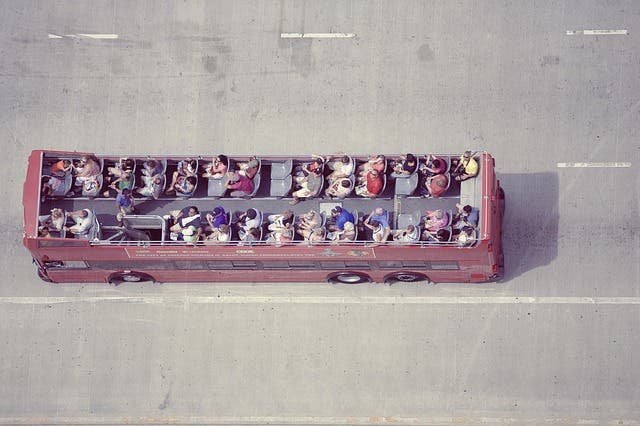
On November 13, a double decker-tour bus crashed in Union Square in San Francisco, injuring 20 people, at least five critically. The bus had never been inspected by the CHP and was not properly registered with the CPUC.
Find out what's happening in Mountain Viewfor free with the latest updates from Patch.
“Tour buses in San Francisco and California must be safer,” said Assemblymember David Chiu (D-San Francisco), whose district includes Union Square and who worked on tour bus issues as a member of the San Francisco Board of Supervisors. “Ensuring full inspections and eliminating ghost buses are important steps we need to take so that tourists and residents do not become victims of regulatory loopholes. I look forward to working with my colleagues and the many state agencies involved in the months ahead.”
Under the current inspection program, the CHP inspects only a small sampling of each bus company’s fleet once a year, resulting in about 30 percent of buses being inspected. The inspections are usually pre-scheduled, giving bus operators an opportunity to make sure that the vehicles available for inspection are in good repair.
Find out what's happening in Mountain Viewfor free with the latest updates from Patch.
In addition, current law only requires bus operators pay an inspection fee of $15 even though each inspection costs the CHP hundreds of dollars. The fee hasn’t been modified since 1986 and the current shortfall forces other state funding sources to cover the remaining balance.
“Our tour bus inspection system is fatally flawed,” said Assemblymember Phil Ting (D-San Francisco), who will be coauthoring the legislation. “Preventable tragedies loom under the current system. Innocent people are paying the price for failure and it’s time for big changes.”
The legislation will:
- Authorize the CHP to raise the inspection fee so that it covers the costs of the inspection program.
- Implement a performance-based bus inspection program that will require more frequent inspections for bus operators that fall below performance metrics, which are to be established by the CHP. The legislation will also require that newly purchased buses – especially those purchased used from out-of-state operators – are inspected by the CHP before being allowed on the road. The legislation also intends to address a gap in the inspection process so that CHP is examining fleets as they are – rather than seeing buses that could have been prepped for the inspections.
- Implement a process to identify “ghost” buses that are not properly registered with the CPUC. Currently, all bus operators must provide a list to the CPUC of all buses in operation. However, bus operators don’t always identify all their vehicles. The legislation will require the CPUC to cross check the list of buses it receives with the company’s buses that are registered with the DMV. Also, whenever a new bus is registered with the DMV, the DMV will be required to notify the CPUC.
- Any bus operator who violates the legislation – e.g. fails to register a bus with the CPUC – can have its operating permit suspended or ultimately revoked, and can be fined up to $2,000 per violation.
“We look forward to working with the CHP, DMV, the CPUC, the bus industry and others on this important legislation,” Hill said. “We must improve bus safety in our state to protect consumers.”
Senator Hill has led previous efforts to improve the safety of buses and limousines and is the author of three earlier bills that have been signed into law to improve bus and limousine safety:
- AB 45 from 2012 closed a loophole that held limousine operators, but not buses, responsible for underage drinking. The Brett Studebaker Law requires party bus companies to ask the person making a reservation if alcohol will be served and if there will be anyone on board under 21 years old. Under the legislation, an adult chaperone must be present if alcohol and people under 21 will be on board. Bus companies are subject to license suspension or revocation for non-compliance. Bus drivers are subject to a misdemeanor if they do not comply and chaperones also are subject to a misdemeanor for providing alcohol to a minor. Hill’s bill was prompted the death of a constituent who was involved in a fatal accident after drinking underage on a party bus.
- SB 611 from 2014 expanded the CHP’s inspection program to include modified limousines, which typically carry six to 10 passengers. Previously, the CHP only inspected buses and limousines that carried more than 10 people. The bill was prompted by a limousine that caught fire in 2013 on the San Mateo Bridge. Five of the passengers died. The limousine was never inspected by the CHP.
- SB 541 from 2015 improved the functions of the CPUC’s Transportation Enforcement Branch and enhanced the branch’s oversight of limousines and buses. The bill authorized law enforcement officers across the state to assess penalties against, and impound the vehicles of, illegally operating buses and limousines. The bill was prompted by a State Auditor’s report that found the CPUC Transportation Enforcement Branch “does not provide sufficient oversight of charter-party carriers and passenger Stage Corporations(passenger carriers) to ensure consumer safety.”
--News release from state Senator Jerry Hill’s office
Get more local news delivered straight to your inbox. Sign up for free Patch newsletters and alerts.