Neighbor News
Studies Show - Teenagers Are A Perfect Host for Clinical Depression
Teenagers are a perfect storm for clinical depression, yet many parents often pass off symptoms as "normal".
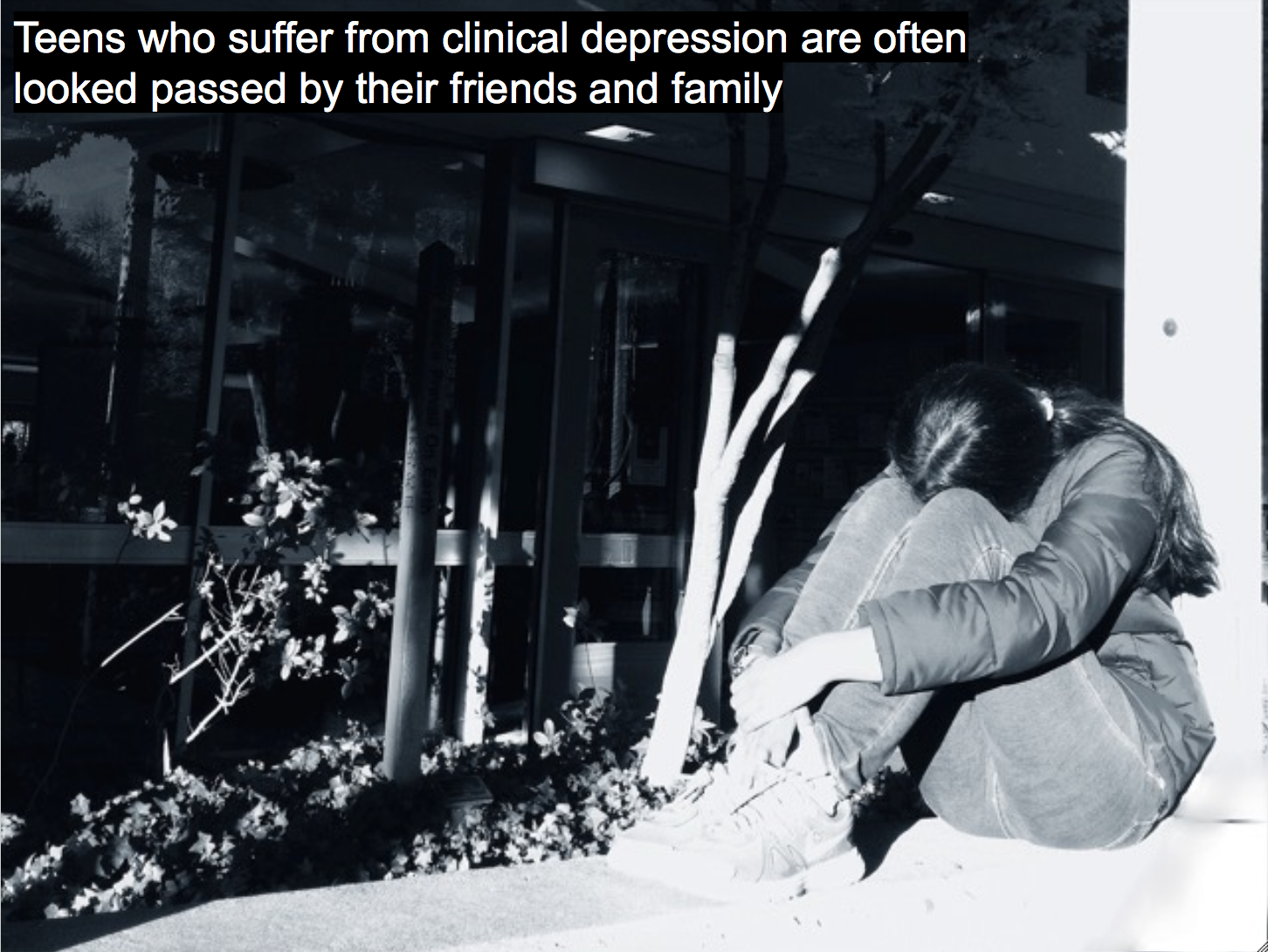


Studies suggest that at ages 14 and 15 years old, a perfect storm of immense emotions, immature brains, and raging hormones create the perfect environment for clinical depression to take hold. This drives nearly one in 12 teenagers to deliberately harm themselves, in methods most often such as cutting or burning themselves, or by trying to electrocute, suffocate, or hang themselves. In extreme cases, clinical depression, also known as major depression, may lead to suicide.
Jessica, a freshman in highschool, began puberty at age 9, getting her first menstrual period by age 10. She describes her childhood as mostly peaceful, besides the constant arguments between her mother and father. Jessica entered puberty early, putting her at high-risk to develop clinical depression.
For teenagers and adults, depression is the most common mental health disorder in the United States.
Find out what's happening in Mountain Viewfor free with the latest updates from Patch.
- Adolescent depression will affect about 20 percent of teens before they reach adulthood.
- 5.3 percent of the general population has suffered from depression for at least one year’s time. This is compared with 8.3 percent of teenagers who will be depressed for one year or more.
- At any one time, 5 percent of teens suffer from major depression
“A high-risk for suicide”
Adolescent depression can affect any teen regardless of economic, social, or racial background, yet many parents pass of their child’s depression as normal teenage behavior. In class of one-hundred high schoolers, five teenagers may be suffering from major depression, which carries a high-risk for suicide.
- Over 90 percent of people who take their own lives suffer from clinical depression.
- Suicide is the second leading cause of death in youth ages 12-18.
- According to The Parent Resource Program, each day in America, there are an average of over 5,400 suicide attempts by people grades 7-12. This rounds out to about 1.9 million suicide attempts by young people each year.
Jessica also suffered from clinical depression throughout her middle and high school years. She admits to being an avid victim of self-harm, cutting herself many nights. Although she exhibited many of the warning signs of major depression, her parents and friends did not notice anything.
Find out what's happening in Mountain Viewfor free with the latest updates from Patch.
One student was interviewed about his/her story with depression, wishing to keep completely anonymous. “I have depression, I have been depressed for around five years. I feel like I’m drowning. The feelings of despair and sadness are overwhelming,” the student told me.
He/she later opened up to me, saying “I haven’t had nearly any support, but I haven’t told anyone about my depression.”
“I haven’t told anyone”
Most students dealing with depression receive little support because they are too scared to talk to someone, and many parents and friends of those suffering clinical depression do not notice anything until it is too late. This leads often to the victim not receiving any help at all, even though many would benefit from the support.
Of course, it doesn’t help matters that a majority of the community passes off depression related symptoms as typical-teenage behaviour.
Yet as people pass off clinical depression’s symptoms as being completely normal, it is estimated that four in five suicide victims exhibited clear warning signs prior to their demise, meaning that many of these suicide attempts may have been prevented by someone noticing the victim’s clear signs.
Warning signs of adolescent depression according to the Suicide Awareness Voices of Education include:
- Persistent sadness, negativity, or irritability
- Uncontrollable anger or outbursts of rage
- Overly self-critical, unwarranted guilt, low self-esteem
- Loss in interest in once pleasurable activities
- Low energy, chronic fatigue, sluggishness
- Change in appetite, noticeable weight loss or weight gain, or abnormal eating patterns.
- Changes in regular sleeping pattern; insomnia/lack of sleep OR excessive sleeping
Note: Not all adolescents with depression show the same symptoms or have them to the same degree of another individual. The symptoms shown above generally characterize major depression. If you or anyone around you exhibits any of the warning signs above, please contact your nearest mental health professional, or the National Suicide Prevention Lifeline.
The onset of puberty traps teenagers with raging hormones and intense emotions. This combined with the immature teenage brain can create the perfect stage for adolescent clinical depression to take root. Although clinical depression occurs in up to 5 percent of teenagers at any given time, parents often do not notice the key warning signs to clinical depression, so their child often does not get the help that they need and deserve.
If you or anyone you know is dealing with clinical depression, please contact your nearest mental health professional for help. One student, when asked what he/she would say to someone dealing with depression, had some powerful words to say:
“For those who are suffering clinical depression, you are not useless and you are not stupid, because there are always people who are more useless than you and they still recovered themselves and became confident in themselves.”
Bibliography
“ABC News.” ABC News. ABC News Network, n.d. Web. 11 Nov. 2015. <http://abcnews.go.com/health/mindmoodnews/12-teens-cut-harm-themsleves/s...
“A Few Signs Your Teenager May Be Depressed.” World of Psychology. Web. 11 Nov. 2015. <http://psychcentral.com/blog/archives/2012/07/21/a-few-signs-your-teenag...
“National Suicide Prevention Lifeline.” Lifeline. Web. 11 Nov. 2015. <http://www.suicidepreventionlifeline.org/>
“Save. Suicide Awareness Voices Of Education.” SAVE. Web. 11 Nov. 2015. <http://www.save.org/index.cfm?fuseaction=home.viewpage&page_id=a806e240-...
“Statistics - Adolescent Depression.” Teen Depression, Drug and Alcohol Abuse. Web. 11 Nov. 2015. <http://www.about-teen-depression.com/depression-statistics.html>
“Suicide And Depression: Risk Factors and Warning Signs of Suicide.” WebMD. WebMD, n.d. Web. 11 Nov. 2015. <http://www.webmd.com/depression/guide/depression-recognizing-signs-of-su...
“Teen Depression Statistics - Teen Depression.” Teen Depression Statistics - Teen Depression. Web. 11 Nov. 2015. <http://www.teenhelp.com/teen-depression/depression-statistics.html>
“Youth Suicide Statistics - Parent Resource Program.” Parent Resource Program. Web. 11 Nov. 2015. <http://jasonfoundation.com/prp/facts/youth-suicide-statistics/>