Health & Fitness
Rare UNICORN Heart Procedure Performed Successfully At Murrieta Hospital
The UNICORN heart procedure offers new hope for patients with limited treatment options. Read more on the procedure and the patient.


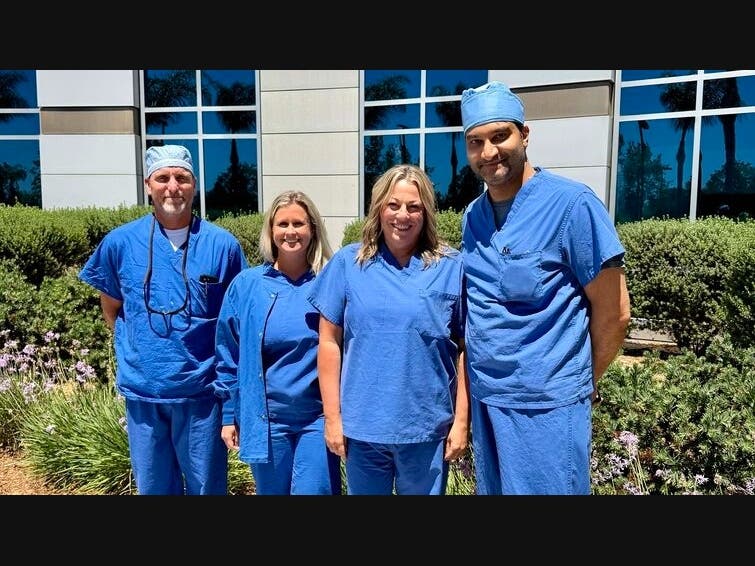
MURRIETA, CA — A major milestone in cardiovascular innovation was achieved this week in the first successful Southwest Riverside County UNICORN heart procedure, Loma Linda University Medical Center – Murrieta announced. The hospital offers new hope for patients with limited treatment options, according to a spokesperson who explained the procedure.
It's short for Undermining Iatrogenic Coronary Obstruction with Radiofrequency Needle—the UNICORN procedure is a highly specialized, minimally invasive technique designed to support patients undergoing a complex valve-in-valve transcatheter aortic valve replacement.
"This approach is particularly beneficial for patients whose prior valve replacement poses a high risk of coronary artery obstruction during repeat procedures," according to hospital spokesperson Ansel Oliver.
Find out what's happening in Murrietafor free with the latest updates from Patch.
"Physicians (performing the procedure) utilize a precise radiofrequency wire to modify the leaflets of a previously implanted surgical valve, creating a controlled pathway for placement of a new valve. This modification allows the newly implanted valve to safely secure the existing leaflets against the artery wall, preventing blockage while maintaining coronary blood flow. The entire procedure is performed under advanced imaging guidance, ensuring precision and patient safety," Oliver said. "As the use of minimally invasive valve therapies such as TAVR continues to grow, so does the need for innovative solutions to address long-term valve durability. While TAVR valves typically last 10 to 12 years, many patients previously faced limited or no options for further intervention once these valves began to fail."
Dr. Niraj Parekh, MD, an interventional cardiologist and medical director of the Heart & Vascular Center at LLUMC–Murrieta, discussed the process.
Find out what's happening in Murrietafor free with the latest updates from Patch.
“The more we offer TAVR and other types of surgical valves, the more there’s going to be a need for newer therapies like UNICORN,” Parekh said. “This treatment has the potential to help a significant number of patients who previously had no viable options.”
So, how is the patient doing now?
"The first patient treated at LLUMC–Murrieta had previously been evaluated by two other healthcare facilities and was told no further interventions were possible," Oliver said.
Following the successful procedure, the patient is recovering well and reporting significant improvement.
The successful implementation of the UNICORN procedure underscores LLUMC–Murrieta’s continued leadership in advanced structural heart therapies, according to the release. As the region’s comprehensive Heart & Vascular Center, the program offers a full spectrum of minimally invasive interventions, including TAVR and other complex valve procedures, delivered by a multidisciplinary team of experts.
Elisa Papell, MSN, RN, Director of Cardiovascular Service Line, described UNICORN patient care.
“Our commitment is to ensure patients in our community have access to the most advanced, life-saving cardiovascular treatments, close to home,” Papell said. “This milestone represents our continued investment in innovation, clinical excellence, and compassionate, patient-centered care.”
To learn more, visit the hospital's website online.
Get more local news delivered straight to your inbox. Sign up for free Patch newsletters and alerts.