Business & Tech
Greg Cole Works the Back and the Front of the House
Q&A with the genial Napa chef/restauratueur.
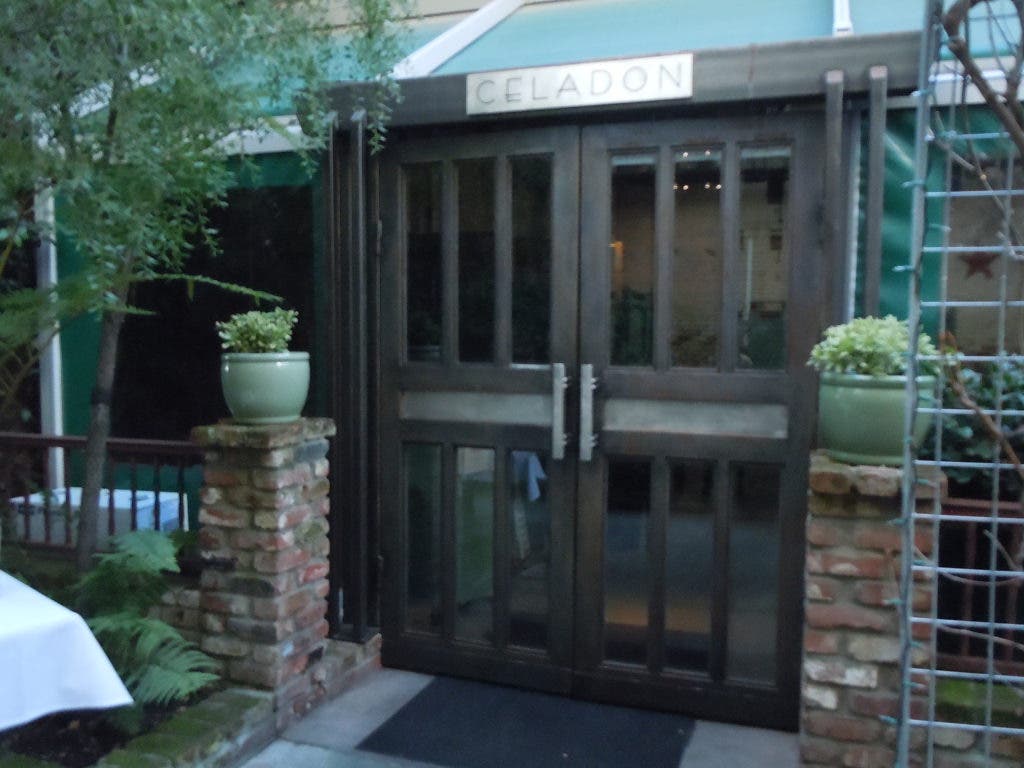


In 1996, Greg Cole opened in an obscure, hard-to-find location. But diners found him anyway. In 2000 he founded Cole’s Chop House, a “Classic American Steak House.” I sat down with Greg at Celadon’s current location in the historic Napa Mill next to the , and talked about his varied roles as owner, executive chef, wine buyer, mediator and yes, bus boy.
Julie: What do you want customers to experience when they walk into Celadon?
Greg: From the beginning I’ve wanted Celadon to be a neighborhood restaurant that overachieves. It’s what I call “global comfort food”.
Find out what's happening in Napa Valleyfor free with the latest updates from Patch.
Julie: It seems like you have a dedicated local clientele.
Greg: It started when we first opened up. You almost had to be a local to find the location.
Find out what's happening in Napa Valleyfor free with the latest updates from Patch.
Julie: I remember. It was a hidden gem.
Greg: A hole in the wall. (laughs) Back then, we were the only game in town. People used to stand in line to get in because we didn’t take reservations.
Julie: You were a bit of a pioneer in Napa.
Greg: I had ideas and skills, but no money. People thought if you were going to do this kind of restaurant you should be in St. Helena or Yountville. But Napa was affordable. Low-overhead Napa, I used to call it.
Julie: Not anymore.
Greg: No, not anymore.
Julie: So now that you’re established and easy to find, what is your role?
Greg: I think as chef-owner, you can’t just be strong in the kitchen, you have to understand what’s going on out front. You can have this dynamic where it’s the waiters against the cooks, the cooks against the waiters. I know what the cooks are going through and I know what the waiters are going through.
Julie: You’re a liaison of sorts.
Greg: That’s the idea. There are some days when we’re all walking around bumping into each other and there are other days when it’s all good.
Julie: Let’s talk about Cole’s. It must have been a big undertaking compared to the founding of Celadon.
Greg: When we first opened Cole’s, it was a struggle. I had a Gibson Explorer guitar, and I had to sell it to make payroll.
Julie: That must have been painful.
Greg: There were days like that.
Julie: Do you spend more time here or at Cole’s?
Greg: They’re both my babies, but the food at Celadon is more interesting to me. Cole’s has among the best New York steaks in the world. But once you cook a couple hundred New York steaks medium rare, you’ve done that.
Julie: How are the two restaurants different when it comes to the front of the house ambience?
Greg: At Celadon we try to be slightly more casual and the price point is lower. With professional service, of course. You still need your soup spoon when you have soup. At Cole’s, it’s more formal and we have a full-time wine director.
Julie: What would you do if you weren’t a chef and restaurant owner?
Greg: At one point I had burned out on the restaurant chef thing and thought I wanted to be a winemaker. I didn’t have any experience, so I went to Robert Sinskey and said, “I’ll cook for you if you let me drag hoses and wash barrels.” I was there for six years.
Julie: So how did you end up back in the restaurant business?
Greg: Well, I’m not really a science guy and there’s a lot of applied science in winemaking.
Julie: Isn’t there applied science in food?
Greg: There is, but if you mess up a soup it’s one thing, but in winemaking, if the sterile filtration goes bad, it’s a problem.
Julie: But now you get to create great wine lists.
Greg: Yes, and we try to support the local wine industry, but you can’t support everybody. The pie is only so big, but at least we have two pies.