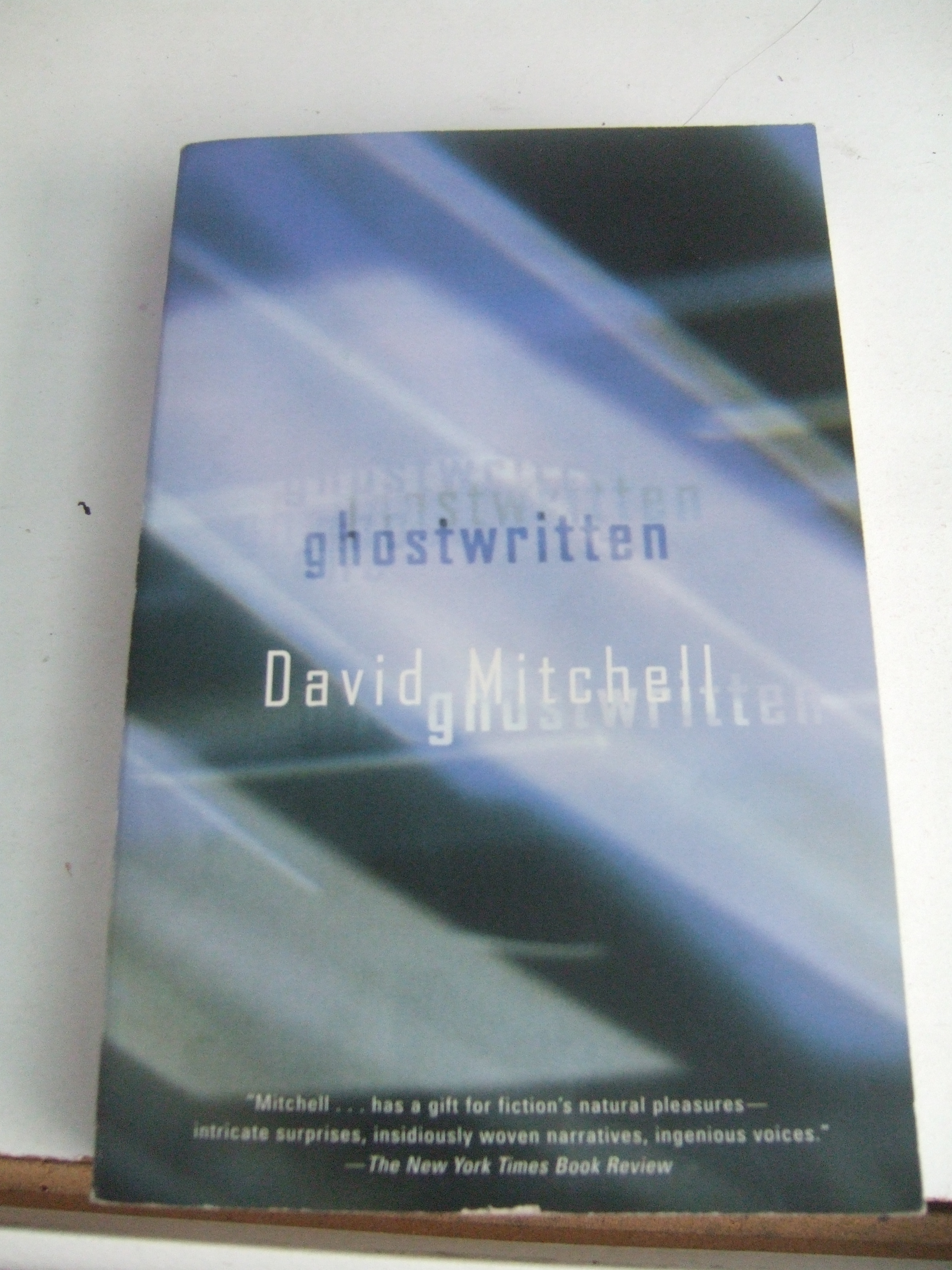
English author David Mitchell has written and published five novels over the course of the past 14 years. He is well respected in his native England, commonly hailed as a genius for his unique way of storytelling. Within the past year, he even received the book-to-screen treatment when his 2004 novel, "Cloud Atlas", was adapted for film.
Despite hearing the polarizing results of this particular film adaptation, I was interested in the story, which is why I took the liberty of beginning to explore his work. However, the first book I read by Mitchell was not Cloud Atlas. Instead, I began at the beginning of his days as a published author by reading his debut novel, "Ghostwritten."
Originally published in 1999, "Ghostwritten" conveys stories of the human experience, by various means of narrations, in a wide circumstance of situations, in countries and cities all over the world. From a deranged member of a terrorist cult in Okinawa, to a noncorpum who goes from host to host in search of its identity in Mongolia; from a drummer/ghostwriter in London, to a New York radio DJ who speaks with the mysterious “Zookeeper” while on the air, the book follows these range of narrators in the lives they lead and the obstacles they encounter.
Find out what's happening in Newarkfor free with the latest updates from Patch.
For anyone who is familiar with Mitchell’s work, it’s understandable that while "Ghostwritten" is certainly a less complex structured story than the famed "Cloud Atlas," that doesn’t mean it’s any less complex as a story in general. In fact, sometimes it truly was difficult to keep up.
Take in the case of the “Holy Mountain” chapter for instance, where there would be time jumps that would take place when I would least suspect it and it was never really heavily indicated otherwise. Another example can be the “Night Train” section where it’s only speaking voices throughout the entire thing, thus taking a while to figure out the identities of who’s speaking and when.
Find out what's happening in Newarkfor free with the latest updates from Patch.
Also, while it may seem a bit odd to have nine stories intertwined into one book, it’s can also be indicated as a fascinating way of storytelling. When reading the book, it’s shown that they’re all connected somehow despite not having anything in common beyond that, and within time, it becomes evident as to just how. It’s with that, that makes it evident on just how the late author Thornton Wilder has had an influence on Mitchell’s writing.
It’s certainly not like any book I’ve ever read and now that I have, I’m glad I did. Once emerged into how the book flows, it really has fantastic narratives to share, all written in a really unique way, all with their own messages of sort to take away from. It’s like seeing through the eyes of the noncorpum in the “Mongolia” section; you’re just constantly shifting from one perspective to the next, and what couldn’t make for a better reading than that?
It’s books like "Ghostwritten" that I wish were more heavily read here in the United States. They make for a different kind of reading experience that’s as refreshing as a gust of fresh air. Don’t let the numerous storylines scare you away, for it’s a novel that is definitely worth a chance. After all, as character Luisa Rey says to Bat Segundo in the “Night Train” section, “The human world is made of stories, not people.”