Health & Fitness
'Worst Variant Yet': Bay Area COVID Surge
New omicron variants are driving up COVID-19 hospital admissions and deaths in Northern California. What to know.


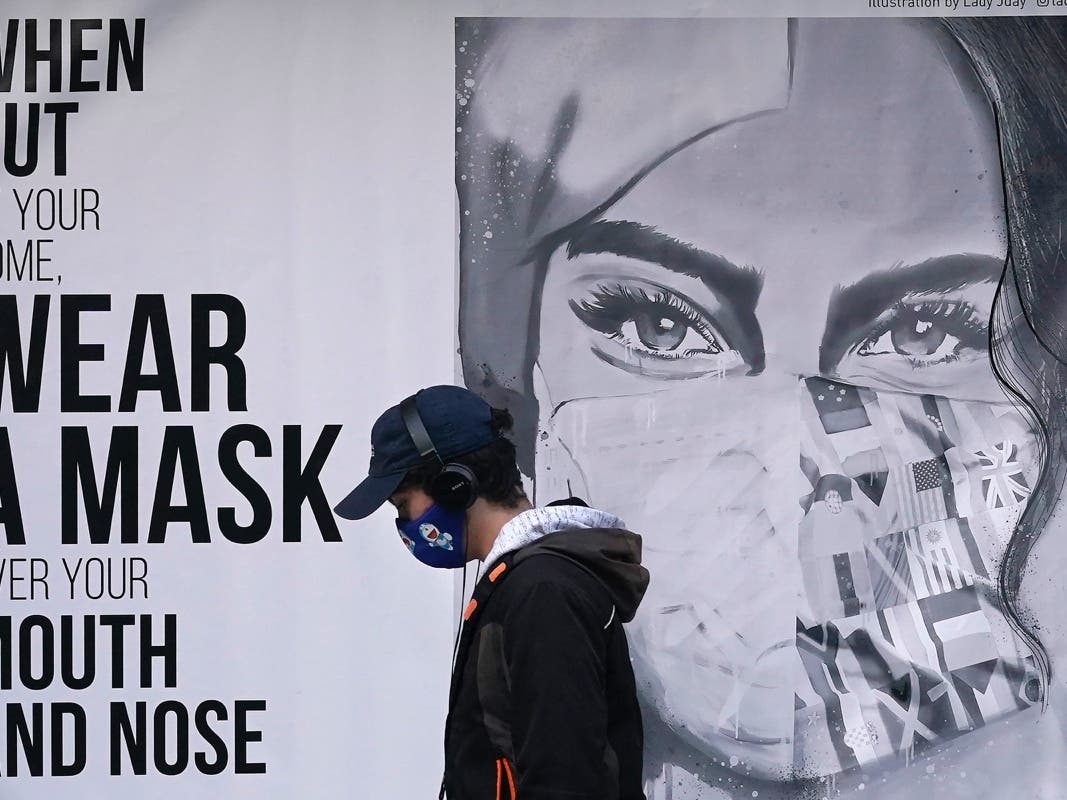
SAN FRANCISCO, CA — The newest COVID-19 omicron variants have befallen Northern California and some experts are saying it's a little too late for warnings.
"It’s well past the time when the warning could have been put out there,” said Dr. Eric Topol, head of the Scripps Research Translational Institute in La Jolla, who has dubbed BA.5 "the worst variant yet."
The highly transmissible BA.5 variant now accounts for 65 percent of cases in the United States with its cousin BA.4 contributing another 16 percent. The variants have shown a remarkable ability to sidestep the previous defenses of infection and vaccination.
Find out what's happening in Novatofor free with the latest updates from Patch.
The two contagious mutants have been surging globally for weeks, experts said. Yet many Californians have resumed summer gatherings and travel, tossing aside masks and ignoring booster shots. Courts have blocked federal mask and vaccine mandates, tying the hands of U.S. officials.
Across the Bay Area, case numbers have been rising steadily, with the highest concentration of cases and deaths in Santa Clara County, according to the San Francisco Chronicle. And the number of people hospitalized with COVID-19 in the Bay Area nearly doubled from April to May, the newspaper reported.
Find out what's happening in Novatofor free with the latest updates from Patch.
In California, the positivity rate has risen sharply to 16.1 percent, according to state data released Wednesday. That's up from 8.9 percent on June 7.
On Wednesday, there were 4,277 California patients hospitalized with the virus and 453 patients being treated in intensive care units, according to the state.
In the Bay Area, the subvariants, along with BA.2.75 have shown up in recent weeks. Seven cases of BA2.75 have been detected nationwide, with two found in the Bay Area.
“We don’t sequence all the samples and there is a lag between when you identify a variant and when someone actually has it first diagnosed,” UCSF infectious disease expert Peter Chin-Hong told the SF Chronicle in an email. “What this means, including the fact that it is in wastewater, suggests that there are likely many more cases in California and in the U.S. in general.”
Chin-Hong told the newspaper that the variant BA.2.75 "can be another escape artist…like BA.2 and cause another round of reinfections and infections for first timers," he said.
Coronavirus is not killing nearly as many as it was last fall and winter, and experts do not expect death to reach those levels again anytime soon. But hundreds of daily deaths for a summertime respiratory illness would normally be jaw-dropping, said Andrew Noymer, a public health professor at the University of California, Irvine. He noted that in Orange County, California, 46 people died of COVID-19 in June.
"That would be all hands on deck," Noymer said. "People would be like, 'There’s this crazy new flu that’s killing people in June.'"
Experts say precautions are not being taken anymore. Vaccinations, including booster shots for those eligible, lower the risk of hospitalization and death — even against the latest variants. But less than half of all eligible U.S. adults have gotten a single booster shot, and only about 1 in 4 Americans age 50 and older who are eligible for a second booster have received one.
Noymer said if he were in charge of the nation's COVID response he would level with the American people in an effort to get their attention in this third year of the pandemic. He would tell Americans to take it seriously, mask indoors and understand the risk of death. “Until we get better vaccines, there’s going to be a new normal of a disease that kills over 100,000 Americans a year and impacts life expectancy,” Noymer said.
That message probably wouldn’t fly for political reasons, Noymer acknowledged.
As of Wednesday, at 5:30 p.m., officials have confirmed the following number of cases around the greater Bay Area region:
Alameda County: 320,225 cases, 1,933 deaths (319,489 cases, 1,932 deaths on Tuesday) (Totals include Berkeley Health Department data).
Contra Costa County: 230,861 cases, 1,355 deaths (229,926 cases, 1,355 deaths on Tuesday).
Marin County: 41,525 cases, 284 deaths (41,445 cases, 284 deaths on Tuesday) (Totals include San Quentin State Prison).
Monterey County: 88,772 cases, 762 deaths (88,772 cases, 762 deaths on Tuesday).
Napa County: 30,061 cases, 141 deaths (30,061 cases, 141 deaths on Tuesday).
San Francisco County: 160,611 cases, 924 deaths (160,212 cases, 924 deaths on Tuesday).
San Joaquin County: 184,005 cases, 2,257 deaths (183,844 cases, 2,257 deaths on Tuesday).
San Mateo County: 155,691 cases, 776 deaths (155,691 cases, 776 deaths on Tuesday).
Santa Clara County: 394,974 cases, 2,345 deaths (393,774 cases, 2,345 deaths on Tuesday).
Santa Cruz County: 57,163 cases, 267 deaths (57,163 cases, 267 deaths on Tuesday).
Solano County: 100,886 cases, 427 deaths (100,886 cases, 427 deaths on Tuesday).
Sonoma County: 99,570 cases, 500 deaths (99,428 cases, 500 deaths on Tuesday).
The Associated Press, Bay City News and City News Service contributed to this report.
Get more local news delivered straight to your inbox. Sign up for free Patch newsletters and alerts.