Rancho Mirage, CA|Featured Classified|Announcement|

Your Chronic Knee Pain May Be Osteoarthritis - How The "G.A.E." Treatment Can Help
Arthritis is one of the most common and disabling chronic conditions in the United States. According to the Centers for Disease Control and Prevention, more than 58 million American adults are living with arthritis, making it a leading cause of chronic pain and reduced mobility.
“Osteoarthritis of the knee is one of the most common forms of arthritis, particularly in people over the age of 40,” says Dr. Pushpinder Sivia, vascular surgeon at Empire Vein & Vascular Specialists. “It develops as cartilage within the joint breaks down over time, leading to pain, stiffness, and inflammation that can affect daily life.”
Understanding Knee Osteoarthritis
Knee osteoarthritis develops over time as cartilage deteriorates. Without this protective cushioning, bones begin to rub against each other, contributing to inflammation, pain, and stiffness. The condition often affects adults over 40, as well as individuals with physically demanding jobs or active lifestyles.
Common symptoms include:
Persistent or worsening knee pain
Stiffness, especially after rest or in the morning
Swelling and tenderness around the joint
A grinding sensation or reduced range of motion
Difficulty walking, standing, climbing stairs, or exercising
As the condition progresses, it may limit everyday activities and, in some cases, interfere with a person’s ability to work.
Limitations of Traditional Treatments
Initial treatment for knee OA typically includes lifestyle changes, physical therapy, and medications to manage pain and inflammation.
If these approaches are not sufficient, injectable therapies—such as corticosteroids or hyaluronic acid (“gel” injections)—may be used. These treatments can provide temporary relief, though their effects diminish over time.
For more advanced osteoarthritis, knee replacement surgery may be considered. However, surgery involves a longer recovery period and potential risks.
“Many patients look for options that may help manage symptoms before considering surgery,” says Dr. Sivia.
A Minimally Invasive Option: Genicular Artery Embolization (G.A.E.)
Genicular Artery Embolization (G.A.E.) is a minimally invasive procedure used to address inflammation associated with knee osteoarthritis.
“G.A.E. targets the small blood vessels that contribute to inflammation in the knee joint,” explains Dr. Sivia.
How G.A.E. Works
G.A.E. is performed in an outpatient setting and typically takes less than an hour.
A small, pinhole-sized opening is made, usually in the upper thigh
A thin catheter is guided through the blood vessels using imaging technology
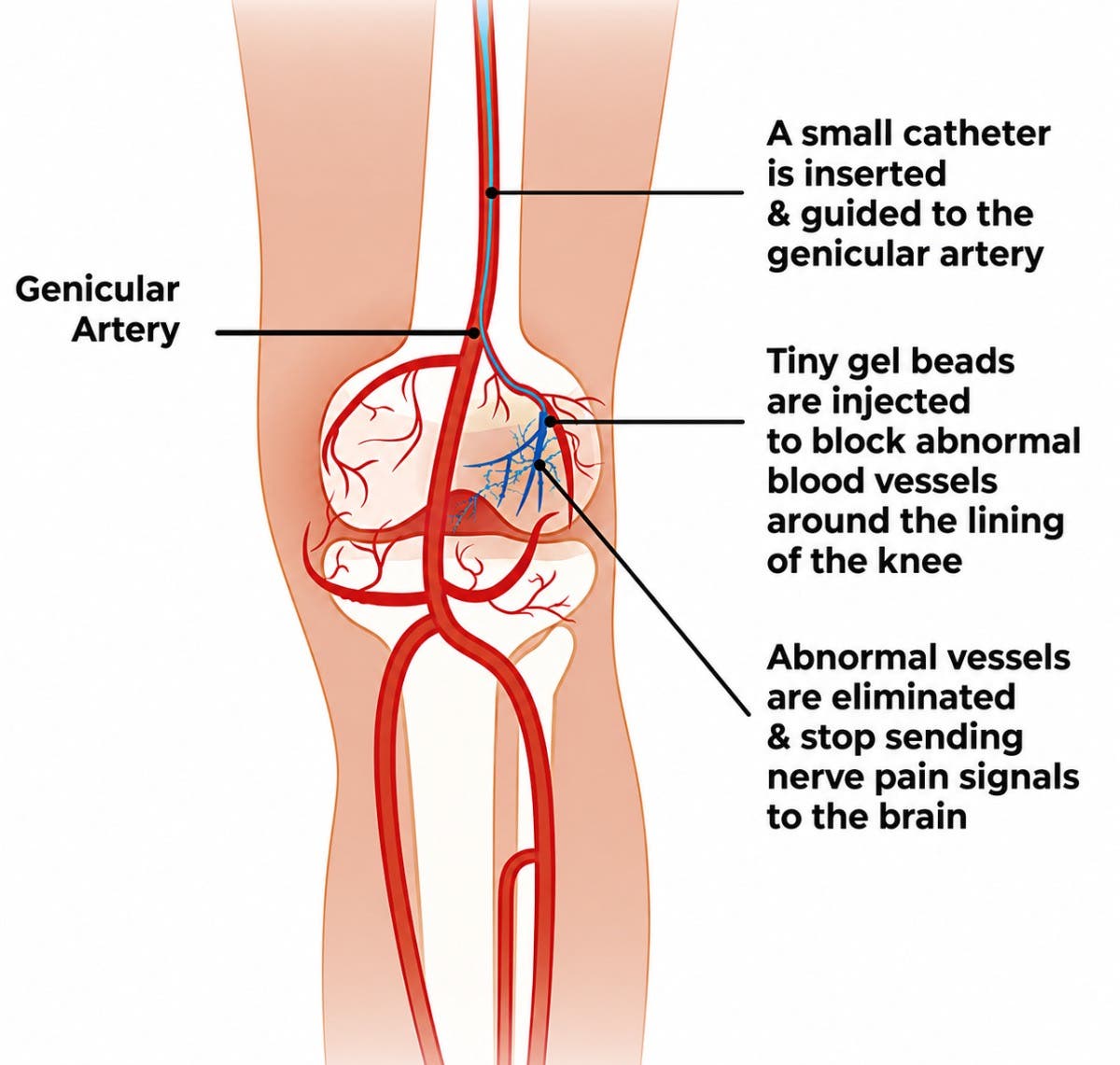
The catheter is directed to arteries supplying the inflamed joint lining
Tiny particles are released to reduce excess blood flow in these areas
By decreasing blood flow to inflamed tissue, the procedure helps reduce inflammation, which may lead to improvements in pain and joint function.
“G.A.E. allows us to target the underlying inflammation that is driving knee pain,” explains Dr. Sivia.
Advantages Over Surgery and Injections
Minimally invasive: No large incisions or stitches
Outpatient procedure: Patients typically go home the same day
Faster recovery: Most resume normal activities within days
Reduced reliance on medications or repeated injections
Potential to delay or avoid knee replacement surgery
A Patient’s Experience
For Silvia, a 54-year-old truck driver and Zumba instructor, knee osteoarthritis gradually became more limiting. What began as mild discomfort progressed into significant pain in both knees. Over time, she stopped teaching classes, and long hours of driving became increasingly difficult.
Silvia tried multiple treatments, including pain medications, gel injections and even stem cell therapy. Despite these efforts her condition continued to worsen.
Faced with the possibility of undergoing double knee replacement surgery, Silvia began searching for alternatives. She then learned about G.A.E. at Empire Vein & Vascular Specialists and was treated by Dr. Sivia.
The results, she says, have been life-changing. Silvia describes her life as being “given back” to her. She has returned to dancing with her husband and is once again able to move freely—without the constant pain that once limited her daily activities.
For individuals experiencing persistent knee pain, understanding available options—and discussing them with a qualified specialist—can be an important step in managing the condition.
For more information call 1-800-Kneecare or visit www.empirevein.com
Empire Vein & Vascular Specialists are located in La Quinta, Rancho Mirage, Palm Springs, Riverside, Ontario and Victorville.