Health & Fitness
Traffic & Parking No Longer Considerations for High Density Development
High density housing infill projects near transit can now ignore, and not have to mitigate, impacts to traffic and parking.
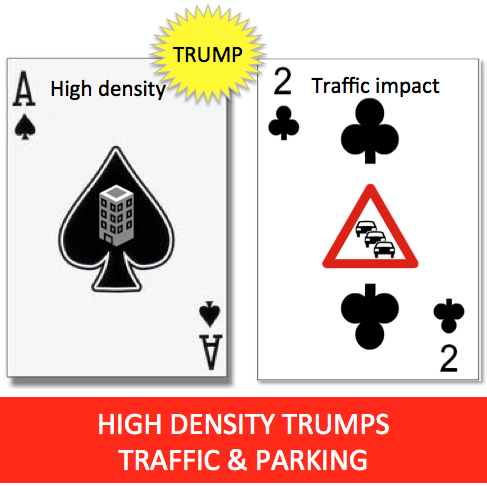
Yes, you read that right. We face the proposition of high density housing units being built across the peninsular - a reasonable person might hope that such projects take traffic and parking impact into consideration. This means either not building if the traffic and parking impact is significant, or requiring improvements to mitigate this impact.
However, the California State Senate has in it's wisdom deemed in Senate Bill 743 the following:
65088.4(b) "Notwithstanding any other provision of law, [traffic] level of service standards described in Section 65089 shall not apply to the streets and highways within an infill opportunity zone."
This senate bill was rushed through in September. It has been passed and enacted!
Many locations being considered for high density development already experience major traffic issues - some reaching "level of service" F (the worst grade) already.
Most cities set a target of achieving level of service D. It's as if your child came home from school with "F"s on their report card, and you said "well that doesn't matter any more"!
So if residents raise concerns "what about the traffic and the parking?" these cries of concern can now officially be dismissed.
Save the Stadium and the Builders
Senate Bill 743 was hastily passed by state senate house leader Darrell Steinberg. Steinberg receives major campaign contributions from the building and transportation industry.
He part justified SB 743 by saying that the building industry is in recession, so rules preventing development should be removed to boost the economy.
The other justification was something called "multimodal transit". The bill claims:
"promoting the development of a multimodal transportation system, and providing clean, efficient access to destinations."
I've covered before many times that transit emits far more greenhouse gases per passenger mile than cars, and the gap is only widening. Also highways provide access to 20x as many people as transit, and despite substantial investments since the 1980s per capita transit ridership has dropped in the Bay Area.
The data is stark and conclusive. But far be it from politicians and builders to let facts get in the way. They are going to flog this dead horse, and use it to justify and railroad their projects through.
What Does this Mean for Us?
What this inevitably means is that high density development will continue, and at a much faster rate thanks to Plan Bay Area's entirely remarkable population growth estimates and obstacles such as traffic and parking impact removed.
More Information
For an excellent overview of Senate Bill 743 and it's implications please read this article by Garrett Colli in the California Land use Blog:
Last-Minute CEQA Bill Brings Significant Changes for Major Infrastructure Projects and Projects within Transit Priority Areas
and here's the wording of the bill itself:
Senate Bill 743