Politics & Government
Rancho Palos Verdes Voter Guide 2026: What's On The Ballot, Voting, & More
From where to cast an early ballot to deciding on local and statewide candidates, here's your Rancho Palos Verdes voter guide.


RANCHO PALOS VERDES, CA — Election Day is Nov. 3, and Rancho Palos Verdes voters face decisions about the city's future as six candidates compete for three City Council seats and a proposed hotel tax increase promises additional revenue for public safety, infrastructure and disaster preparedness.
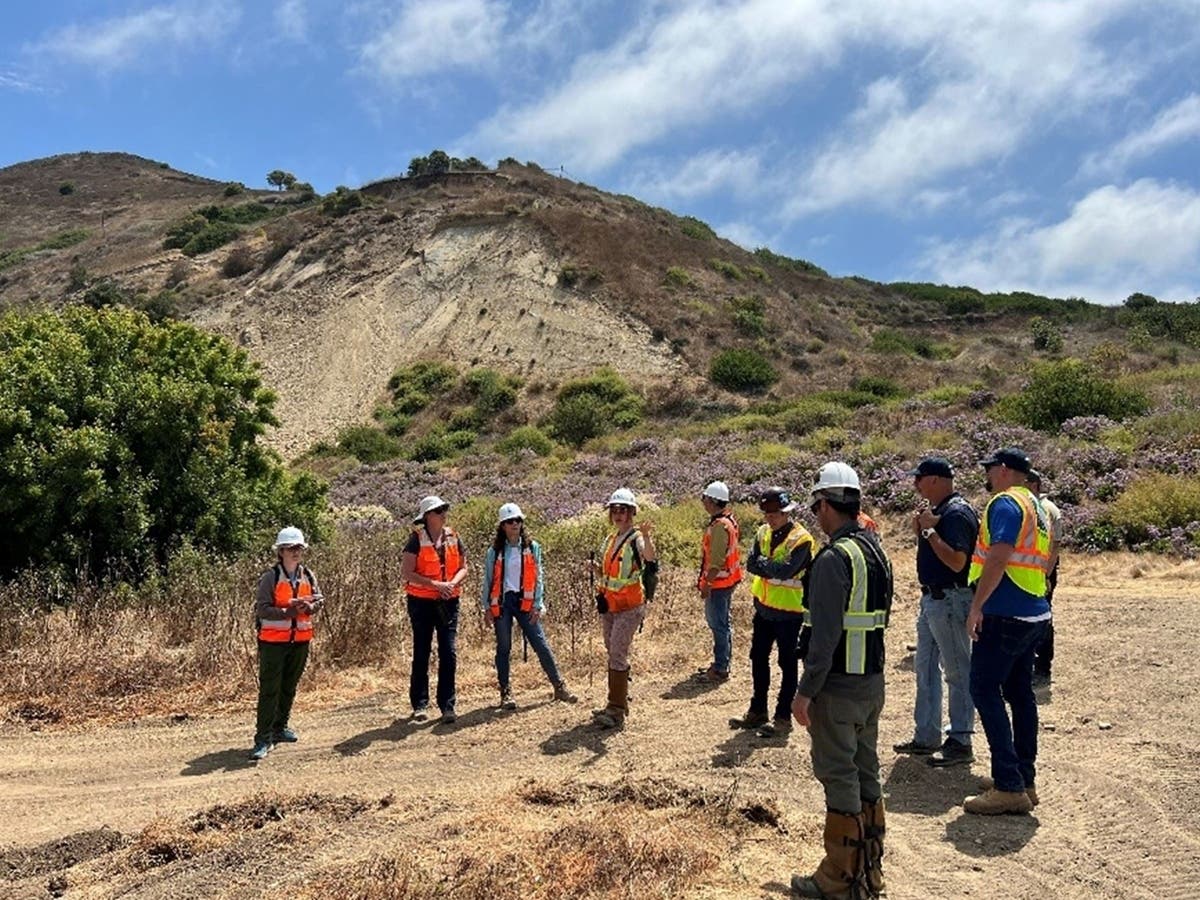
The election comes as the city continues responding to the Portuguese Bend landslide complex, which has placed significant pressure on municipal finances and infrastructure. Voters will decide whether to increase the city's transient occupancy tax from 10 percent to 13 percent, a proposal officials estimate would generate approximately $2.2 million annually.
Residents will also elect members of the Palos Verdes Peninsula Unified School District Board of Education and decide congressional and state legislative contests, alongside two Los Angeles County charter amendments and 14 statewide propositions.
Find out what's happening in Palos Verdesfor free with the latest updates from Patch.
California Secretary of State Shirley Weber encouraged residents to return their ballots early.
“Voting in California is secure, reliable, and part of California's tradition of encouraging participation in our democracy,” Weber said. “I encourage Californians to return their completed ballot as soon as possible, using one of several safe and secure options available to them. Fulfill your civic duty early – vote now, and have your voice heard.”
Find out what's happening in Palos Verdesfor free with the latest updates from Patch.
Where And When To Vote In Rancho Palos Verdes
Los Angeles County began mailing vote-by-mail ballots in early October. Every active registered voter automatically receives a ballot, which can be returned by mail, deposited in an official ballot drop box or delivered to a participating Vote Center.
Ballots returned by mail must be postmarked by Nov. 3 and received by county election officials no later than Nov. 10. Ballots deposited in official drop boxes must be returned by 8 p.m. on Election Day.
Select Los Angeles County Vote Centers open Oct. 24, with all Vote Centers scheduled to open Oct. 31. In-person voting is available from 10 a.m. to 7 p.m. through Nov. 2 and from 7 a.m. to 8 p.m. on Election Day.
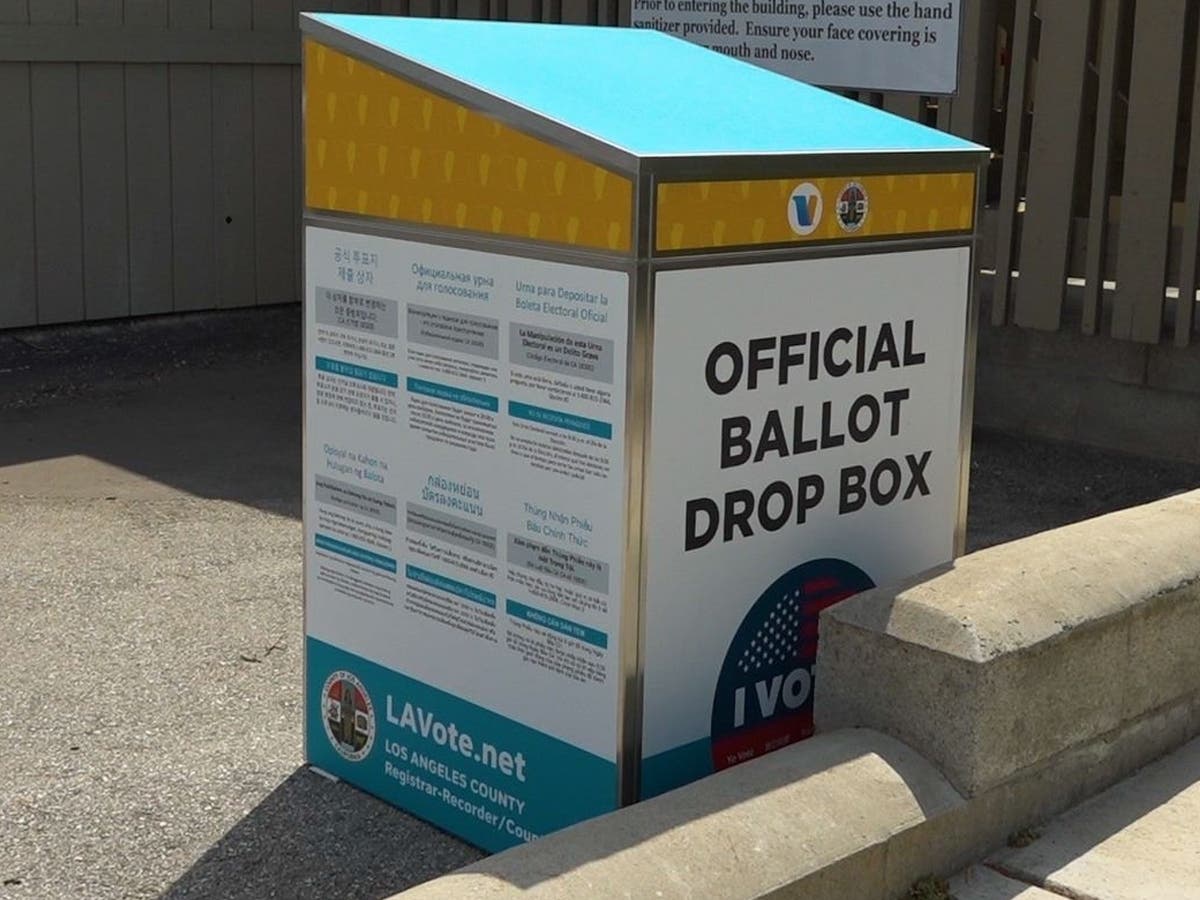
Rancho Palos Verdes has a permanent ballot drop box outside City Hall, near the flagpole, at 30940 Hawthorne Blvd. The city says the box became available Oct. 6.
Residents can locate additional Vote Centers and official ballot drop boxes through the Los Angeles County Registrar-Recorder/County Clerk. The state also provides an early voting location search.
The regular voter registration deadline is Oct. 19. Eligible residents who miss that deadline can use California's conditional voter registration process to register and cast a ballot through Election Day.
The city's official election website provides local election information, while the Los Angeles County election portal allows voters to access personalized sample ballots, check registration information and track mailed ballots.
Races To Watch In Rancho Palos Verdes
Rancho Palos Verdes City Council
Six candidates are competing for three seats on the Rancho Palos Verdes City Council, with no incumbents seeking re-election. According to the city's official candidate list, the candidates, in ballot order, are:
- David Chura
- Michele Patrick Carbone
- John Cruikshank
- Matthew Brach
- Jessica Patton Vlaco
- Tina Funiciello
Council members serve four-year terms, and the mayor is selected by the council on a rotating basis rather than elected separately by voters. The incoming council will face decisions involving landslide mitigation, disaster preparedness, road maintenance, infrastructure spending and the city's long-term financial stability.
The city has posted information about the candidates, campaign filings and recorded candidate forums on its municipal election webpage.
Palos Verdes Peninsula Unified School District
Five candidates are competing for three seats on the Palos Verdes Peninsula Unified School District Board of Education.
The candidates are:
- Louis Matthew Harley
- Liz Peterson
- Allyson Lehrer
- Jeremy Vanderhal
- Paul Vidal
School board members oversee district policy, budgets, educational priorities and the selection and evaluation of the superintendent. Voters can review their individual contests through the Los Angeles County interactive sample ballot.
U.S. House Of Representatives, 36th Congressional District
- Ted Lieu, Democrat, incumbent
- Houston Brignano, Republican
California State Senate, 24th Senate District
- John M. Erickson, Democrat
- Brian Goldsmith, Democrat
The candidates are competing to succeed Democratic state Sen. Ben Allen, who is running for California insurance commissioner.
California State Assembly, 66th Assembly District
- Paul Seo, Democrat
- Sara Deen, Democrat
Seo, the mayor of Rancho Palos Verdes, and Deen, a Palos Verdes Peninsula Unified School District board member, are competing to succeed term-limited Assemblymember Al Muratsuchi.
Rancho Palos Verdes Measure RS: Hotel Tax Increase
Rancho Palos Verdes voters will decide Measure RS, the city's Public Safety/City Services Measure, which would increase the transient occupancy tax paid by hotel and motel guests from 10 percent to 13 percent.
According to the city's official Measure RS information page, the increase is projected to generate approximately $2.2 million annually for municipal services, including wildfire and disaster preparedness, road and storm drain maintenance, landslide response and other city operations.
City officials estimate Rancho Palos Verdes will have spent approximately $75 million of its own funds responding to landslides over a three-and-a-half-year period ending in June 2027. Measure RS would establish a locally controlled revenue source and require spending disclosures and independent annual financial and performance audits. The tax would remain in effect until ended by voters.
A yes vote would increase the city's hotel and motel tax to 13 percent. A no vote would leave the existing 10 percent rate unchanged. The City Council unanimously placed the measure on the ballot and subsequently voted to support it.
Los Angeles County Ballot Measures
Two proposed amendments to the Los Angeles County Charter will also appear on Rancho Palos Verdes ballots.
Measure A: Public Safety Labor Disputes
Measure A would establish a binding arbitration process for certain labor disputes involving county public safety employees, including firefighters and sheriff's personnel.
It would also prohibit strikes by specified county employees, including district attorney investigators, medical examiner personnel, lifeguards and certain civilian public safety workers. The measure would reaffirm existing requirements for good-faith labor negotiations and would require a simple majority to pass.
Measure E: County Ethics And Community Investment
Measure E would revise the county charter to provide greater independence and structure for the Los Angeles County Ethics Commission, Office of Ethics Compliance and ethics compliance officer. The changes would address appointment procedures, qualifications, terms, duties and responsibilities, while continuing the county's commitment to community investment and alternatives to incarceration.
A simple majority is required for approval. Voters can review the full ballot language, fiscal impact statements and impartial analyses for both measures through the Los Angeles County election information portal.
Key Statewide Races
Millions of Californians will vote in November to decide who will occupy the governor's office and several other statewide positions.
Governor
Democrat Xavier Becerra, a former U.S. secretary of health and human services, faces Republican Steve Hilton, a former Fox News commentator, in the race to succeed term-limited Gov. Gavin Newsom. The contest follows a crowded June primary that saw former Rep. Eric Swalwell leave the race amid sexual assault allegations.
California has not elected a Republican to statewide office since 2006, when Arnold Schwarzenegger won another term as governor. Registered Democrats substantially outnumber Republicans, although polling has also found widespread voter concerns about the economy and the state's direction. Hilton has made affordability a central campaign issue, including a proposal to reduce gasoline prices to $3 a gallon. Becerra has emphasized his experience in state and federal government.
“I've never said it's going to be easy,” Hilton told The Associated Press. “It's obviously an uphill battle. I still see this as a winnable race.”
Read more: 'Creepy, Weird, Disturbing' Campaign Ad By Candidate For CA Governor Draws GOP Condemnation
Attorney General
Incumbent Attorney General Rob Bonta, a Democrat and former state lawmaker, faces Republican Michael E. Gates, a deputy U.S. attorney and former Huntington Beach city attorney. Bonta was appointed attorney general after Becerra joined President Joe Biden's administration and later won election to a full term.
The attorney general oversees California's Department of Justice, directs state law enforcement efforts and represents the state in legal proceedings.
Insurance Commissioner
Democratic state Sen. Ben Allen faces Republican attorney Jane Kim in the contest to lead California's Department of Insurance.
The office regulates an insurance industry facing mounting pressure from wildfire-related losses, rising premiums and the withdrawal of major insurers from some markets.
Allen has emphasized stabilizing the insurance market, protecting policyholders and addressing problems involving California's FAIR Plan. Kim has called for stronger oversight of insurers that deny claims following disasters.
Related: Santa Monica Sen. Ben Allen Picks Up Major Endorsement In Insurance Race
Secretary Of State
Incumbent Democrat Shirley Weber faces Republican Orange County Supervisor Donald P. Wagner. Weber, who was appointed after Alex Padilla became a U.S. senator, has overseen California's universal vote-by-mail system and emphasized election security.
Wagner has supported voter identification requirements and greater cooperation with federal election investigations. The secretary of state oversees California's elections, business filings and other government records.
Read more: The Race For Secretary Of State
Controller
Incumbent Democrat Malia M. Cohen faces Republican Herb W. Morgan. The controller serves as California's chief fiscal officer, overseeing state accounting, financial reporting and certain auditing functions.
Read more: The Race For CA Controller
State Treasurer
Democratic Lt. Gov. Eleni Kounalakis faces Republican Jennifer Hawks in the contest to oversee California's investments and debt financing. Kounalakis is seeking to exchange offices with State Treasurer Fiona Ma, who is running for lieutenant governor.
Read more: The Race For CA Treasurer
Lieutenant Governor
Democratic State Treasurer Fiona Ma faces Republican Gloria Romero, a former state senator. The lieutenant governor serves as acting governor when necessary and sits on several state boards and commissions.
Read more: The Race For CA Lieutenant Governor
California Ballot Propositions
Voters will decide 14 statewide propositions addressing housing, taxation, elections, medical research, health care and environmental regulations.
Proposition 1: Affordable Housing Bonds
Proposition 1 would authorize California to issue $11.25 billion in bonds for affordable housing, homeownership assistance and veterans' housing programs. Of that amount, $10 billion would support affordable rental housing and homeownership programs, while another $1.25 billion would fund housing assistance for veterans.
The proposal is expected to help finance approximately 40,000 new homes or apartments while providing homeownership assistance to another 40,000 people.
Read more: CA Proposition 1: Bonds For Housing Affordability Programs
Proposition 2: State Rainy Day Fund
Proposition 2 would amend California's Constitution to strengthen the state's rainy day fund, allowing additional savings during periods of strong revenues.
The measure would increase the maximum size of the Budget Stabilization Account and give lawmakers greater flexibility to manage reserves and debt. Supporters say the changes would help California prepare for economic downturns.
Read more: CA Proposition 2: Amendment To Increase The State's Rainy Day Fund
Proposition 3: Income Taxes On High Earners
California's higher income tax rates on high earners were established under Proposition 30 in 2012 and extended through Proposition 55 in 2016. Those provisions are scheduled to expire in 2031. Proposition 3 would make them permanent, continuing the state's progressive income tax structure.
Read more: CA Proposition 3: Makes Progressive Income Tax Rates Permanent
Proposition 4: Public Campaign Financing
Proposition 4 would repeal a prohibition dating to 1988 on using taxpayer funds to finance campaigns for state and most local government offices. The measure would allow state and local governments to establish public campaign financing programs under specified restrictions.
Supporters argue that public financing could help candidates without substantial personal wealth or access to wealthy donors compete for office. Opponents object to using taxpayer money to subsidize political campaigns, including those involving candidates they do not support.
Read more: CA Proposition 4: Changing The Rules On Public Campaign Donations
Proposition 5: Recall Elections
Proposition 5 would change the process for replacing state officials removed through recall elections.
Instead of choosing a successor during the same election, voters would decide whether to remove the official. If the recall succeeded, the resulting vacancy would generally be filled through the procedures used for other vacancies.
Read more: CA Proposition 5: Constitutional Amendment Changing The State's Recall Process
Proposition 37: Homebuyer Loan Program
Proposition 37 would authorize up to $25 billion in bonds to support loans for qualifying middle-income homebuyers.
The proposed program would provide loans of up to 17 percent of a home's purchase price to help buyers assemble a down payment. Eligibility would extend to buyers earning up to twice their area's median income.
Read more: CA Proposition 37: Loan Program For Middle-Income Homebuyers
Proposition 38: Medical Research Bonds
Proposition 38 would authorize California to issue $8.4 billion in bonds for immunology and immunotherapy research, including studies involving cancer, Alzheimer's disease, cardiovascular disease and diabetes.
The measure would direct half the funding to the University of California, with the remainder going to eligible public and nonprofit research facilities. It would also establish requirements involving discounts for medications developed with the funding and the return of a portion of resulting revenue to the state.
Voters can review the measure in the California Secretary of State's official voter information guide.
Proposition 39: Voter Identification
Proposition 39 would amend California's Constitution to require government-issued identification for in-person voting and additional identifying information on mail-in ballots.
The measure would also require the state to verify voter registration lists, conduct regular compliance audits and adopt implementing laws.
Read more: CA Proposition 39: Voter ID Measure
Proposition 40: Billionaire Tax
Proposition 40 would impose a one-time state tax of up to 5 percent on California residents with assets exceeding $1 billion, excluding real estate and certain pension or retirement accounts.
Revenue from the labor union-backed initiative would be directed toward health care, food assistance and education programs. The proposal has attracted significant campaign spending and opposition, including competing ballot measures that could affect its implementation.
Read more: CA Proposition 40: The Billionaire Tax
Also: Billionaire Tax Explained: What You Need To Know About Prop. 40
Proposition 41: State Tax And Spending Rules
Proposition 41 would prohibit new state taxes that exclude their revenues from California's constitutional spending limit, approved by voters in 1979.
It would also require audits of programs funded by new special taxes. The measure could affect the implementation of Proposition 40, depending on the election results.
Proposition 42: Personal Property Taxes
Proposition 42 would prohibit new state taxes on certain personal property, including business interests, intellectual property and financial assets such as retirement and investment accounts. Like Proposition 41, it could affect the implementation of the proposed billionaire tax.
Read more: CA Proposition 42: Bars New Taxes On Personal Property; Could Blow Up Billionaire Tax
Proposition 43: Local Special Taxes
Proposition 43 would amend California's Constitution to increase the voter approval threshold for certain local special taxes proposed through citizen initiatives. Instead of a simple majority, those measures would require approval from two-thirds of voters.
Supporters of the change argue that higher thresholds protect taxpayers, while opponents contend that the measure would make it harder for communities to finance local services.
Read more: CA Proposition 43: Raises Threshold For Passing New Tax Ballot Measures
Proposition 44: Community Clinic Spending
Proposition 44 would require certain nonprofit community health clinics to spend at least 90 percent of their annual revenue on qualifying program services rather than administrative or other expenses.
The measure would authorize financial penalties for clinics that fail to meet the requirement, with provisions allowing penalties to be returned if a clinic subsequently complies. Money from penalties not returned would support clinic worker training, recruitment and retention.
Read more: California Prop. 44: What To Know About Community Clinic Spending Measure
Proposition 45: Environmental Reviews
Proposition 45 would change environmental review procedures under the California Environmental Quality Act, establishing deadlines and revised legal challenge procedures for certain housing, transportation and water projects.
Supporters argue that existing procedures can delay needed development. Opponents warn that shortening reviews could weaken environmental protections. A yes vote would allow eligible projects to use the new procedures, while a no vote would preserve the existing system.
Read more: CA Proposition 45: How Environmental Review Laws Turned Into Spending War
Voters can find the complete text, fiscal analyses and arguments for and against the statewide propositions in the California Secretary of State's official voter information guide.
For additional election information, including registration, voting locations and ballot tracking, visit LAVote.gov or the Rancho Palos Verdes election website.
The Associated Press contributed to this report.
Get more local news delivered straight to your inbox. Sign up for free Patch newsletters and alerts.