Community Corner
The Man Who Replaced Shrubs with Succulents
Tom Nelson has managed Grand Lake Ace Garden Center since it opened in 1992, 19 years ago, after running an exotic plant export business in Hawaii.
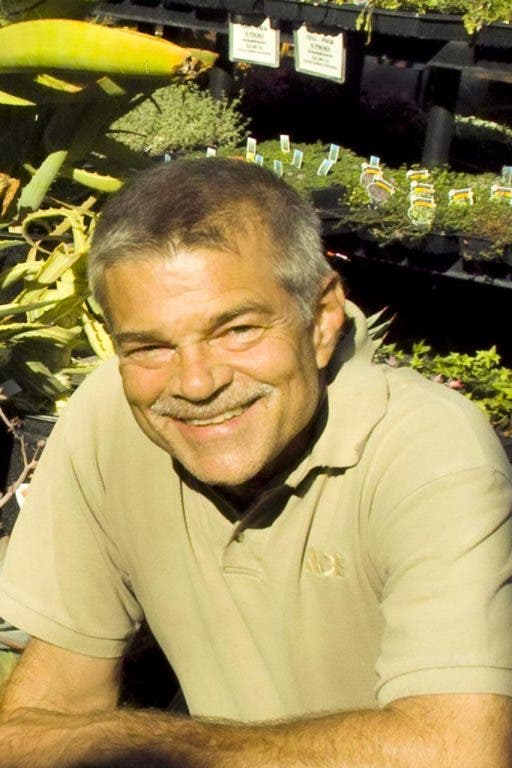
Name: Tom Nelson
Age: 55
Occupation: Ace Garden Center manager.
Find out what's happening in Piedmontfor free with the latest updates from Patch.
How did you get into working with plants?
I studied biology at University of Vermont, then came west and settled in San Diego, where I worked on my first landscape project. I was a plant person from then on.
Find out what's happening in Piedmontfor free with the latest updates from Patch.
I moved to the Big Island [of Hawaii] and bought land on the southern tip, which is arid and hot. Orchids love heat, so I built greenhouses, so I began growing them and other tropicals and exported to the East and West Coasts. I grew succulents from seeds, and continue to be amazed at their variety and colors. Some have grown to be 20 to 30 feet high. I had a business there for about eight years, and still go back every year to see how everything is doing.
What brought you to the Bay Area?
I just needed more contact—my place was so isolated, I wouldn’t see anyone for a week if I didn’t drive to town. I got lucky when I landed here. The garden center had just opened, and they were looking for a manager. There were mostly shrubs and trees being offered, evergreens. The owner gave me free reign, so I replaced most of them with landscape favorites, brought in Oakland natives, perennials—which are very popular—succulents, and the usual array of annuals. We are relatively small, so I have to make the most of our space. We have tried to expand, but we are right on the Oakland border, and it has been too complicated dealing with both cities.
How do you relate to plants?
Plants teach us patience, and if you are observant you will see that each has its own character. Over time, you can develop empathy for plants. I can walk through the nursery and see a plant 20 feet away that needs more water, more or less sun, more space. Plants do have sensations that we don’t understand very well. When you place a hyacinth bulb in a container over, but not in, water, it will sense where the water is and put out roots to reach it. A great read about plants is "The Secret Life of Plants."
Another fascinating they’ve discovered is that plants respond to the color of soil. Vegetables are more productive if there is red underneath them, like red mulch. Root vegetable leaves respond to orange on the ground. Colors put out wave lengths of light, and that is what the plants seem to respond to.
I recently discovered that aspirin is a tonic for plants. If you give it to young plants (dissolved in water), it makes them stronger and resistant to diseases. I read this in my favorite resource for new developments in plant care, the Avant Gardener, which has no web site. It is an insider’s monthly newsletter on old-fashioned paper. You can contact them at P.O. Box 489, New York, NY 10028.
What local resources do you recommend?
My bible is Sunset Western Garden Book. And then, for vegetable gardeners in the Bay Area, Pam Pierce’s book Golden Gate Gardening, is indispensable.
What’s hot right now?
This is a great time in gardens. Just keep up with watering and enjoy!
This is also the time to plant winter vegetables, like cabbage and Brussels sprouts. People are buying a lot of blueberries, the bushes do well here. Also, succulents are popular.
Basically, we live in a low water environment, so it’s always a good idea to plant drought-tolerant plants, like succulents. A great way to get started with succulents is to mix them in with other plants. Try agave and aloe, including tree aloe, giant Bird of Paradise, angel’s trumpet vine, Canna lilies and tree ferns. And palms! Bamboo can be grown in pots and there are also varieties that clump so you don’t have to worry about them popping up everywhere.
What preferences have you noticed among Piedmont landscapers?
They like white! Not too much color. Roses are popular, as is purple loropetalum.