Health & Fitness
Dining Out Survival Guide: Have A Plan
Dining out strategies so you don't gain weight.
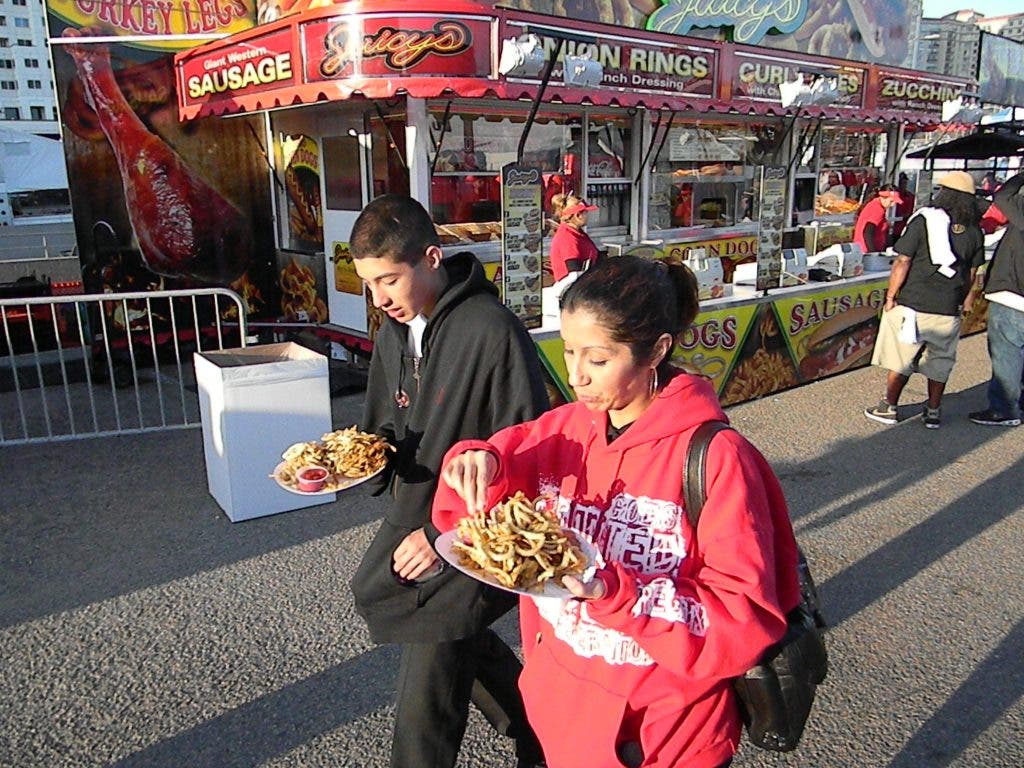
Dining out is a part of our daily lifestyle. Americans eat out nearly one out of every four meals and snacks. This can create a challenge for those people that are managing their weight. Unlike eating at home, the ability to control the type of ingredients or methods used in preparing, servings and portion control become very difficult. Often restaurant meals typically contain more calories, sodium, saturated and trans fat than meals eaten at home.
- Do you find yourself eating and drinking more while in a social setting?
- Do certain people or a particular restaurant trigger you to eat more?
- Are you eating away from home due to other obligations (i.e., work, travel, lunch meeting, meals on the run, obligations for your kids, etc.)
- Do you find it difficult to prepare meals at home due to time restraints?
- Do you lack the time to get to a grocery store?
- Are you unsure of what to cook that is healthy?
- How often do you eat out?
Dining Out
- Determine where and with whom you will eat.
- Decide ahead of time what you will order and how much of it you will eat before going to the restaurant. Order only what you will eat.
- Order first, so that you don’t get swayed by your companions’ food choices. Plus, you might just set a good example and influence others to order better.
- Avoid “all-you-can-eat” restaurants. It’s too easy to give in to “getting your money’s worth”.
- Consult on-line menus and nutritional information ahead of time to help you plan out your meal.
- Choose restaurants where you can eat appropriately.
- Eat slowly and enjoy every bite of your meal.
- Drink water.
- Refuse the bread/chip basket that is offered when you sit down at the table. You can always ask for a plate of veggies and salsa instead (yes, they will do it for you, if you ask).
- Ask questions about preparation method and menu substitutions (i.e., dressing on the side, double vegetables instead of pasta)
- Stop eating when you begin to feel full (on a scale of 1 to 10, about a 5 or 6)
- Choose foods in their simplest forms. The closer a food looks like it’s true self, the less processed and better for you it is.
Parties and Celebrations
Find out what's happening in Rancho Santa Margaritafor free with the latest updates from Patch.
- Don’t go into the party hungry. Have a mini-meal before you get there—think produce + protein. This combination will take the edge off of your hunger so that you don’t have the urge to attack the food at the party.
- Keep as far from the food tables as possible. Find someone to talk to so that you don’t get bored or distracted, ending up with a face full of food.
- Watch your alcohol. Choose a wine spritzer or light beer. Alternate alcoholic beverages with non-caloric ones.
- Survey the buffet before you take anything. Then make a plan. Cover half of your plate with fruit and veggies/salad. The other half of the plate should have some lean protein (i.e., fish, chicken) and maybe one or two small spoonfuls of something that looks interesting or irresistible. No deprivation, but no binging either. One plate of food (not piled a mile high!) should be enough.
- Do not allow the host/hostess or friends to pressure you into eating. It’s OK to say “No” to a food offering.
For individualized meal planning and coaching to improve your relationship with food so you can achieve your health and wellness goals, see a Registered Dietitian, the food and nutrition expert. Visit Erin Macdonald at her site, ErinMacdonaldRD.com