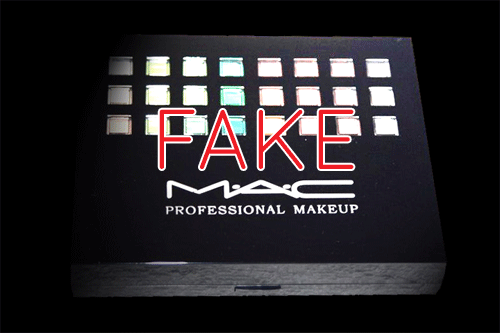
Counterfeit Cosmetics, Fragrances
Hazardous to Your Health
01/02/14
You see what appears to be your favorite brand name eye shadow, eye liner, or fragrance for sale at a flea market or on an unfamiliar website. You notice the price is lower than what you normally pay at your favorite retail store or through an authorized online dealer.
Find out what's happening in Redlands-Loma Lindafor free with the latest updates from Patch.
Before you hand over your hard-earned money, though, keep this in mind: It could be counterfeit, and—in addition to buying something that’s not the real deal—you are also risking your health by buying and using products that may contain substandard or even dangerous substances.
The National Intellectual Property Rights (IPR) Center—of which the FBI is a partner—wants you to know that the volume of all sorts of counterfeit cosmetics and fragrances coming into the U.S. is definitely on the rise…that’s according to our industry partners as well as law enforcement. Why is this happening? Because the Internet has given counterfeiters widespread access to customers, and because criminals increasingly view dealing in counterfeit personal care products—as well as other knock-off consumer goods as well—as a relatively low-risk crime since many of the perpetrators are located outside of the U.S.
Find out what's happening in Redlands-Loma Lindafor free with the latest updates from Patch.
Government and industry studies and testing have discovered that some of the ingredients that make up counterfeit cosmetics and fragrances are downright dangerous:
- Phony cosmetics often contain things such as arsenic, beryllium, and cadmium (all known carcinogens) along with high levels of aluminum and dangerous levels of bacteria. Some of these products have caused conditions like acne, psoriasis, rashes, and eye infections.
- Counterfeit fragrances have been found to contain something called DEHP, classified by the Environmental Protection Agency as a probable human carcinogen. These phony perfumes and colognes, which sometimes contain urine as well, have been known to cause serious skin rashes.
Indicators of Counterfeits
- The packaging differs slightly from the authentic brand (might be a different color or different lettering on the product), and/or the product’s wrapping appears haphazard.
- The product is being advertised as a “limited edition” even though the authentic manufacturer doesn’t offer it as a limited edition.
- The price is either slightly or drastically lower.
- For cosmetics, the product’s consistency or texture just doesn’t feel or look like the authentic brand.
- For fragrances, there’s something a little off about the scent, and the color of the fluid in the bottle might be different than the original.
- For both products, they’re being sold at non-authorized retailers, including flea markets, mall kiosks, and over the Internet.
There is no typical profile of the individuals or groups trafficking in these kinds of counterfeit products…and this might just be one of their many illegal activities—often times, the illicit proceeds are used to fund other types of crime. We’ve also seen people selling counterfeit products through online auction sites and other websites just to make a little extra cash…some may not even realize their merchandise is fake.
Because of the dangers to the public, law enforcement is mobilizing against counterfeit cosmetics and fragrances. For example, the nearly two dozen U.S. and foreign agencies that make up the National IPR Center are working on the matter—sharing intelligence with one another, coordinating with state and local law enforcement, and developing relationships with industry representatives.
But we need the public’s help.
First, educate yourself about some of the common indicators of counterfeit cosmetics and fragrances so that you don’t become a victim (see sidebar). If you’re not sure about the authenticity of a product, don’t buy it.
And second, if you think you or someone you know may have purchased counterfeit cosmetics or fragrances…or if you suspect someone of selling counterfeit items…submit a tip to the National IPR Center. The more information law enforcement has, the more effective we can be. With the proliferation of counterfeit goods increasing at an alarming rate, the National IPR Center focuses on keeping these bogus and often unsafe products off U.S. streets…while dismantling the criminal organizations behind this activity.