Health & Fitness
Blog: AES Property Rights, Public Consensus
With the council doing their bidding, AES turns its eye on residents.

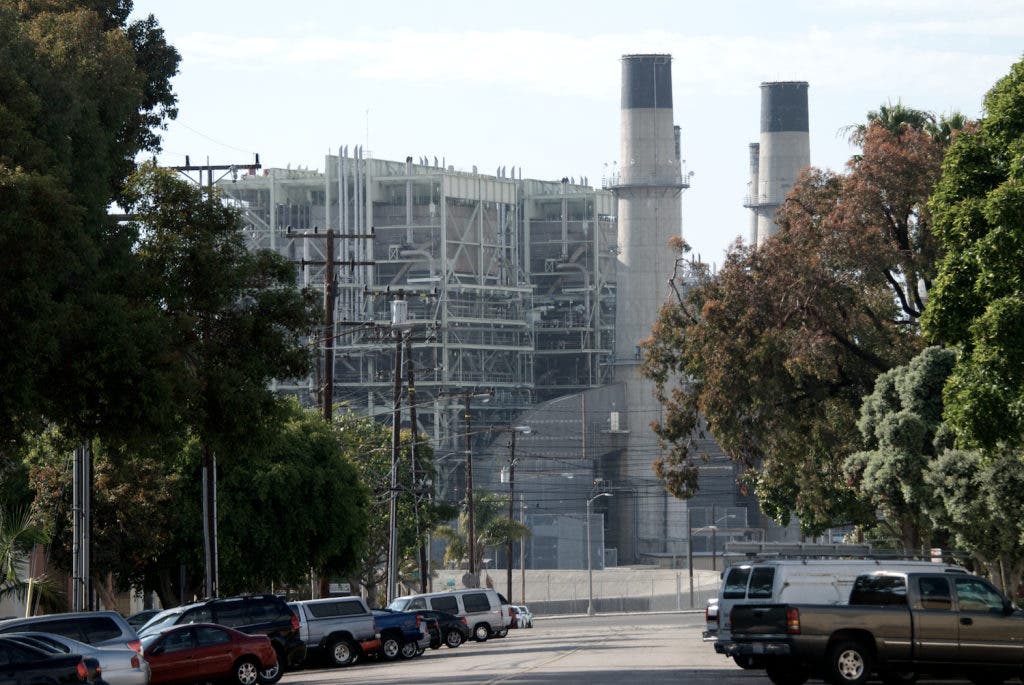
A recent Easy Reader article on the initiative describes AES Southland President, Eric Pendergraft as “furious” about the zoning initiative. Pendergraft says his firm believes in private property rights and equates the initiative to rezoning a single private residence to build a park. He stated the initiative devalues their property. Then Pendergraft puts on his public face and says AES is “not opposed to a vision for the site that has open space and recreational opportunities and things that are visitor-serving and serve the community.” He goes on to say the initiative is not the way to accomplish this change. Pendergraft pitches that AES wants to “go through a more collaborative and consensus building process with the community.”
When you peel back the onion, this is all just part of AES’ marketing campaign trying to divide the community and lure residents into supporting their plan to repower. Let’s tackle each of these statements.
Does AES really want a community consensus-building process?
If AES really wanted to engage the public on what to do with their property, why did it take BBR to reveal AES' plan to rebuild the power plant? Why did they try to fly their plan below the radar? Why has AES held no public meetings prior to filing its application to the state? Why has AES already engaged developers? One would think if AES REALLY cared about what we think they would have engaged residents early and often. Obviously, that has not been the case.
Find out what's happening in Redondo Beachfor free with the latest updates from Patch.
Originally, Mr. Pendergraft told Councilman Brand and me that AES would not build a plant if the community did not want it. We asked how he would measure that public opinion and he had no answer. (The initiative will do that nicely, though!) Now AES has changed their tune that if the state won’t give them a permit and a long term power contract, they will not build the plant. Well that’s a no brainer, isn’t it? Obviously, AES had changed their tune as they sensed the public sentiment was against them.
As the initiative zoning developed, BBR and Councilman Brand offered AES multiple opportunities to participate in the crafting of the initiative zoning for their site. I emailed Mr. Pendergraft and AES Project Manager, Jennifer Didlo, the final draft of the zoning for their comment. We got one response early on … AES would not engage in any zoning that did not include a power plant.
Find out what's happening in Redondo Beachfor free with the latest updates from Patch.
AES has made it clear, they want a new power plant and mixed use development right on top of it. This direction is with zero public engagement. But they have brought developers in for their input already. Hmmm.... if AES really wants community concensus building there has been no evidence to date. In fact, evidence is to the contrary. It would seem AES views residents as an inconvenient impediment rather than a partner.
Consensus or Coercion?
The one time a block of residents stood before city council supporting the power plant out of a dozen of meetings on the topic, AES had treated them to a cocktail party at the immediately before the council meeting. A reporter recently retorted that NoPowerPlant.com has parties for the initiative as well. But there is a huge difference—at a NoPowerPlant.com party attendees donate money to the initiative cause. At the Chart House, AES was treating their so-called supporters.
AES sent a slick mailing piece to about 10,000 residents that says nothing but attempts to mislead uninformed residents into supporting them. For example the mailer says natural gas power plants are essential to fill in the gap left by renewable forms of energy. Note that the mailer never states that AES’ Redondo power plant is essential. Then they use air pollution statistics for all of the LA Basin and Orange County to hide the fact that the AES Redondo power plant is the biggest, single source of air pollution in Redondo Beach. AES included graphics showing some emissions as concentrations. They cleverly avoided showing the projected annual total pollutants that can be expected. Those numbers would look bad. And then there is AES’ graphic of the new power plant layout. They show the smaller plant surrounded by green as though it is all open space parkland, but the small print says they plant mixed use development that could include a park. Finally, AES uses very deceptive angles to attempt to fool us into thinking the new plant will be small enough to be hidden from view. The Whaling Wall is about 85 feet high. Go see for yourself if you could hide that on the property. AES conveniently ignores that most views look down on the power plant site. There is no way to possibly hide an 80 foot tall power plant on this property. AES' slick mailer proves out to be very deceptive when you really dissect it.
AES followed up this slick propaganda piece with a phone survey. Many residents complained to BBR that the surveyors were forcefully trying to persuade and intimidate residents into saying they support the new plant. One resident was so upset with the phone surveyor’s tactics that she volunteered to gather signatures. Was it really a survey? Or another attempt to coerce residents into supporting a new power plant?
Actions speak louder than words. So far the evidence demonstrates that AES really doesn’t care about the public will or consensus. They want to build a new power plant whether we want it or not. And they don’t seem to mind manipulating residents in an attempt to diffuse the public backlash.
Private Property Rights?
First, we need to understand that the city and its residents have the right to determine the zoning of property throughout the city. This is so the city can ensure compatible uses, phase out antiquated uses, minimize impacts between uses, and to ensure the best use for the land. The city makes zoning changes regularly.
Zoning changes are a normal city function - The city made sweeping changes in 1992 when it updated the whole General Plan. The General Plan changes downzoned a large percentage of Redondo residential multi-family dwelling properties. For example, properties that had been zoned for six units were downzoned to allow only three. Many commercial and industrial properties were rezoned to residential. Examples here include the property Catalina Coffee Company is on and the former industrial property along Ruxtan Lane which is now high density condo development. The reason given by the city was that the residential density was too great under the old zoning and that there was too much commercial property in the city. This is but one extreme example of the City changing zoning. Now any property owner could have complained, as AES has here, that this impacted their property rights. Property zoned for six condos is worth more than property zoned for three. Businesses on former industrial and commercially zoned property could not rebuild or expand. But the changes went through as they were legal… they allowed owners residual value for their land, even if it was less than before. It was all for the public good. And it was not a "taking". The situation with the power plant property is no different.
Power Generation already a “conditional use” - Another key aspect we need to understand is that even under current zoning, power generation on the AES property is a “conditional use.” “Conditional use” means that any significant expansion, rebuilding or new uses must be approved by the City. The criteria used by the city to weigh a “conditional use” approval include the impacts on surrounding properties and how the proposed project fits in with the surrounding neighborhood. Projects have been rejected by the city that conformed with all the zoning requirements because of their impacts on the surrounding community.
An example of this is a project called the “Pearl Plaza.” In this case, a landowner wanted to build a massive three story mixed-use development on his properties along PCH. The project conformed with the “mixed use” zoning of his properties and he even made concessions to attempt to accommodate concerns expressed by neighbors. Despite its conformance with all zoning requirements and approval by the Planning Commission, Councilman Aspel voted against it and ultimately Mayor Gin vetoed the project because it did not fit with the character of the surrounding neighborhood and it blocked views from properties on the other side of PCH.
Certainly, a power plant has negative impacts beyond its aesthetics. The current plant’s ecological, economical and health and welfare impacts are well documented by the city. While the new plant may be smaller, the impacts will remain or get worse. As mentioned before, you cannot hide an 80 foot tall power plant at this site. And at the run rates AES is projecting, the air pollution will increase and be released much closer to Redondo residential neighborhoods with the plant’s shorter smokestacks and its new location on the eastern property line. Through the years, the AES property has been ringed on all sides by what the city calls “incompatible uses”—residential, recreational, and commercial development. In fact the City has deemed the power plant the main “blighting influence” in the harbor area. The City can reject the new power plant based on any of these reasons.
The bottom line is that even under current zoning, AES has no “right” to build a new power plant. This is further bolstered by the state permits a new power plant would require.
Is the initiative equivalent to rezoning your house for a park?
The short answer is no.
First, the initiative does not zone the entire AES site for a park. The zoning includes 30 percent to 40 percent commercial zoning with a generous development cap of about 430,000 square feet of development. The initiative’s commercial density and cap are equivalent to the commercial density allowed in the harbor and pier area zoning. And 15 to 20 acres or waterfront commercial development is worth a lot of money.
Secondly, a residential home built in a residential neighborhood is a compatible use. There is no drastic negative impact to the surrounding properties.
Thirdly, we are talking 52 acres of land across four parcels, not a 50 x 150 foot lot.
Comparisons to rezoning your home for a park are a feeble attempt to emotionally mislead the public.
Bottom line
AES has our Council right where they want them… frozen into inaction for fear of a potential lawsuit. In essence, the Council has become the mouth of AES spewing fear mongering about what AES might do. At this point it is difficult to determine if our Council or AES is talking.
Now, AES has turned its eye on the residents directly. I believe AES senses they are losing the battle of public opinion so they are pulling out the stops in an attempt to divide the public. Comparing the park and commercial zoning of the initiative to zoning someone’s home for a park is ludicrous. Showing LA Basin and Orange County total pollution statistics and using emission concentrations rather than annual emissions are deceptive and demonstrate how low AES is willing to go in this public debate. The property rights argument is just another attempt to manipulate the public.
In the end, if the CEC denies AES a permit to rebuild a plant in Redondo, AES will have a lot more value left in its property thanks to the initiative. Without the initiative AES would have a huge property zoned for industrial uses and parkland. And let’s face it, waterfront commercial zoning next to a seaside park is a whole lot more valuable than industrial zoning.