Politics & Government
Residents Blazing Mad Over Plan to Thin Trees in Hills
The eucalyptus trees would be replaced with native trees such as oak and bay. Eucalyptus explode in fires.

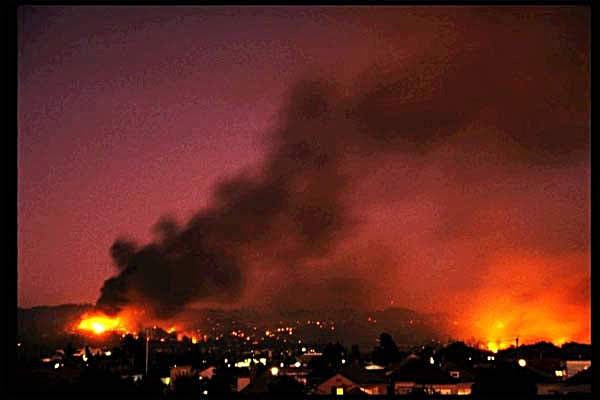
Photo: The 1991 Oakland Hills fire killed 25 people and destroyed more than 3,000 homes. A fuels mitigation plan has drawn lawsuits. Photo credit: NASA
--
Residents and environmental groups are opposing a $4 million federal grant to reduce the fire danger by thinning trees in the Oakland hills, the site of a 1991 blaze that killed 25 people and destroyed more than 3,000 homes.
The Oakland City Council is scheduled to vote at its meeting tonight on whether to accept the grant from the Federal Emergency Management Agency (FEMA) and match it with nearly $900,000 in city funds.
Find out what's happening in Rockridgefor free with the latest updates from Patch.
But the Hills Conservation Network, a group of homeowners in the area that was devastated by the 1991 blaze, and the Sierra Club have filed lawsuits seeking to stop the tree-cutting plan, alleging that its environmental impact statement is flawed.
Oakland vegetation management supervisor Vincent Crudele said today that the city plans to use the grant money to thin eucalyptus trees in two areas: a 53-acre area west of the Caldecott Tunnel, which is near the origin of the 1991 fire, and a 66-acre section along Grizzly Peak Boulevard.
Find out what's happening in Rockridgefor free with the latest updates from Patch.
“We want to reduce the fire danger within the zone of the 1991 hills fire,” Crudele said. He said if the grant is approved, the city would begin cutting down eucalyptus trees in fall 2016 and replace them with native trees such as oak trees and bay trees.
Workers would thin trees for three years and spend another two years managing fuels from trees in order to minimize the fire danger, Crudele said.
The city won’t do any aerial spraying of herbicides but instead will apply herbicide by hand under strict regulations and the watchful eye of a monitor, he said.
Hills Conservation Network board member Dan Grassetti said he thinks the plan to spend nearly $5 million is “a crazy use of public money” because he thinks it actually will increase the risk of fire. Grassetti said that’s because he thinks the plan to remove eucalyptus and pine trees will lead to a rapid increase in invasive brush species such as broom trees, thistle, hemlock and poison oak, which he said pose a greater fire threat.
Grassetti said he thinks the real agenda for city and FEMA officials who want to get rid of eucalyptus and pine trees is restoring native plants to the hills area, not reducing the fire danger. He said the plan to start cutting down eucalyptus and pine trees starting next year “is just a battle in a war.”
Grassetti said he and other HCN members also object to the tree-cutting plan because of concerns about herbicides potentially contaminating groundwater, the increased risk of landslides and the potential threat to raptors’ habitats.
He said it’s likely that the City Council will vote tonight to approve accepting the FEMA grant but he’s hopeful the plan will be stopped in the courts. The Hills Conservation Network filed a lawsuit against the project in March and the Sierra Club filed a separate suit last week, he said.
“We believe our case is very strong,” Grassetti said. He said Hills Conservation Network members “are all very concerned about fire risk” because they live in the fire danger zone and many of them lost their homes and even family members in the 1991 fire.
But Grassetti said they think a better way of reducing the fire danger would be to remove ground fuel from trees and have larger buffer zones next to roads and homes.
Get more local news delivered straight to your inbox. Sign up for free Patch newsletters and alerts.

