Health & Fitness
Plains Indian Ledger Art
November - Native American Heritage Month - is a great time to celebrate ledger art.

Art has the ability to provide up-close views of the culture within which it was created. Native American Ledger art, often also referred to as Plains art, is one such example. It represents when in the 19th century the Plains tribes (Sioux, etc) were forced to occupy government reservations. They were literally removed from everything that they once knew and, in order to survive, had to adapt quickly.
This resulted in many changes in lifestyle tools, among them how they recorded important events and more.
Paper: The New Canvas
With the reservations came paper which was new to these indigenous people. Before then, native people used buffalo hide (occasionally rabbit and otter skins) canvases to record and describe certain events and other important information. Reservation life, combined with the destruction of buffalo herds changed not only the materials but also the content of this pictographic art form.
Find out what's happening in Rohnert Park-Cotatifor free with the latest updates from Patch.
When Did It Begin?
Plains art on paper first began in the early 1860’s. The most common paper type used for this representational art work was ledger book pages that had been used for accounting purposes. Bone and stick paintbrushes and mineral pigments were replaced by colored pencils, crayons and water colored paints. All of these ‘artistic’ materials - designed to encourage a Western education - were made available in trades made after military engagement and with priests and other missionaries, etc. This could explain why much of early Plains art depicted military exploits and personal heroism.
The most celebrated ledger artists of the day were prisoners of war at Fort Marion in St. Augustine, Florida. In 1874, in what became known as the Red River War or Buffalo War, a group of Cheyenne, Kiowa, Comanche, Arapaho, and Caddo warriors fought the US Army to protect the last free herd of buffalo and to assert their autonomy. Their valiant efforts were captured in ledger art.
Find out what's happening in Rohnert Park-Cotatifor free with the latest updates from Patch.
Over Time More Than Just Paintings
Other scenes that were often depicted in Plains art include elements of ceremonies and daily reservation life, including courtship and hunting. By 1870 relocation to reservations was almost complete. That meant that the artwork reflected many of the social and cultural changes that they had endured in the forced assimilation, including the arrival of European inventions, like the trains and cameras. Over time the paper itself told stories. For example, European Bible pages were also used as canvas.
Once a chronicle for anthropologists and others, it experienced a revival in the 1960s and 1970s.
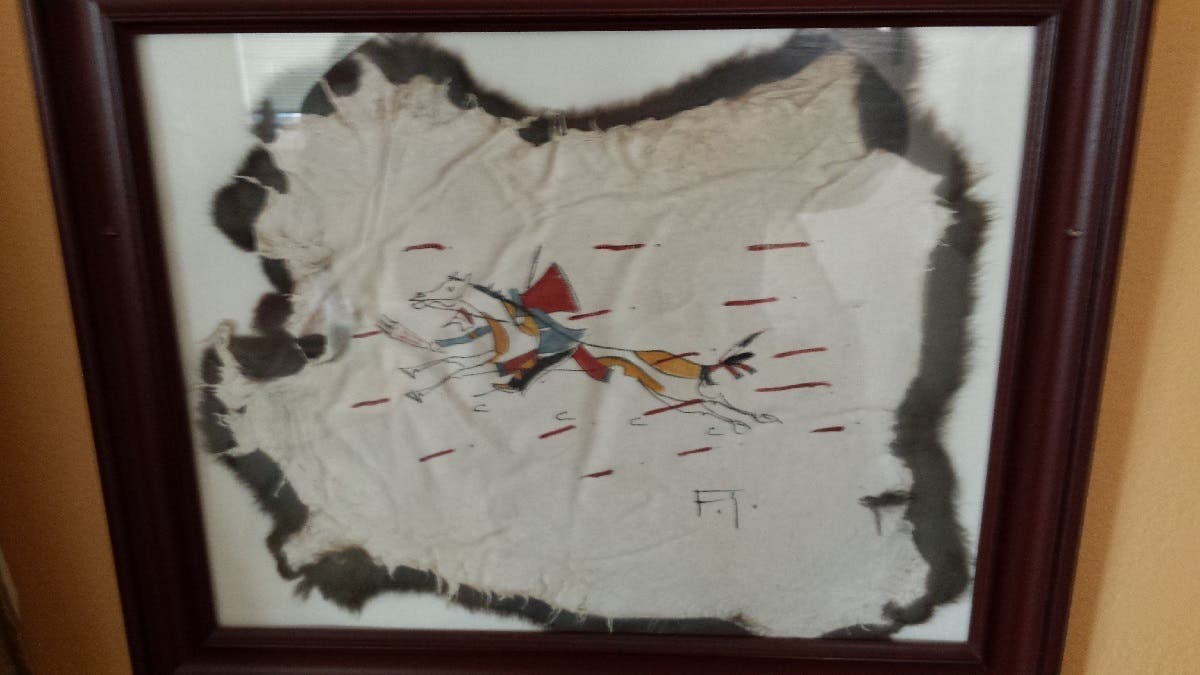
The piece of Ledger Art pictured here is mine. Created for purchase on rabbit skin by Lakota Sioux Frankie Short it depicts the story of a warrior riding his horse into battle. It is not a specific individual but the symbol for all warriors as noted by the rider’s head placed beneath the horse’s neck rather than on the man’s shoulders to indicate personage.
To see more examples of Ledger Art, click here.