Schools
Cal State May Soon Offer Degrees That Take Just 3 Years To Finish. Work Experience Counts, Too
A need to attract more students and competition from online colleges are reasons why.

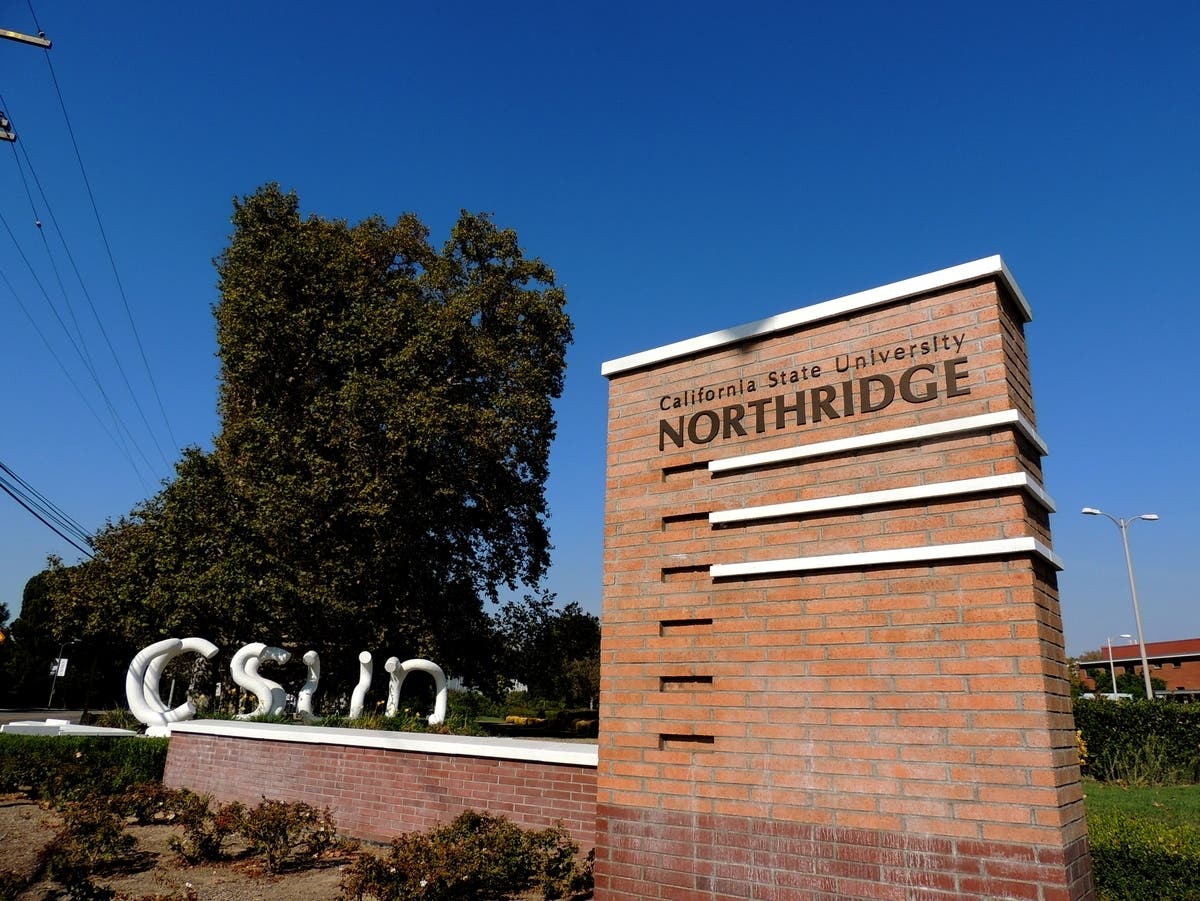
Students may soon be able to earn bachelor’s degrees in as little as three years at California State University campuses as system leaders contend with a need to attract more working-age students and those without a degree eager to lift their job prospects.
The system’s trustees voted unanimously last week to allow campuses to create three new types of shortened bachelor’s degrees:
- Bachelor of Education, for aspiring teachers who want a bachelor’s focusing on teaching specifically
- Bachelor of Professional Studies, which targets employees pursuing managerial positions that will give them course credit for skills learned at past jobs
- Bachelor of Applied Studies will be geared toward students with vocational or technical training, such as in car maintenance or home heating repair
The new degree types don’t replace the existing four-year bachelor’s in the arts and sciences but will instead widen the offerings campuses can provide — if they want to. There’s no mandate for the campuses to create any.
Nor do the new degrees have to be as short as three years. They may require any number of units that take between three and four years to finish. The policy sets the minimum units for these degree types at 90 units — which typically take three years for students to complete. A four-year degree generally requires 120 units.
Find out what's happening in Sacramentofor free with the latest updates from Patch.
READ NEXT
How one Cal State campus is trying to break out of a doom loop of declining enrollment
The changes are meant to “reduce the time required for students to earn a degree” and to “offer more immediate access to economic and social mobility,” said Nathan Evans during last week’s trustees meeting. He is Cal State’s associate vice chancellor for academic affairs and helped to write the policy.
The new offerings are also designed to compete with for-profit and online colleges that offer quicker degree programs but are generally far pricier than what Cal State charges.
Find out what's happening in Sacramentofor free with the latest updates from Patch.
Students transferring from community colleges may choose these degrees to earn a bachelor’s in one year, rather than two, said Evans in an interview. Adults with on-the-job experience and busy schedules may opt for these so that they convert some of their workforce experience into completed degree units and finish degrees faster, saving money.
Battling enrollment declines
Today, some Cal State campuses are experiencing enrollment growth but others are battling steep student losses, prompting soul-searching about how to bring in more learners and plug the financial holes from lost tuition revenue. Ten campuses have seen double-digit-percent enrollment declines between 2020 and 2025, including Easy Bay and Dominguez Hills.
Evans said the new degrees could appeal to workers in fields undergoing strain, such as set workers in Hollywood. Campuses that adopt these shorter degrees may pair them with master’s programs in professional disciplines as part of accelerated pathways, Evans said.
Chancellor’s office officials indicated that a handful of universities in other states now offer these quicker degree types, such as Cornell University, the University of Kansas and New Mexico State University. Meanwhile, the University of California has promoted traditional four-year bachelor’s degrees that students can earn in three years, such as economics and math at UC Santa Cruz. Students there generally need to take summer courses to fit all their courses into the tighter window.
Fall is the earliest that faculty at Cal State’s 22 campuses will begin working on developing these new degrees. The first to debut may come as soon as fall 2027, but more likely in 2028, Evans said.
California is home to more than 6 million working-age adults with a high school diploma but no college degree. Half of them earned some college credit.
Bachelor’s degree recipients in California typically earn an annual salary of $96,000, according to 2024 data. It’s $65,000 for those with associate degrees and $48,000 for workers with only a high school diploma. Student loans may eat into those wages, but most Cal State undergraduates earn their bachelor’swithout debt.
Another change allows Cal State students to earn a degree without having to accumulate a minimum number of units at any one campus. In the past students had to earn at least 30 units at the Cal State campus awarding them a degree. That campus-level requirement is now gone, which could make it easier for some students to earn a bachelor’s, such as those who previously dropped out of one Cal State, moved, and are returning to a different Cal State campus to finish their degree.
Some faculty express concerns
The systemwide academic senate, a key player in shaping academic programming, supports the shorter degree plan broadly but objects to specific portions. The academic senate wrote publicly before the board’s vote that any degree needing fewer than 120 units shouldn’t be called a bachelor’s but some other degree name. They also wrote that these new degree programs should expire after 10 years, unless an evaluation indicates the degrees requiring fewer units have merit.
“A student who worked hard to earn a degree with 120 units would be lumped in with a student who merely took 90 units, so the traditional BAs and BSs would be devalued. Frankly, students might feel insulted that their hard-earned (in terms of money and in terms of academic work) BAs and BSs are treated the same as degrees with fewer units,” the letter states.
The letter says almost all of the advocacy for the new bachelor’s program comes from College-in-3, an organization advocating for three-year degrees with about 60 campuses as members. However, there are thousands of colleges in the country that haven’t joined the group, the letter says.
The senate chairperson, Elizabeth “Betsy” A. Boyd, told trustees that the senate wanted to pause the approval of the new degrees until at least September. The trustees denied that request.
Evans said in an interview and to the trustees that colleges in Europe award bachelor’s in three years. But the academic senate’s letter says that’s only because European high schools are more rigorous than U.S. high schools and can in turn offer fewer courses once those students enter college.
But one trustee was sympathetic to the academic senate’s worries. Jack McGrory, who often faults the Cal State system for requiring too many general education courses, said “we’re diluting the quality and the importance of a BA degree by lowering the unit count,” with these new degree types.
Cal State officials stressed these new degrees won’t replace existing four-year bachelor’s degrees and the system is not pivoting to fewer units for all its bachelor’s offerings.
Other trustees supported the measure but said the systemwide chancellor’s office isn’t doing enough to consult the faculty. “I’m not comfortable approving things that they don’t feel they’ve had enough consultation with,” said Trustee Larry Adamson.
One possible barrier to creating expedited degrees is approval from the regional accreditor of academic offerings at California’s colleges and universities. But Evans said that the accreditor, the quasi-federal Western Association of Schools and Colleges, is on board with these degrees.
“WASC has already approved five or six of these degrees for their universities that are part of their accrediting region, and they’re expecting many more to come,” Evans said in an interview.
He noted to the trustees that the regional accreditor recommended slightly different names for the shorter bachelor’s degrees. Cal State officials heeded that advice — which is why the new degrees have “applied”, “education” or “professional” in their titles.
“We’re not mandating anything. It’s really an opportunity to experiment and be more flexible,” said Julia Lopez, a trustee, during the board meeting. For campuses without enrollment struggles, these shorter bachelor’s degrees may not be what they want to do. But for campuses on a state watch list for low enrollment, a faster degree may attract the students they desperately seek.
At campuses with many part-time or working-adult students or with a goal of attracting them, “this may be a real opportunity to offer growth where there hadn’t been growth before,” she said.
READ NEXT
No need to apply: Cal State is automatically admitting high school students with good grades
March 28, 2025
Sonoma State’s plan to cut more than a dozen majors is on pause
April 15, 2025
Nonpartisan, independent California news for all
We’re CalMatters, your nonprofit and nonpartisan news guide.
Our journalists are here to empower you and our mission continues to be essential.
- We are independent and nonpartisan. Our trustworthy journalism is free from partisan politics, free from corporate influence and actually free for all Californians.
- We are focused on California issues. From the environment to homelessness, economy and more, we publish the unfettered truth to keep you informed.
- We hold people in power accountable. We probe and reveal the actions and inactions of powerful people and institutions, and the consequences that follow.
But we can’t keep doing this without support from readers like you. Please give what you can today.
Every gift helps. GIVE NOW