Neighbor News
Silence Is Not a Food-Safety Strategy
Consumers deserve clear facts about what happened, what is affected, what isn't, and what agriculture is doing about it

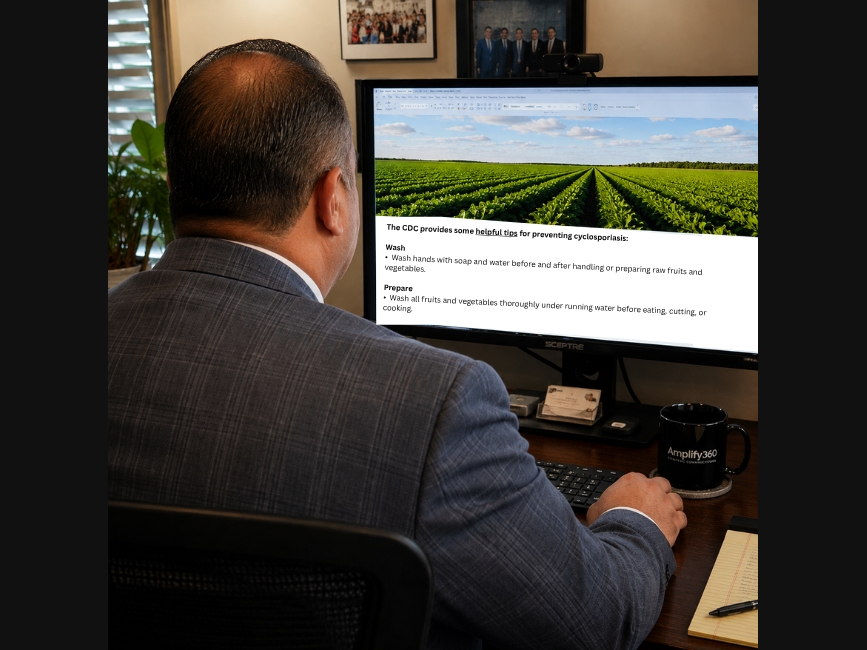
Agriculture cannot allow frightening headlines to define an entire industry. Food safety must come first. But agriculture also has a responsibility to respond with facts, transparency, and credible, independent voices.
The past several weeks have been difficult for agriculture and even more so for the people who became sick.
The Cyclospora outbreak linked to iceberg lettuce has caused thousands of illnesses, hundreds of hospitalizations, and two deaths. Those affected and their families should remain at the center of this discussion. A responsible industry cannot minimize their experiences or appear more concerned with sales than with public health.
Find out what's happening in Sacramentofor free with the latest updates from Patch.
But acknowledging the seriousness of an outbreak does not require agriculture to remain silent while consumers are left with an incomplete picture of what happened, which products were involved, and what is safe to eat now.
In fact, that is precisely when communication is most important.
Find out what's happening in Sacramentofor free with the latest updates from Patch.
Some agricultural organizations understand this. They gather accurate sourcing information, communicate with reporters, engage credible outside experts, and help consumers distinguish recalled products from those never implicated. We are proud to be part of that work.
But too much of agriculture remains quiet.
And silence has consequences.
When Agriculture Doesn't Explain, Others Will
A food-safety crisis naturally attracts attention. It should. Consumers deserve to know when food has made people sick.
The problem comes when a specific outbreak begins to define an entire category.
One recall becomes a reason to question iceberg lettuce. Iceberg lettuce becomes a reason to question salads. Soon, consumers are wondering whether they should avoid the produce aisle altogether.
FDA says the recalled iceberg lettuce associated with this outbreak should no longer be available in stores or restaurants. The agency has also said it is confident that the recalled lettuce connected to this specific outbreak is off the market. The investigation itself remains ongoing.
Those distinctions matter.
Yet consumers are still seeing headlines asking whether they should stop eating lettuce, along with stories about declining salad sales and shifting lunch habits. SEE BELOW!
That doesn't mean those stories shouldn't be written. It means agriculture needs to participate in the conversation.
Silence doesn't keep an organization out of the story. It simply gives others more influence over how the story is understood.
Start With Safety, Not Self-Promotion
The first response to an outbreak should never be, "But fruits and vegetables are good for you.”
That's the wrong message at the wrong time.
Start with food safety and what happened. Explain what investigators know and what they don't. Identify affected products as specifically as possible. Tell consumers what actions they should take.
Then explain what isn't affected.
Only after people have the information needed to make safe decisions should agriculture return to the nutrition conversation.
And don't tell consumers not to be afraid.
Give them enough useful information to make an informed decision with confidence.
Agriculture Shouldn't Be the Only Voice
Agriculture also needs to recognize that it cannot and should not deliver every message on its own.
Independent experts often have greater credibility with consumers, especially during a food-safety crisis.
Food-safety scientists can explain what investigators know, how traceback works, and why identifying an outbreak source can take time.
Physicians and infectious-disease specialists can explain symptoms, testing, and when to seek medical care.
Registered dietitians can help families meet their nutritional needs while avoiding recalled products.
Public-health professionals can put risk into context without exaggerating or dismissing it.
Growers, retailers and distributors can provide sourcing and traceability information.
More Than a Press Release
Industry organizations should make independent food-safety and health experts available to newsrooms.
Short videos should answer common consumer questions in plain English or Spanish.
Dietitians, physicians, and scientists should write opinion pieces and speak with reporters.
Sourcing information should be easy to find and easy to understand.
When reporting or social media posts incorrectly implicate products, growers, or regions that aren't linked to an outbreak, agriculture should respond quickly with evidence.
None of this requires minimizing an outbreak. It requires explaining it.
The Communications Work Starts Before the Crisis
Agriculture cannot begin building credibility the morning a recall is announced.
Relationships with food-safety experts, physicians, dietitians, public-health professionals, reporters, and consumers should already be in place.
Protocols should already be established.
People should already know who will speak, who will verify facts, who will monitor coverage, and who will answer consumer questions.
Because another outbreak is coming. Another recall, invasive pest, contamination concern, or frightening headline is coming. We don't know what it will be or when it will happen. We know it will happen.
This Story Is Not Over
Anyone who thinks the lettuce story has already disappeared should look at coverage from the past several days.
The Washington Post published a piece titled "Why we should stop eating lettuce, cyclospora or not.”
CNBC reported on how the outbreak is changing workplace lunch habits.
USA Today reported on falling lettuce and salad sales.
NPR examined the outbreak in the context of the nation's public health system.
Scientific American asked whether lettuce is safe to eat again.
Reuters reported the ongoing rise in nationwide cyclosporiasis cases.
These stories approach the issue from very different perspectives. Collectively, however, they highlight something agriculture should pay attention to:
The consumer conversation continues long after a recall announcement. And that conversation will continue with or without agriculture.
Communicating isn't about burying bad news. It isn't about attacking reporters. And it certainly isn't about convincing consumers that an outbreak wasn't serious.
It is about preventing incomplete information from becoming the full story.
It is about acknowledging what went wrong, explaining what is being done about it, and helping people understand what the evidence shows today.
Most importantly, it is about respecting consumers enough to provide them with facts, context, and practical guidance.
Agriculture has a compelling case to make.
But first, it has to show up and make it happen.
A few of the articles published in the past 5 days:
Why we should stop eating lettuce, cyclospora or not
https://www.washingtonpost.com/food/2026/08/24/case-against-lettuce/
Cyclospora is changing the American workplace lunch: ‘We switched our marketing immediately,’ says Saladworks CEO
https://www.cnbc.com/2026/08/18/cyclospora-outbreak-changing-american-workplace-salad-lunch.html
Cyclospora Cases Are Starting to Trend Down: See States Still Impacted, Foods to Avoid and More
Salad, lettuce-linked outbreak is making greens shoppers see red
Record cyclosporiasis outbreak tests the response of a 'weakened' health system
https://www.npr.org/2026/08/20/nx-s1-5930462/trump-health-foodborne-illness-outbreak-cyclospora
As US’s cyclosporiasis cases surpass 15,000, these are the hardest-hit states
San Francisco health officials report 10 cyclosporiasis cases so far in 2026
Is lettuce back on the menu? New data suggest cyclosporiasis cases are slowing
Cyclosporiasis cases in US climb to 15,716, CDC says
The cyclospora outbreak isn’t about lettuce. It’s about who is protecting you and your family from disease
Hector Barajas is the founder of Amplify360 Inc., a strategic communications and public affairs firm based in Sacramento and Los Angeles. Amplify360 helps organizations shape narratives, influence public opinion, and navigate complex public policy environments through media relations, coalition building, and integrated communications strategies. The firm works with clients facing high-stakes legislative, regulatory, and reputational challenges across local, state, and federal arenas.
X: @HectorMBarajas
LinkedIn: www.linkedin.com/in/hectormbarajas