Business & Tech
Will San Diego 'Scoot Scoop' Guys Slay Electric Scooter Goliaths?
Unique San Diego towing company is Robin Hood-style counterpoint to electric ride-share scooter companies that invaded their hometown.


SAN DIEGO — It’s past 6 o’clock on a dour morning, and there’s no sign of the men I’m downtown with a photographer to meet — the “Scoot Scoop” guys. Dan Borelli and John Heinkel have become infamous in these parts for making a buck by sticking it to the venture capitalists responsible for the electric scooter epidemic plaguing Southern California and dozens of major American cities.
In the last year or so, dockless electric ride-share scooters have popped up on streets, sidewalks and, at least once, on the highway in more than a hundred cities worldwide. San Diego alone has tens of thousands of the dockless scooters available for rent. And unlike San Francisco, which had laws in place and a robust vetting process for scooter companies, San Diego and other cities are more like the Wild West — which is precisely why scooters seem to be, well, everywhere around here, industry insiders will tell you.
“The places where there are no laws, that’s where we go in,” Bird CEO Travis VanderZanden said. Until recently, San Diego was one of those lawless scooter cities. San Diego officials say there are about 23,000 dockless rideshare scooters in the city of 1.4 million people.
Find out what's happening in San Diegofor free with the latest updates from Patch.
That’s one scooter for every 60 San Diego residents.
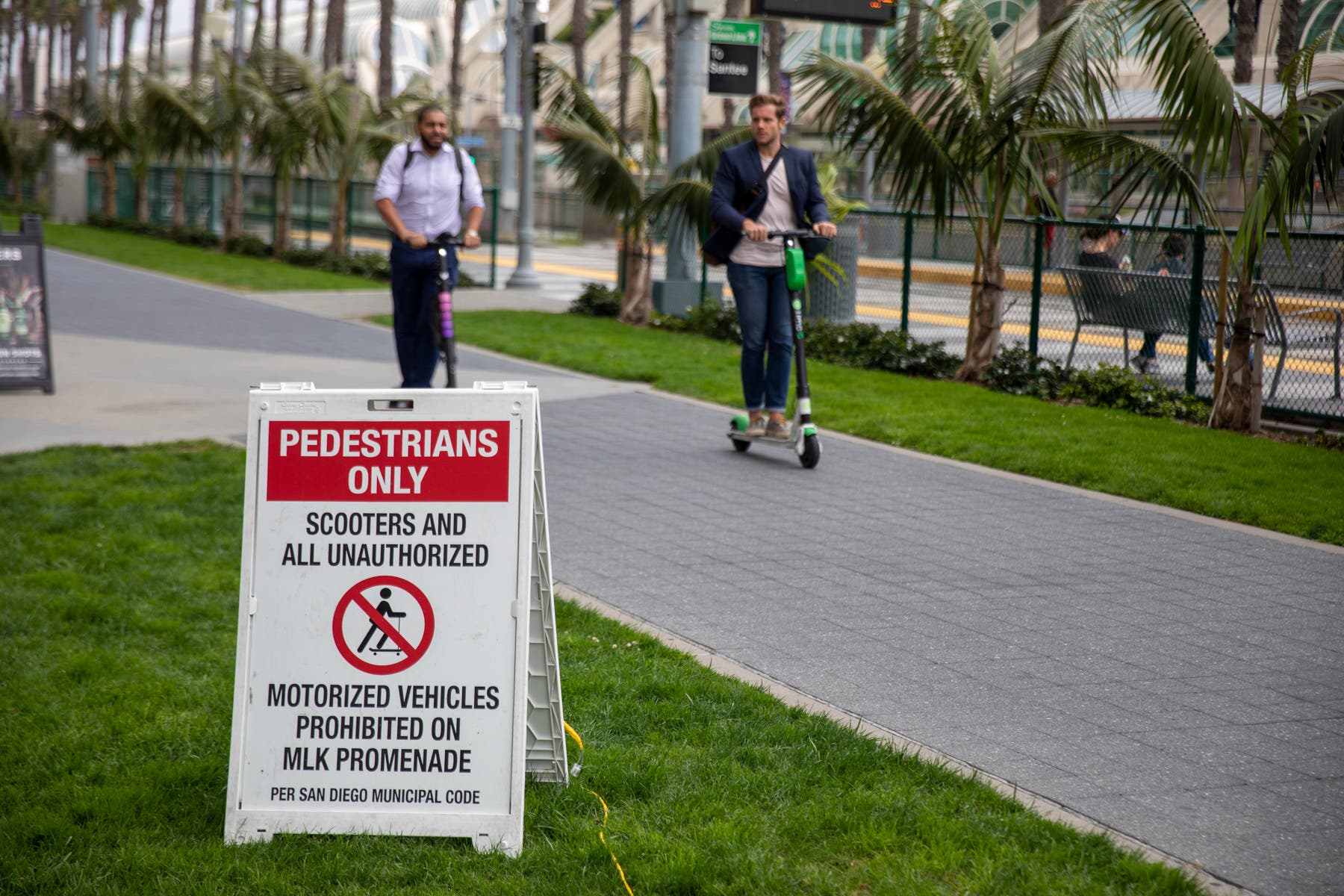
There’s a vocal faction of San Diego residents who, given the opportunity, will endlessly complain about those darn ride-share scooters that you can rent for a few bucks. Some people hate the scooters for taking up sidewalk space; for being driven recklessly; for getting kicked over by other scooter haters; for being foisted onto the public to deal with, with no real consequences.
Find out what's happening in San Diegofor free with the latest updates from Patch.
There’ve been several fatalities in San Diego and elsewhere and many, many injuries. In February, an Austin a college student riding a Lime scooter was struck and killed by a driver for Uber, the ride-share company that has a minority ownership stake in Lime. The Centers for Disease Control is conducting a study related to the health effects of dockless electric scooters. In Austin Texas, a local study of ride-share scooter accidents showed county paramedics responded to nearly three scooter-related injuries each day during a two-month period last year.
Perhaps the conflict between scooter fans and foes was inevitable. But Borelli and Hienkel’s entrepreneurial, Robin Hood-style counterpoint to the electric scooter companies who invaded their hometown has taken the social conflict out of the hands of slow-to-react politicians and into civil court, where a judge could decide if they can continue operating the scooter-towing business, Scoot Scoop, that they run out of Heinkel’s suburban tow yard.
The photographer and I continued to wait for the Scoot Scoop guys as a sect of downtown San Diego’s homeless population came to life, and a vibration alerted me to an email. It was Borelli. He and Heinkel got jumped in Pacific Beach, a scooter-related attack.
We rushed to catch the aftermath at Crystal Pier, a wooden boardwalk high above the Pacific Ocean that’s home to clapboard rental cottages where summer tourists can sleep over the waves for around $600 a night if they make reservations 11 months in advance.
The police were there, taking notes, seemingly trying to make sense of what went down on the pier shortly after sunrise.
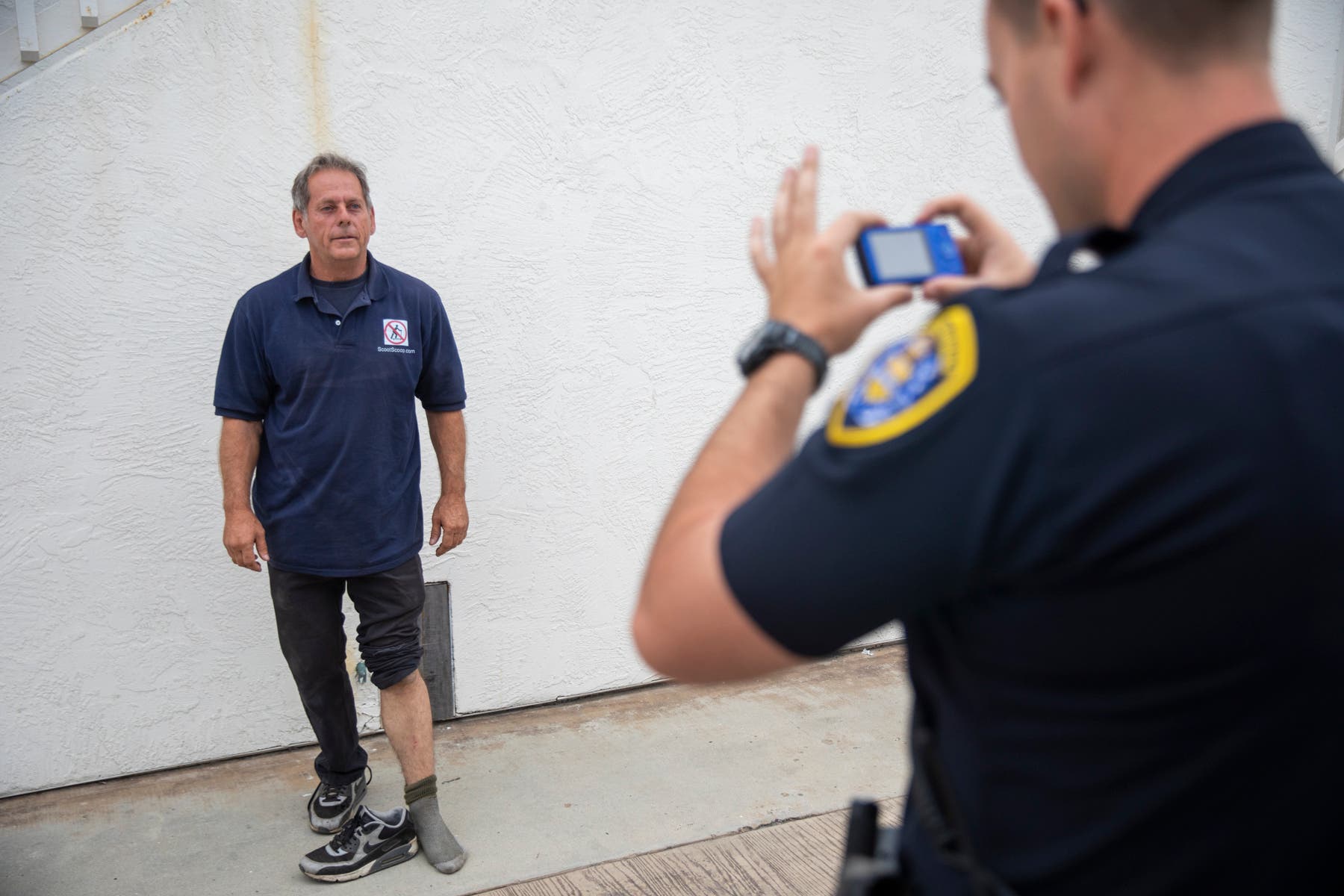
Borelli, totally bald and solidly built, and Heinkel, short, powerful, tanned, a former Marine who runs an international repossession business and towing company, are dressed in matching blue “Scoot Scoop” polos, and rather eagerly showing off their cuts and bruises to the police. They told officers that their injuries resulted from a confrontation with a group of guys who they say tried to “steal” a couple confiscated scooters.
Heinkel and Borelli get up early to implement Scoot Scoop’s business plan, which appears to be the first of its kind and works like this: They “tow” scooters off private property and hold them for ransom, er, a fee, the same way towing companies remove parked cars trespassing in private lots. That’s really it: The Scoot Scoop guys pick up scooters parked where they don’t belong, load ‘em into their truck, and send the appropriate scooter company a bill, which includes a $50 impound fee, plus $1 a day storage fee for each and every scooter, every time it's towed.
They’ve made money and enemies for their effort. Last fall, for instance, Bird paid the Scoot Scoop guys about $50,000 to get 1,801 confiscated scooters back. Certain ride-share scooter companies pay their “towing bills” regularly. Bird and Lime, among the country’s largest scooter rental companies, each have filed lawsuits against Scoot Scoop. And, of course, there are the guys who got into it with Borelli and Heinkel on Crystal Pier.
Watching the hotel’s soundless surveillance video from the morning Heinkel and Borelli took a minor beating, it appears that after some back-and-forth arguing, Borelli wound up tangling with one man on the ground. A few feet away, another man appeared to stomp on Heinkel’s foot and use a scooter as a weapon, raking Heinkle’s ankle.
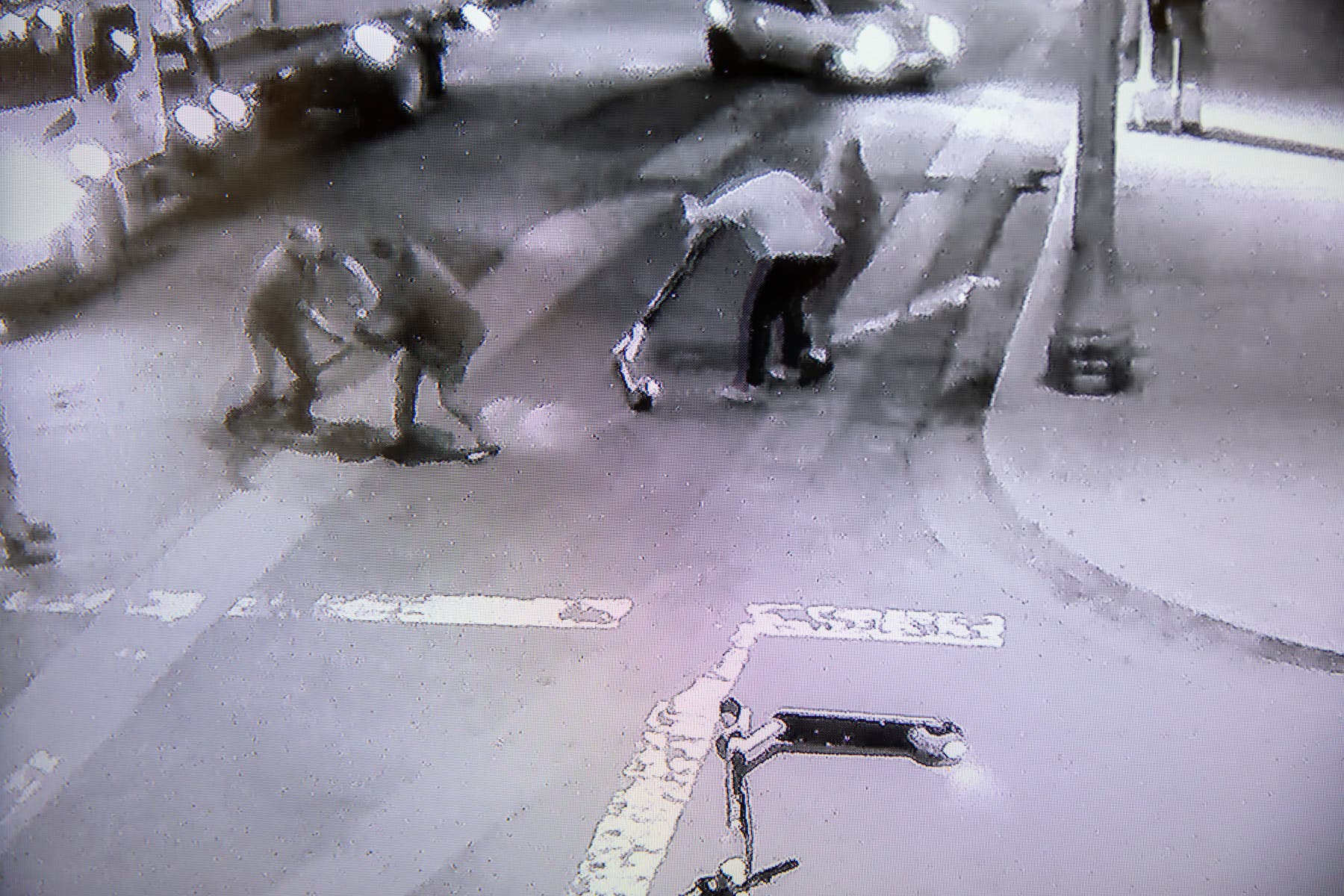
Then, as quickly as it started, the minor melee ended in a whimper. The video appears to show the alleged attackers walking away empty-handed, and Borelli and Hienkel tossing their first confiscated scooters of the day in the truck.
That day’s conflict is the least of Borelli and Heinkel’s troubles. Because ride-share scooter companies are backed by giant, venture-capital-funded tech companies, Uber and Google among them, Scoot Scoop’s war against a neighborhood nuisance pits them against international powerbrokers with the deepest of deep pockets.
Bird and Lime, each valued at more than a billion dollars, call Heinkel and Borelli thieves.
Even if a judge ultimately decides that the scooter companies are right about that, the utter contempt some people have for ride-share scooters only bolsters Borelli and Heinkel’s status as modern-day Robin Hood-like characters stealing from the rich to stick up for the little guy.
The public has never liked a towing company as much as they seem to like these guys. Old ladies, the ones terrified of scooters zooming past them on sidewalks, give the guys coffee gift cards. Police officers cheer them on, hooting “Scoot Scoop!” from their cruisers as Borelli and Heinkel conduct business.
Jim Bostian, the co-owner of the Crystal Pier Hotel and Cottages, says San Diego’s ride-share scooter infestestation has become the biggest public nuisance he’s had to deal with since he started working on the pier a half century ago.
“I’ve been here over 50 years, so I’ve dealt with everything that’s gone on in this area,” Bostian says. “We’ve had biker bars. But I never had physical contact with them. This is the most extreme thing I’ve ever seen in this area: The number of them, the people that are using them. Originally the idea of the scooter was a great idea. They’ve almost become a litter problem.”
Or worse. Bostian, 70, says he got thrown to the ground this year in a scooter-related confrontation. So many scooters get illegally parked on the hotel’s property — in the way of its entrances, or on the wooden pier — that Bostian loaned Borelli and Heinkel space where they can temporarily corral impounded scooters. That’s where the Scoot Scoop guys got into the early morning brawl with suspected trespassers who appeared to be Lime “Juicers.” That’s the cutesy job title the company gave to independent contractors paid to recharge scooters, usually $5 or less per scooter.
Because the ride-share scooter economy seems to have that kind of bounty-hunting nature to it, physical encounters sometimes happen. The fight on Crystal Pier wasn’t Borelli and Hinkel’s first altercation.
“When I started impounding them they’d graffiti our truck, shoot paintballs at us, there’d be altercations,” Borelli says.
“We’ve had a motorcycle with two Bird chargers on it go by me on the freeway and he comes into my lane, then slows down and brake-checks me sideways while his girlfriend on the back turns around and flips me off. They’re putting themselves risk on the highway over a stupid scooter? We don’t understand why we’ve gotten these people to dig in so hard when they make $3 to $5 a scooter.”
That opposition to their work has escalated to street fights before sunrise and lawsuits with millions on the line is even more preposterous because of how the conflict began.
The way the Scoot Scoop guys tell it, a wayward middle finger inspired thousands of scooter confiscations.
“Watch Where You Point That Finger”
Last year, Heinkel was on a bike ride with his daughter along the Pacific Beach boardwalk when a tire popped. They stopped at Borelli’s electric bicycle store, located inside the Promenade shopping plaza, among T-shirt shops, phone stores, and Mexican restaurants, to fix the flat.
While they were inside, Heinkel says scooter chargers staged a few newly charged scooters directly in the entrance of bike shop, then flashed middle-finger salutes in their general direction.
“Watch where you point that finger, kid,” is what Heinkel remembers saying.
The chargers told Heinkel they were flipping off the store, a response to Borelli’s complaints about them parking scooters near his store, blocking his sign. It gave Heinkel an idea. By the next week he had Borelli as a partner and a tow-authorization agreement from the plaza’s owner, who already hated scooters and had asked tenants to simply throw them in the dumpster.
The day after the Scoot Scoop guys had their early morning scuffle, I joined them on their morning rounds downtown. Watching them at work is shocking, even when you realize that they’re snagging unwanted scooters from private property.
They parked in front of a fancy high-rise condo, another of Scoot Scoop’s clients, where unwanted scooters are scattered around a courtyard near a legally required, 17-by-22-inch sign saying it’s illegal to park scooter there.
Borelli and Heinkel take photos of scooters, mark the location and enter scooter serial numbers into a database before loading them on the truck. You can hear a feeble beep emitted from the scooter — like an annoying car alarm — as each one gets confiscated.
Then, they either take scooters to a little garage near the beach or strap ‘em down in the truck, and head for their impound lot several miles away. Working 5 a.m. to midnight every day, fueled by 7-Eleven coffee and doughnuts, their spoils add up: After about a year of operation, picking up 40 to 50 scooters a day, Borelli and Hinkel say they have confiscated so many scooters that you can’t find certain models on the streets anymore.
Behind the razor wire-topped fence of their suburban tow yard, you’ll find a labyrinth of scooters stacked on scooters, teetering dozens high, among the weeds and in shipping containers. The Scoot Scoop guys say they’ve got about 7,400 scooters, a recently appraised inventory worth about $3 million.

In March, Bird, along with Lime — which has never paid Scoot Scoop to get its scooters back — filed separate civil lawsuits that essentially accuse the Scoot Scoop guys of violating the California Vehicle Code by both charging an excessive impound fee, and by not giving sufficient notice to the companies to move their scooters before they’re impounded, among other things.
If Borelli and Heinkel had their way, they would’ve sold some of those scooters already. But there’s legal gray area — the question of whether electric scooters are vehicles — that keeps the Scoot Scoop guys from auctioning off the impounded scooters. Since scooters don’t have vehicle identification numbers, the state department of motor vehicles won’t allow Heinkel and Borelli to sell them to satisfy unpaid impound fees. Plus, they’ve got to keep them as evidence in the lawsuits.
Given that millions of dollars are at stake, it’s not shocking that two of the country’s biggest scooter rental companies are suing to get their property back, and shut down the Scoot Scoop guys altogether.

A Bird scooter company spokesperson described the situation this way in a written statement: “The people of San Diego are being bamboozled by a local tow company scheme. Scooter Removal aka ScootScoop, orchestrated by Talon Auto Adjusters, is unlawfully impounding micro-mobility devices and demanding a ransom for their return. We are seeking an immediate end to their scheme as the company is robbing people of the environmentally friendly scooter options they’ve come to rely upon each day to get to and from work, as well as to local businesses.”
No other scooter companies responded to questions.
Scoot Scoop’s attorney Matt Souther claims that “tow-away” signs on private property are legally sufficient because Scoot Scoop isn’t dealing with parking spaces — it’s dealing with fire lanes, entrances and exits. You don’t need to give notice to tow a scooter from those locations, he said.
Souther’s firm, Neil Dymott Attorneys, represents clients in other scooter-related lawsuits, including a class-action case against the City of San Diego. That lawsuit alleges the city violated the Americans with Disabilities Act by allowing scooter companies to park on sidewalks. Some people in the scooter industry say the case could expose secrets about how scooter companies deal with city ordinances, or operate with impunity when local laws don’t exist. For instance, Souther says scooter companies alternately define scooters as both a vehicle and not a vehicle depending on the legal situation.
As for the lawsuits against the Scoot Scoop guys, “I think it’ll be resolved,” Souther said over the phone. “I feel good about it. You look at the intent of the law, you look at the rights of property owners, and I just can’t imagine a court would say [Scoot Scoop is] in the wrong.”
It’s hard to imagine a juror thinking it’s OK to for someone to conduct business on their front lawn without compensating them in any way, he says.
It’s also hard to imagine any resolution will make everyone happy, even though San Diego city officials are trying. On July 1, San Diego instituted laws for electric scooters: There is now a geofence-enabled 5 mile-per-hour zone on the boardwalk next to the ocean, and city employees are now responding to complaints logged via a city app and even impounding scooters left on sidewalks rather than in the street, and elsewhere on city property. The city charges a $60 impound fee, and stores them at the city dump, according to Borelli.
The Scoot Scoop guys welcome it.
“It’s made our position a lot stronger,” Borelli told me over the phone recently. “The public opinion too — they’re so happy about what the city is doing, that they’re finally cleaning up the community, making the streets safer. I mean all that stuff is exactly what we’ve been doing for private property. So it’s onehundred percent validating everything we’re doing.”
In the meantime, Borelli and Heinkel say they’ve met with several groups of potential investors about scaling up their own business and expanding Scoot Scoop’s reach to other cities.
“They all say we have a $20 million idea,” Heinkel says. But they haven’t struck an expansion funding deal yet. Borelli says some Scoot Scoop suitors want to own a bigger stake in the company than they’re willing to give up.
So seven days a week, Borelli and Heinkel keep scooping up scooters as they wait for the civil lawsuits against them to proceed. “We have faith in what we’re doing,” Heinkel says. “But there are days when you get tired. When you get frustrated.”
“You Guys Need Help?”
Even if the Scoot Scoop guys have bitten off too much, they can’t quit. Not now, not with lawsuits pending. Win, lose or settle, they’re all in. So, they keep up their routine, which as things typically turn out, doesn’t lead to as much conflict as you might think.
On a recent morning, for instance, as the Southern California sun bleached the Pacific Beach boardwalk during the height of tourist season, ride-share scooters seemed to be everywhere — either being ridden or littering the private properties of Scoot Scoop clients.
Borelli approached a row of five scooters illegally parked at an ocean-view restaurant. When a family of tourists walked up, he paused to ask if they’re planning on taking a scooter ride. They said yes, and he kept walking.
“I’m not here to ruin anyone’s vacation,” Borelli said, as they wheeled off.
A moment later, as Borelli started to pluck scooters from a client’s property, an on-duty Lime “Juicer” approached to do his work. Even though Borelli could have insisted on confiscating scooters (owned by the company suing him) illegally parked on his client’s property, he let the scooter-charger take them to make a few bucks.
They even struck up a cordial conversation about how Scoot Scoop’s business works that ended unexpectedly, given how things sometimes turn out in the Wild West of the ride-share scooter business.
“So, you guys need help?” the Juicer asked.
Adam Elder is a writer in San Diego who's written for Esquire, The New York Times, The Wall Street Journal, NewYorker.com, VICE, The Guardian, WIRED.com and elsewhere.
More from Adam Elder on Patch.com:
Sewage USA: Can Surfing Mayor Clean Up California's Toxic Coast?
Get more local news delivered straight to your inbox. Sign up for free Patch newsletters and alerts.