Neighbor News
Why we must Look at July 4th from a different lens on its 250th anniversary
Yes the systemic issue here is that Donald Trump gives off stereotypes that CEO's are dictators.

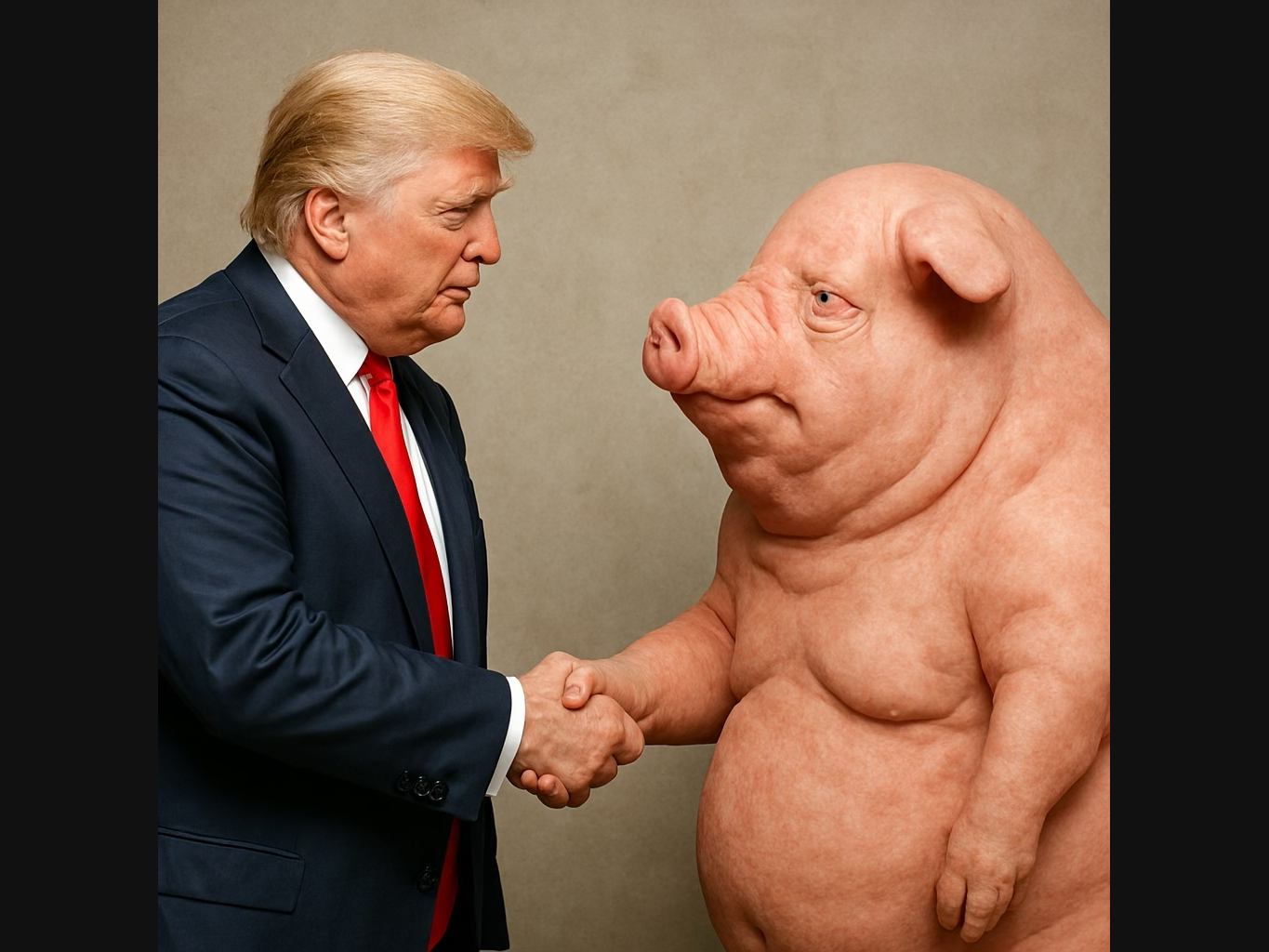
This July 4th, as Americans gather to celebrate the ideals of liberty and self-governance, we face an uncomfortable question: why is the United States trusted less on the world stage than it has been in nearly two decades? The answer, in large part, begins with the image that Donald Trump has cultivated—an image forged not just in the White House, but over decades at Trump Inc., where the CEO was treated as a dictator. This perception has done profound damage to America's global standing. Yet the underlying assumption is fundamentally flawed. In the real world of American corporate governance, no CEO—not even Donald Trump—can be a dictator. The checks and balances built into our system of public and private enterprise are precisely what make that image so misleading, and so corrosive when projected onto the presidency.
The evidence of America's declining trust is stark. A sweeping 2026 Pew Research Center survey of over 42,000 adults across 36 countries found that only 23% of respondents trust Trump to make the right decisions on international issues, while roughly two-thirds express either no confidence or complete distrust. Overall perceptions of the United States are equally grim: 57% hold an unfavorable view, while just 37% see the country favorably. Perhaps most alarming is the collapse among traditional allies. In Canada, trust in the U.S. as a reliable partner fell from 83% in 2022 to just 35% in 2026. Similar declines were recorded in Germany (83% to 39%), Sweden (83% to 31%), France (62% to 27%), and the United Kingdom (82% to 49%). The global image of the United States, Pew concluded, is among the weakest the research center has found in twenty years.
Why this dramatic fall? Observers point directly to the Trump administration's conduct. Critics have described Trump's governance as resembling that of a "medieval king, with an administration of fawning courtiers", warning that "the US is no longer trusted as a reliable and dependable player". The president, they argue, "seems to have no understanding of the boundaries that are meant to separate public office from private interests". Trump has alienated allies with lies, insults, tariffs, threats to withdraw from NATO, and proposals to annex allied territory. A Washington Post/ABC News poll found that 71% of Americans believe he isn't honest and trustworthy. This credibility gap endangers national security, as foreign allies and adversaries alike "don't believe much of what he says".
Find out what's happening in San Josefor free with the latest updates from Patch.
At the heart of this crisis is a particular image: the CEO as dictator. Trump spent decades cultivating this persona at Trump Inc., where his word was law and loyalty was paramount. He has brought that same mindset to the presidency, treating the executive branch as his personal domain and the Constitution as a suggestion. But here is the crucial point that the world—and too many Americans—have forgotten: **no CEO in the American corporate system can actually be a dictator.** The very structure of our corporate governance makes it impossible.
Consider the publicly traded company. Here, the CEO serves not as sovereign but as an employee of the board of directors. Board members are bound by fiduciary duties—legal obligations to act in the best interests of the corporation and its shareholders. They owe duties of care, loyalty, and good faith. Executives, including the CEO, are accountable to the board. The board appoints, evaluates, and can replace the CEO. Shareholders, not executives, are the company's collective owners. When a CEO oversteps, the board can—and does—act. In 2025, the board of Market Basket filed a 35-page complaint describing its CEO as a "dictator" in connection with his removal from the company. The very word was used by a board to oust a chief executive. That is the opposite of dictatorship.
Find out what's happening in San Josefor free with the latest updates from Patch.
Moreover, the largest shareholders are not passive observers. Institutional investors like BlackRock, Vanguard, State Street, and Fidelity collectively control more than twenty percent of the votes of S&P 500 companies. These asset managers vote on executive compensation, board composition, and governance matters. They routinely demand accountability and transparency. Investors increasingly push for separation of the CEO and board chair positions, recognizing that when the roles are combined, "the board's role is diminished, and a lack of checks and balances can arise". Even in companies where the CEO also serves as board chair—nearly half of S&P 500 firms—the CEO must still answer to other directors, face shareholder votes, and comply with the laws of the DOJ, IRS, SEC, and state regulators. One CEO cannot simply decree policy; every major decision is subject to oversight, debate, and legal constraint.
What about privately held or family-owned companies? The same principles apply—often more rigorously. Even privately held corporations are formed with boards of directors, and those directors owe fiduciary duties to act in the best interests of shareholders. A family company, experts advise, "should have an independent, professionalized board, not one made up of golf buddies". Why? Because their biggest competitors are publicly traded companies listed on major stock exchanges. A family firm that operates like a dictatorship—ignoring board input, flouting legal compliance, alienating talent—can be "beat up anytime in the market." Competitive pressure alone forces private companies to adopt governance structures that constrain CEO power. The board's role is to ensure long-term success, not to rubber-stamp the founder's whims.
The irony is painful. The very system that Trump spent his career mastering—and that he now claims to have run as a dictator—is in fact a system of dispersed power, legal constraint, and accountability. The CEO of a public company cannot unilaterally fire the board; the board can fire the CEO. The CEO cannot ignore SEC regulations; the SEC can fine and prosecute. The CEO cannot treat shareholder money as personal property; fiduciary law forbids it. The reason Trump's "CEO as dictator" image is so damaging to America's global standing is not because it is true, but because it is a lie—and the world knows it.
When Trump projects this image onto the presidency, he undermines the very trust that America depends on. Allies see a leader who treats the Oval Office like a corporate fiefdom, who confuses loyalty with competence, who imagines that executive power has no limits. They see someone who "respects no real lines of authority" and who believes "that presidents have absolute power over executive branch decision-making". This is not how American democracy works. It is not how American corporations work. And the gap between Trump's fantasy and America's reality is precisely why the world no longer trusts us.
This July 4th, as we celebrate independence, let us also reaffirm the principles that made America worthy of trust: accountability, checks and balances, and the rule of law. The CEO who imagines himself a dictator is a figure of fiction—in the boardroom and in the White House alike. The truth, which our allies are desperate to see again, is that America's institutions are stronger than any one person's ego. The decline in trust is not permanent; it is a warning. We can restore confidence by demonstrating that we remember who we are: a nation of laws, not of men; a republic, not a corporation; a democracy, not a dictatorship.