Sports
Guerrero's Emergence Boosts Cap's Rebuilding: Part 2
Miranda Guerrero: "All of the girls on my team have something that they can contribute. That's part of what makes us a team—being able to support each other in some way or another."

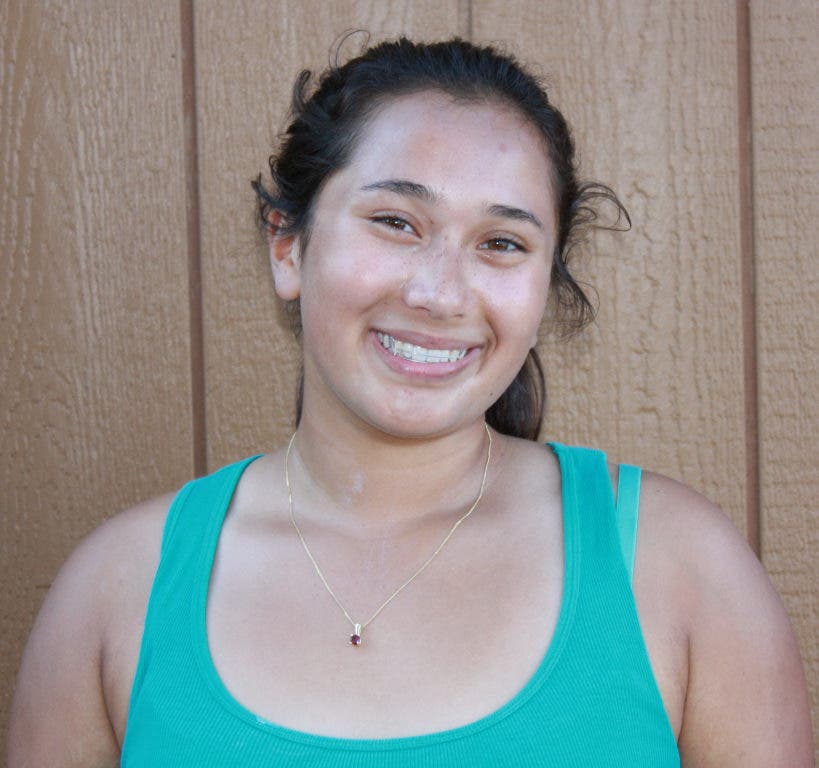
's Miranda Guerrero is a 16-year-old junior who made her varsity tennis debut last year in exhibition matches. Thanks to her hard work, dedication and a very technical approach to her practices and in-game feats, she's catapulted herself from an exhibition player to the No. 2 singles player. In addition to tennis, Guerrero swims the 200 individual medley and the 100 butterfly for the swimming team, capping it off with a 4.0 GPA. This is the second part of San Bruno Patch's .
Patch: You view your matches in a very particular way, dissecting the events analytically. What are some things that catch your eye during a match?
Guerrero: When I play tennis, I love focusing on what my opponents do well, particularly when they have a lot of control in terms of directing where the ball will land, even if they lack a bit in power. When my opponents play well, I feel good about myself and want to play better, so I watch for ways to challenge my opponent. Often, once I get a feel for a player, I can determine how they are going to hit a ball, even if my body does not always respond accordingly.
Find out what's happening in San Brunofor free with the latest updates from Patch.
Patch: Describe your competitiveness before, during and after the match.
Guerrero: I'll be honest. A lot of the time, girls before a match will talk about their opposing school based on other things they've heard or on previous experiences. However, I do my best to put those thoughts out of mind because the fact of the matter is that they do not relate to tennis and could have a negative impact on my game. When I step onto a court, I can't have my thoughts clouded by unnecessary competitiveness that stems from wanting to beat a girl because supposedly the people from her school are rude. It's distracting and, from my experiences, the girls are amicable.
Find out what's happening in San Brunofor free with the latest updates from Patch.
I guess what I'm saying is that I don't like to let my opponents' supposed personalities affect my competitiveness. What will spark my competitiveness is the thought that I definitely could win as long as I keep control of myself. The majority of my competition is with myself, anyway. Before the match, I am nervous. During, I am focused. After, I am happy to have played. That's it.
Patch: Who was your toughest opponent this season and what were the things that pushed you the most during the match?
Guerrero: I suppose it would be cliché to say that my toughest opponent is always myself, even if it's true. But, this question is difficult to answer because all of my opponents had different strengths that I was forced to adapt to. Mostly, my motivation is just to do better because I believe I can.
Patch: You work on your game daily and don't skip any practices. In what ways has that helped you and how gratifying do you feel the end results are?
Guerrero: For starters, I love the end results. But one thing that I notice about tennis is that you can easily have an amazing practice one day and do quite poorly the next. This is always really frustrating because just when you think you've made progress, it feels like you are regressing. However, I think the best gratification is when you learn that you can make certain shots in games and not just in practice.
Patch: With the loss of several seniors last year, how do you feel this team stacks up against its competition?
Guerrero: I feel that our singles players are still very strong, and our doubles members are improving daily, almost more visibly than our singles players. One of the things my team has going for it is that all the girls have leveled-heads and good relationships with each other, which is extremely helpful for alleviating stress during a game. Our coaches are also very supportive, although their coaching methods do conflict at times. With all of this taken into consideration, I think our team is definitely something to be proud of and, win or lose, we will be able to benefit from the very experience of playing.
Patch: Who are some people on this year's team who can make an impact? How?
Guerrero: Honestly, all of the girls on my team have something that they can contribute. That's part of what makes us a team—being able to support each other in some way or another. As for specific people, our No. 1 singles player, Magdalena Toval, is always inspiring to watch and has a good attitude that is contagious, but she is also extremely focused. But even our first-year players like Mitzi Rojas and Elizabeth Ramirez are making an impact. They are as dedicated as anyone else and are improving rapidly.
Patch: Having played doubles last year in some PAL (Peninsula Athletic League) matches. What are the main differences between playing singles and doubles?
Guerrero: In singles, you have to cover more distance without a partner to rely on. In some ways, this is really good, because it allows you to better track your own individual progress. Doubles teaches teamwork and calculated movement in a way that singles can't. Overall, I think that by playing one, you increase your ability to play another.
Patch: Any chance we'll get to watch you play doubles again this year? If you do, who would you partner up with and why?
Guerrero: Actually, Maggie (Toval) and I were hoping to play doubles at PALs this year. Last year we both went but had different partners. We want to partner up because we are friends but more importantly because we both think it would be beneficial to our playing as a whole. Also, we have different strengths and weaknesses that we hope we will be able to balance out. We are able to ease each other's stress well, too.
Patch: What parts of your game have been working for you so far this year and what areas are you still honing in?
Guerrero: My backhand has gotten a lot better this year, as has my footwork. I have been able to get to the ball really efficiently this year. I do, however, still want to improve my serve and hone my ability to control ball placement.
Patch: Walk us through your best memory as a Capuchino player and why are you particularly so fond of that moment?
Guerrero: As No. 1 and No. 2 singles, Maggie and I often play on adjacent courts, and often in between points, we will signal encouragement to each other. One time in particular, right after a signal, I was in the middle of a rally and was at the base line when my opponent hit a short ball. I was forced to race to save it and then returned it in such a way that my opponent was incapable of catching the ball before the second bounce. I tried to keep a fairly composed face although I was happy when I saw Maggie cheering relatively silently for me from the next court over. It demonstrates the positive environment that our tennis team thrives in as well as our camaraderie. Of course, the success and beauty of my shot helps, too.
