Politics & Government
Sacramento CAHill, Gray & Hertzberg to Introduce Legislation Launching California's Earthquake Early Warning System :
Bills Would Provide $23 Million in Start-Up Funds and Remove Prohibition Against Using State General Fund Dollars


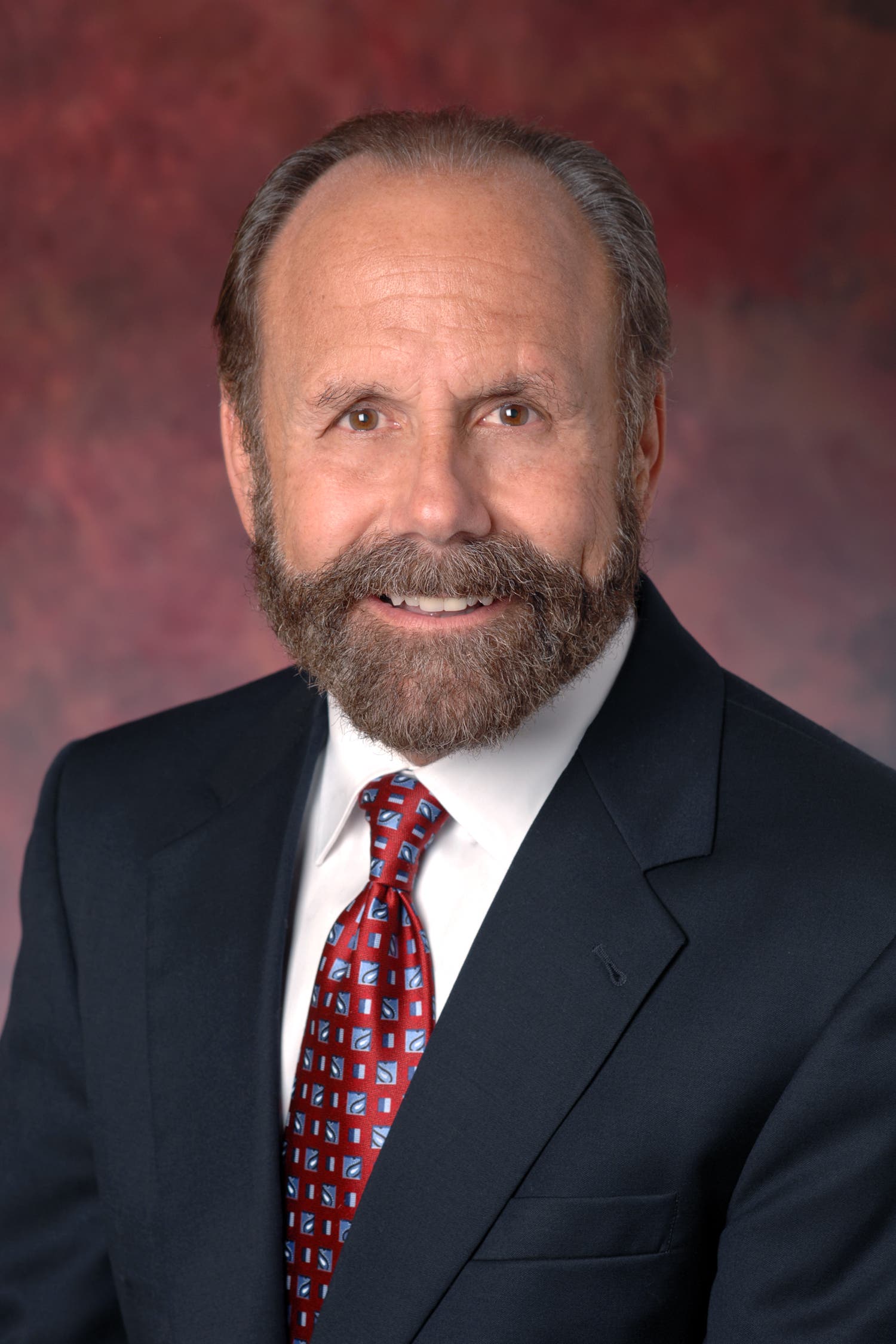
Hill, Gray & Hertzberg to Introduce Legislation Launching California’s Earthquake Early Warning System
Bills Would Provide $23 Million in Start-Up Funds and Remove Prohibition Against Using State General Fund Dollars
Sacramento - State Senator Jerry Hill (D-San Mateo and Santa Clara counties), Assemblymember Adam Gray (D-Merced) and Senator Robert Hertzberg (D-Van Nuys) will introduce legislation Monday to start funding a statewide earthquake early warning system to help save lives and protect the public before temblors strike.
Find out what's happening in San Brunofor free with the latest updates from Patch.
The mandate to create the statewide warning system has been on the books since 2013, with the intent of funding it through public-private partnerships. Those partnerships and funding have yet to materialize. SB 438 (Hill and Hertzberg) and AB 1346 (Gray) address that gap.
“I urge my colleagues and the Governor to join us in fulfilling our primary responsibility of protecting the public,” said Senator Hill. “There’s no valid reason not to make this relatively small investment in an early warning system that has the potential to save the lives of Californians and prevent injury. We owe it to Californians to get this system up and running as soon as possible.”
Find out what's happening in San Brunofor free with the latest updates from Patch.
“Funding programs that keep our constituents safer should be a top priority for the legislature,” said Assemblymember Gray. “The Earthquake Early Warning System will protect property, mitigate systemic damage, and above all save lives in the event of an earthquake. We cannot and will not wait for that funding to trickle in. It is our responsibility to ensure resources are available to get this system up and running as soon as possible.”
“California is a worldwide leader in so many areas of government and industry, but we are behind the times in launching an early warning system for earthquakes,” Hertzberg said. “We know it’s not a question of if – but when – another major earthquake will strike California. It’s crucial that we fund a statewide earthquake early warning system and get it in place right away.”
In 2013, California passed a law requiring the Governor’s Office of Emergency Services (CalOES) to develop a comprehensive statewide earthquake early warning system based on public-private partnerships. The law prohibited the use of General Fund dollars to create the system.
The early warning system is essential in California, which, according to the United States Geological Survey (USGS), is the second most seismologically active state. Only Alaska has more earthquake activity.
According to the Federal Emergency Management Agency, 66 percent ($3.5 billion) of the annual monetary losses resulting from earthquakes occur in California.
Seismologists have warned that the state is due for another big earthquake. The most recent Uniform California Earthquake Rupture Forecast, published in March 2015, predicts that there is 99.7 percent likelihood of a magnitude 6.7 or larger earthquake in California in the next 30 years. There is a 93 percent chance there will be a magnitude 7.0 earthquake or larger.
“The idea has been to fund the warning system without relying on state tax dollars. While we agree public-private funding models are helpful, the system is intended to provide core public safety benefits and as lawmakers we should be free to fund this service just like we do other emergency preparedness and public safety programs,” said Senator Hill and Assemblymember Gray. “This doesn’t mean that the system will be fully funded into the future. We still need to have - and we will have - conversations with project stakeholders about how to maintain the systems operability and long-term financing.”
“Our Legislative Analyst predicts the state will end the next fiscal year with a reserve of $11.5 billion. We should use a small fraction of that money to make a smart, one-time investment in a system that can improve public safety and save lives,” said the legislators. “We share Governor Brown’s commitment to fiscal restraint, however to not invest a small fraction of the overall state budget to implement the earthquake early warning system would be fiscally irresponsible.”
SB 438 and AB 1346 will have mirroring provisions that strike language in current law that prohibits General Fund dollars from being used to fund the Earthquake Early Warning System. Additionally, the bills will appropriate $23.1 million to install the needed seismic sensors, to implement the telecommunications technology, and to get the system up and running.
Background:
An earthquake early warning system is composed of a series of sensors in the ground that detect shaking and disseminate warnings up to 60 seconds before the shaking occurs. While the warning may only be a few seconds before shaking occurs, it can have many benefits:
· Providing time for residents to drop and cover
· Passenger and commuter trains can come to a complete stop or slow down to prevent derailment
· Doctors performing surgeries would be able to stop delicate procedures
· Elevators could automatically stop at the nearest floor and doors could open so people could exit
· Other automated responses could include fire station garage doors opening when alerts occurs so the doors don’t jam during earthquakes. Businesses can shut off equipment or put crucial operations into safe mode to protect workers and facilities
Currently, there is a prototype earthquake early warning system in place, called ShakeAlert, which is a partnership between the USGS, UC Berkeley, CalTech, and the Governor’s Office of Emergency Services. The system is funded largely by the USGS ($9 million) and the Gordon and Betty Moore Foundation ($10 million). The ShakeAlert system is comprised of about 400 sensors throughout the state and is limited to sending alerts to participating prototype system partners, such as Bay Area Rapid Transit (BART).
ShakeAlert does not provide earthquake warnings to the public or on a statewide basis because it does not have a dense enough network of sensors, nor enough connectivity to disseminate alerts on a broad scale. California, through the Governor’s Office of Emergency Services and the California Geological Survey, provides $5.2 million to operate a network of seismic sensors, called the California Integrated Seismic Network, which provides earthquake shaking information to the ShakeAlert system.
The law passed in 2013 was intended to expand the prototype system, but adequate funding has not been obtained for the expansion. As estimated by the USGS, at least $23.1 million in additional funding is needed for one-time start-up costs, and another $11.4 million is needed for ongoing maintenance and operation costs. Last December the federal government provided another $8.2 million for earthquake early warning to be split up between California, Washington, and Oregon, but the state of California has yet to provide any additional funding beyond what it already provides for seismic sensors because current law prohibits the use of General Fund dollars. The funding provided by Senator Hill’s, Senator Hertzberg’s, and Assemblymember Gray’s legislation would be used to launch the warning system, which would include installing 440 new and upgraded seismic sensors throughout the state, connecting 840 existing seismic sensors with communications equipment so they can be hooked up into the system, and developing a system to send alerts to the public.
When the Napa earthquake struck in August 2014, the ShakeAlert system provided BART with a 10 second warning. Had BART trains been running at the time (the earthquake struck early in the morning, before trains were running), the trains would have automatically slowed down or come to a complete stop when the alert was received.
Several other countries have already implemented earthquake early warning systems. After the 1995 Kobe earthquake that killed more than 6,400 people, Japan implemented a warning system that went online in 2007. The system helped save lives during the disastrous 2011 earthquake, which led to the closure of the Fukushima nuclear power plant. After more than 10,000 people died in the 1991 Mexico City earthquake, Mexico implemented an early warning system as well.
###
=
Robert Riechel
E=Mail: SanBrunoPatch.Robert@Yahoo.com
Photo Credit: San Bruno CA Patch Archives
Source Credit: CA State Senator Jerry Hill
I support the American Cancer Society’s mission and Relay For Life San Bruno CA
American Cancer Society’s MISSION Statement:
The American Cancer Society is the nationwide community-based voluntary health organization dedicated to eliminating cancer as a major health problem by preventing cancer, saving lives, and diminishing suffering from cancer, through research, education, advocacy, and service.
