Community Corner
Celebrate Our Bay, Creeks and Wetlands on Coastal Cleanup Day, September 17
Volunteers Wanted for Local Cleanup and Restoration Events
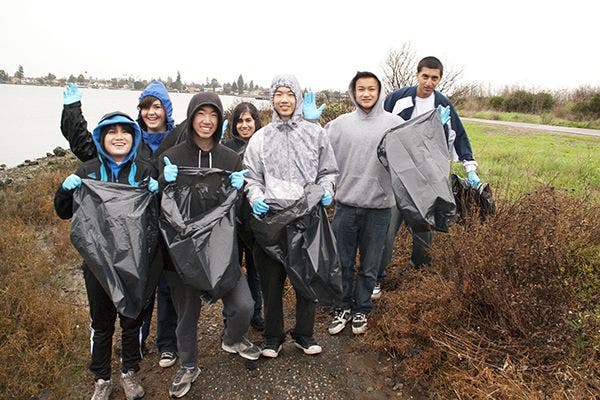
Volunteers throughout Alameda County are preparing for the 32nd Annual California Coastal Cleanup Day scheduled for Saturday, September 17. The event is expected to draw tens of thousands of participants throughout the state, who will help remove trash accumulating on California’s beaches and inland waterways. In 2015, more than 68,300 volunteers joined the half-day effort, ridding California of more than 1.1 million pounds of trash. In Alameda County, volunteers can choose many cleanup and restoration events on or around September 17, organized by public agencies and non-profit groups.
“Coastal Cleanup Day reminds us of the extremely negative impact litter—and especially plastic debris—has on wildlife and our water quality in general, and gives everybody an opportunity to be part of the solution,” noted Clean Water Program Manager Jim Scanlin. “The Clean Water Program encourages citizens to stop litter at the source by always placing trash in garbage cans or recycling containers, buying reusable instead of disposable products and minimizing packaging as much as possible.”
Find out what's happening in San Leandrofor free with the latest updates from Patch.
Only a small amount of marine debris enters waterways directly. The vast majority of litter found in the ocean—up to 80%—originates inland, where it is carried by rainwater, street runoff and wind into the storm drain system. From there litter travels into creeks, the Bay and the ocean, as stormwater generally does not pass through a water treatment plant. Litter poses a hazard to marine wildlife, entangling and poisoning animals that mistake the items for food.
Litter also brings chemical pollution into our waterways. Littered cigarette butts—made from cellulose acetate, a non-biodegradable plastic—carry thousands of toxins including 43 known carcinogens that are released into the environment when filters slowly break apart into smaller and smaller plastic pieces. Once ingested by marine animals, these dangerous pollutants accumulate as they enter into the food web, and potentially into human diets.
Find out what's happening in San Leandrofor free with the latest updates from Patch.
To learn more about the impact of litter and everyday actions to prevent it, visit www.cleanwaterprogram.org/residents/litter-prevention.html.