Schools
SMUSD Considers Liberalized Access to Honors/AP Courses
The Academic Advisory Committee proposed a policy to allow more students into AP and honors courses and drop the extra point for those courses when calculating GPA.


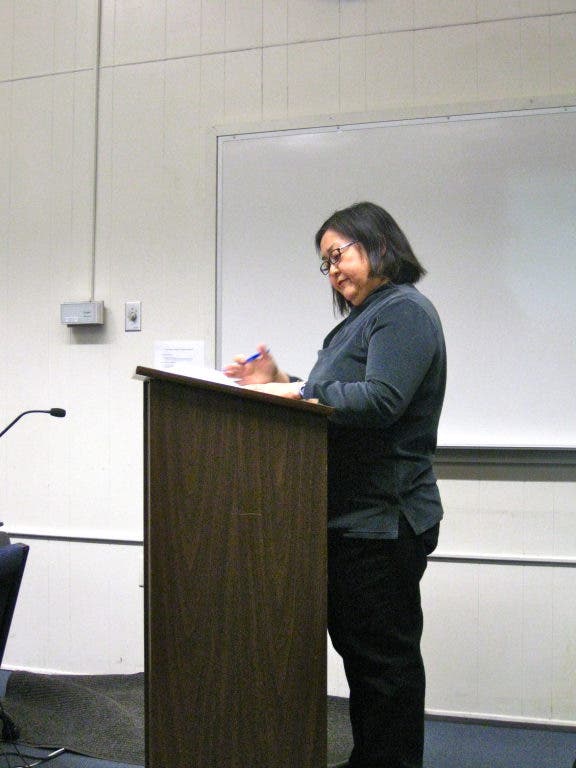


The Academic Advisory Committee presented a policy to the San Marino Board of Education Monday night to liberalize enrollment in San Marino High School honors and Advanced Placement courses.
“We recognize that these selective colleges favor applicants who have challenged themselves by taking rigorous courses such as Advanced Placement and Honors courses,” stated the policy. The Academic Advisory Committee recommends that the San Marino Unified School District liberalize access to these courses “in order to open these courses to as many ambitious students as may be practical, so that they may enjoy the benefit of a rigorous academic course load,” the policy continued.
The new policy would still require students to complete the appropriate prerequisites. If a student fails to achieve a grade of a ‘B’ or higher in a prerequisite he or she can petition the teacher who will consider special circumstances, such as “intensified student commitment.”
Find out what's happening in San Marinofor free with the latest updates from Patch.
“I am a huge proponent of liberalizing AP classes but I don’t want teachers and counselors to get the backlash,” said Board of Education Vice President Nam Jack, who wondered if academically at-risk students who take an AP class under the new policy would blame teachers and counselors in the case of a poor course grade. “I want to make sure we’re opening it up but not just to kids who are at risk.”
San Marino High School principal and active policy participant Loren Kleinrock, also a proponent of more relaxed honors and AP enrollment, had his share of concerns.
Find out what's happening in San Marinofor free with the latest updates from Patch.
“In my experience, teachers get the brunt,” said Kleinrock. “They spend a disproportionate amount of time with kids who shouldn’t be there.”
Adding more sections for honors and AP classes also means bigger class sizes for the kids who are not at the honors or AP level since less of those sections will be available, Kleinrock noted.
Since the AAC recognized that students may do poorly in or fail the AP or honors classes if the students are not accustomed to those courses, the AAC also provided the following guidelines designed to help students make the proper course decision:
- Prior to the start of the course, assign summer work or reading that challenges the students and gives them a taste of the rigor to come.
- Plunge briskly into the course material at a high level of intensity during the first two weeks with the aim of showing students the challenge they have undertaken.
- Permit students to drop the course for up to three weeks after it begins, subject to the constraints of available alternatives
- Counsel students believed to be at risk of failure, urgently if necessary, and notify their parents. This counsel can be provided by faculty and/or college counselors. To minimize ambiguity, counselors may ask parents to acknowledge receipt of a form that the student is taking the course “against academic advice.”
“The AP and honors classes offered at San Marino High School have always been a point of frustration for myself and my kids over the years,” said Miriam Nakamura-Quan, whose son is a San Marino High School senior and daughter is now a college junior. “My son received a ‘C’ in freshman honors English and this grade has haunted him his whole high school career.”
Nakamura-Quan said that due to her son’s grade in that class, he was restricted from honors and AP courses that he needed to be highly competitive with his peers who have access to those courses at their high school.
The College Connection newsletter sent to high school juniors and seniors outlines key factors for college acceptance and Nakamura-Quan said that four of the eight factors involve honors and AP classes, such as strength of curriculum.
“He has a weighted GPA of almost 4.0 and was just named a finalist as a National Merit Scholar, so he’s not dumb,” said Nakamura-Quan of her son. “This exclusion from these courses has been detrimental to his college applications.”
Members of the AAC enthusiastically applauded Nakamura after her comments.
San Marino Board of Education President and AAC member Chris Norgaard said there seems to be consensus at the committee level for the recommendations, but the one trickier area is the extra point for AP and honors classes.
The proposal includes not adding an additional point when calculating honors and AP grades since it may help weed out the students taking those classes just to inflate their GPA.
Also, colleges “create their own uniform systems for evaluating GPA. Therefore, the perceived advantage conferred by inflating the grade if the rigorous courses is illusory.”
Board of Education Clerk Karen Preston expressed she doesn’t think it does any harm to keep the extra point and parent Birgit Gabig believes in keeping the extra point to encourage the students who challenge themselves.
“There has to be further exploration on the effects of that in every way including the expectations of kids that were already on a track where they thought they were on a five-point scale for AP,” said Board President Chris Norgaard.
The proposal would also eliminate reporting deciles or other class rankings to universities.
“It’s an injustice to so many kids,” said Kleinrock of reporting class rank, since so many high-achieving students exist in the district.
The proposal will have its official first reading at some point in March, said Norgaard, followed by a second reading and Board of Education vote at the second March meeting, said Kleinrock.
Kleinrock added that an informational program for parents will take place before the vote.
Get more local news delivered straight to your inbox. Sign up for free Patch newsletters and alerts.