Schools
Camp Our Time Helps 14-Year-Old San Rafael Student Gain Confidence
New York camp offers special place for kids who stutter
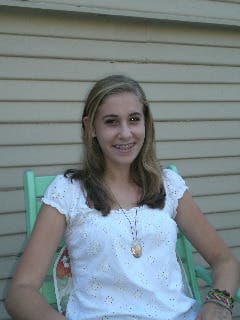

"You know what you want to say, but you can't get it out," says Linnea Schurig, a San Rafael High sophomore who has stuttered since she was three.
She's describing the frustration of having a "silent block" that stops the flow of her speech and often triggers an expression of bewilderment, unease or pity on the faces of people to whom she's talking.
"I used to feel a lot more frustrated than I do now," says Linnea, a smart and lively 14-year-old who has always been the only kid in her schools that stuttered. For many years, she felt isolated, ashamed and angry. But over the past few years, as the severity of her blocking has diminished and she's connected with others who stutter, she's become more confident and at ease with herself and the world.
Find out what's happening in San Rafaelfor free with the latest updates from Patch.
That's due in large part to her experience at Camp Our Time, a remarkable program in New York's Catskills Mountain that brings together kids who stutter from around the country and abroad. Among other activities, they write and perform original plays, raps, skits and songs. Rather than trying to teach kids not to stutter, the camp staff encourages them to embrace who they are and gives them the confidence to communicate, however long it take to finish a sentence.
"It's very freeing," says Linnea, who recently returned from a week at Camp Our Time, her second summer there. She's been Skyping with some of her friends from camp, where she wrote and sang a song about happy endings.
Find out what's happening in San Rafaelfor free with the latest updates from Patch.
"We all have some kind of block or tick," she says, sitting in the garden of her family's cozy Victorian in Gerstle Park. She's wearing a white peasant blouse and denim shorts, braces on her teeth, and a half dozen rainbow-colored friendship bracelets from Camp Our Time on her left wrist. "At camp, you know nobody is going tease you, even if it takes 10 seconds or a year to say what have to say. No one is going to say, 'Took you long enough.' I got that a lot when I was younger."
At Sun Valley Elementary School, Linnea would sometimes run away and hide when other kids laughed or teased her when she stuttered. It was painful time. Unlike 60 percent of the people who stutter – about 3 million American adults do – genetics play no part in her speech problem; nobody in her family stutters. (Researchers don't know exactly why people stutter except that people who stutter process language and speech in a different part of the brain than those who don't.)
"I thought there was something particularly wrong with me," says Linnea, whose mother, journalist Melaine Haiken, began taking her to speech therapists when the girl was three. Linnea began learning fluency techniques aimed at slowing down speech and getting it to flow more easily. Those techniques have been helpful, but Linnea's blocks and ticks increased in grade school. Her mother sought out experts, who recommended everything from medication to nutritional supplements.
"The more I tried to help, the more I was making Linnea feel like she had this horrible problem," says Haiken, who no longer believes, as she did then, that if you work hard enough with your child, you can cure her stuttering.
"I think that's what made me stop talking," says Linnea, who hit the occasional block during this conversation but plugged right along. "If there was something wrong with the way I talk, why should I talk at all? That kind of makes sense, in a twisted, logical way."
Things began to change when Linnea and her mom began attending the annual conference of Friends: the National Organization of Young People Who Stutter. Linnea, who was seven at the time, had never met anyone else who stuttered.
"It was a totally new experience," Linnea says. " People wouldn't lose eye contact with you when you started to block. They were truly interested in what you had to say, not how you were saying it."
The same feeling of kinship prevails at Camp Our Time, founded by New York actor Taro Alexander, who's stuttered since he was five.
"The main philosophy of the camp is to accept yourself, to know that stuttering never has to hold you back from anything you want to do," Alexander says. "As long as you have confidence in your self and know how to communicate, the sky is the limit."
He calls Linnea "one of the most remarkable young ladies I've ever met. She's smart, courageous and has a great sense of humor. She's a leader at camp. Time and time again, she's willing to reach out and offer help to a child who's really scared. She's going to be a huge success at whatever she decides to do."
These days, Linnea, a talented painter who may want to write fiction for a living, isn't as scared of stuttering as she once was. "It's a combination of growing confidence and growing up," she says with a smile.