Politics & Government
Yaroslavsky Talks Politics, Mayoral Race
County supervisor tells Sherman Oaks Homeowners Association he'll decide soon whether to run for mayor of L.A.
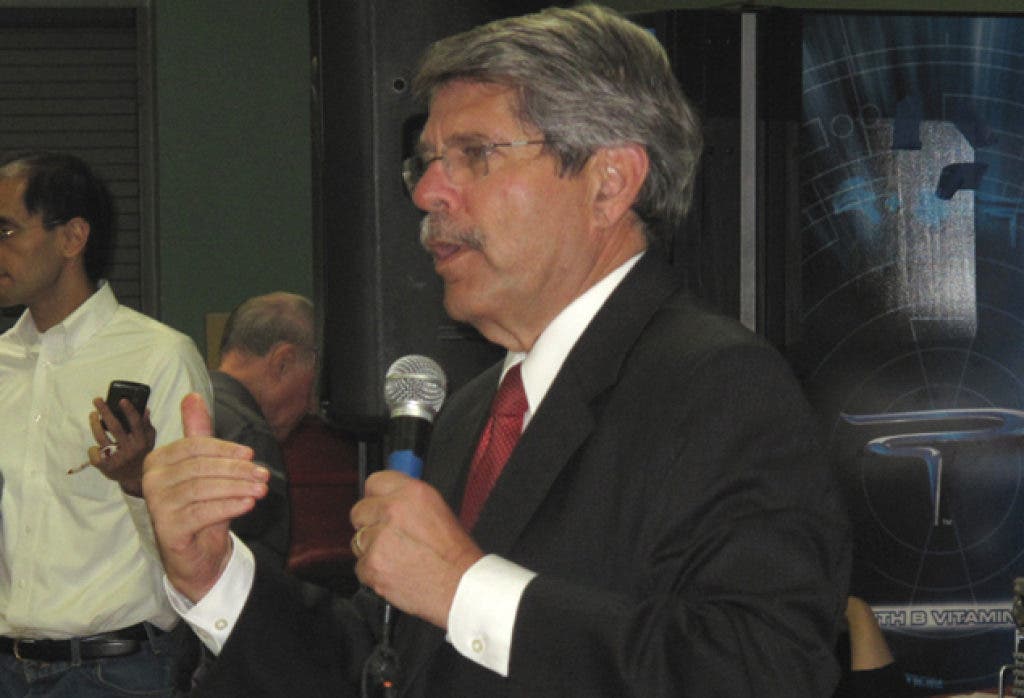


Zev Yaroslavsky is still pondering whether to run for mayor of Los Angeles. The soon-to-be-termed-out Los Angeles County supervisor answered the obvious question during an appearance Wednesday night before the Sherman Oaks Homeowners Association (SOHA).
“I’m not a believer in term limits, but four decades is a good run,” Yaroslavsky said of his 36 years in elected office as a city councilman and, subsequently, county supervisor. “I’ve got to decide if I want to make it five.”
The decision is mainly personal, namely what to do with the rest of his productive life, and he will decide soon, Yaroslavsky said. The lineup of candidates to replace termed-out Los Angeles Mayor Antonio Villaraigosa is still in the early stages, but five declared candidates exist: City Councilwoman Jan Perry, city Controller Wendy Greuel, council President Eric Garcetti, former Deputy Mayor Austin Beutner and radio host Kevin James.
Find out what's happening in Sherman Oaksfor free with the latest updates from Patch.
Although Yaroslavsky’s appearance Wednesday was billed as an update on issues, the spirit of politics was in the air, with the supervisor repeating his Aug. 31 endorsement of Rep. Howard Berman (D-Valley Village), who is seeking reelection in the newly redrawn 30th congressional district in the West Valley.
Berman is running against another longtime Democratic incumbent, Rep. Brad Sherman (D-Sherman Oaks). Yaroslavsky faulted redistricting for making it “a real shame that people of like minds have to run against each other.”
Find out what's happening in Sherman Oaksfor free with the latest updates from Patch.
He praised SOHA for helping to defeat a county redistricting plan that would have put Sherman Oaks in the same supervisorial district as Long Beach, Cerritos and Lomita. Those boundaries were intended to correspond to areas of Latino voter strength. But Yaroslavsky called the proposed boundaries “stupid” and “absolutely ridiculous” and thanked SOHA for mobilizing against the idea, which was defeated in favor of districts that remain similar to existing ones.
In other remarks, he criticized the release of 33,000 convicted felons from state prisons because of overcrowding. The state is providing county governments with 80 cents on every dollar it costs the state to house the felons in the belief that counties will more cost-effectively handle the felons, he said.
But many of those released could end up back in county jail, which is itself overcrowded and suffering from a “culture of rule violations,” he said. To address problems at the jail, Yaroslavsky said the county Board of Supervisors this week approved creation of a panel to come up with a plan within 180 days to fix what’s wrong there.
Meanwhile, he praised the county’s frugality and wise money management, which enabled the county to keep providing services and avoid employee layoffs or furloughs, albeit at the price of omitting cost-of-living pay raises. But new measures are needed to boost the area’s economy and the America Fast Forward plan could provide that boost, Yaroslavsky said.
Under the proposed plan, which Villaraigosa has supported, the county could get a federal advance of $500 million for transit projects to be paid back over 10 years from the half-cent sales tax approved by voters in 2008 as Measure R. Los Angeles County could guarantee payback, improve infrastructure and generate jobs.
With 22 percent of the nation’s economy based in California, and Los Angeles representing a third of the state’s economy, Yaroslavsky concluded, “If California is going to get out of the economic doldrums, it has got to happen in Los Angeles County. If we want to solve the nation’s economy, it all starts in L.A. County.”
State Sen. Fran Pavley (D-Agoura Hills) also appeared Wednesday evening with a Sacramento update. She mentioned the recent hearing on the Los Angeles River revitalization plan and said reclaiming river water for human use makes sense, since most of it now rushes out to sea down a flood-control channel.