Crime & Safety
State Supreme Court Denies Latest Appeal by Man Convicted of Murdering Three Boys
Harold Ray Memro went on to allege that he was coerced into confessing by the South Gate Police in the 1970's.


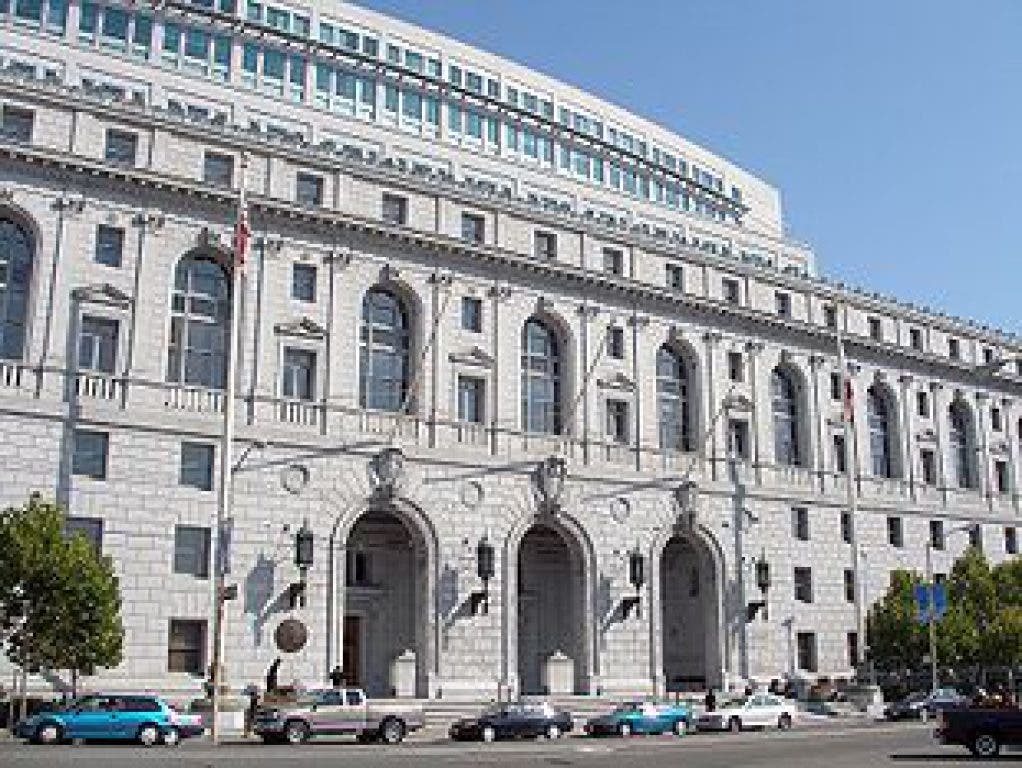
LOS ANGELES (CNS) - The California Supreme Court today denied the latest appeal in the case of a man convicted of murdering three boys in Los Angeles County in the 1970s.
The state's highest court unanimously rejected a petition filed by attorneys for Harold Ray Memro, who legally changed his name to Reno while on death row in December 1994.
Find out what's happening in South Gate-Lynwoodfor free with the latest updates from Patch.
Memro was convicted of first-degree murder for the July 1976 slaying of 10-year-old Ralph Chavez Jr. and the October 1978 death of 7-year-old Carl Carter Jr., and second-degree murder for the July 1976 killing of 12-year-old Scott Fowler.
His initial conviction for the slayings was overturned by the California Supreme Court and he was retried and again sentenced to death in 1987.
Find out what's happening in South Gate-Lynwoodfor free with the latest updates from Patch.
Chavez and Fowler were found dead near a pond in John Anson Ford Park in Bell Gardens on July 26, 1975. The boys -- who had been fishing at the park -- had their throats slit.
Memro told police that he had gone to the park to take pictures of young boys and admitted slitting the boys' throats, according to a 1995 ruling from the California Supreme Court.
He also told police that he choked the 7-year-old boy -- who was the son of a family friend -- after the youth asked to leave Memro's apartment where he had hoped to take nude photos of him, according to the 1995 ruling.
Memro later claimed that his confession involving the 1975 killings was coerced by South Gate police.
In the latest ruling, Associate Justice Kathryn M. Werdegar wrote that there was ``strong, even overwhelming evidence he was guilty of killing three boys, that he forcibly sodomized one victim (possibly after he was dead) and that he represented a continuing threat to the safety of children in the neighborhood (inferable from the discovery by police that petitioner possessed hundreds of photographs of young children).''
The justices found that the 521-page petition filed by the defense in its latest appeal is ``an example of an abusive writ practice'' and ``is by no means an isolated phenomenon.''
``Some death row inmates with meritorious legal claims may languish in prison for years waiting for this court's review while we evaluate petitions raising dozens or even hundreds of frivolous and untimely claims,'' Werdegar wrote.
The California Supreme Court will allow an unlimited length for the first habeas corpus petition submitted on a death row inmate's behalf, but limit subsequent petitions to 50 pages, according to the ruling.
From City News Service
Keep up with South Gate Patch Latino by subscribing to breaking news alerts, liking us on Facebook and following us on Twitter. Have an event or announcement you'd like to publicize? Submit them for free.
Get more local news delivered straight to your inbox. Sign up for free Patch newsletters and alerts.