Arts & Entertainment
Fate Of $30M Nazi-Looted Masterpiece To Be Decided In LA Trial
Eighty years after a woman was forced to trade a masterpiece for her life, her family is fighting to regain the $30 million work of art.


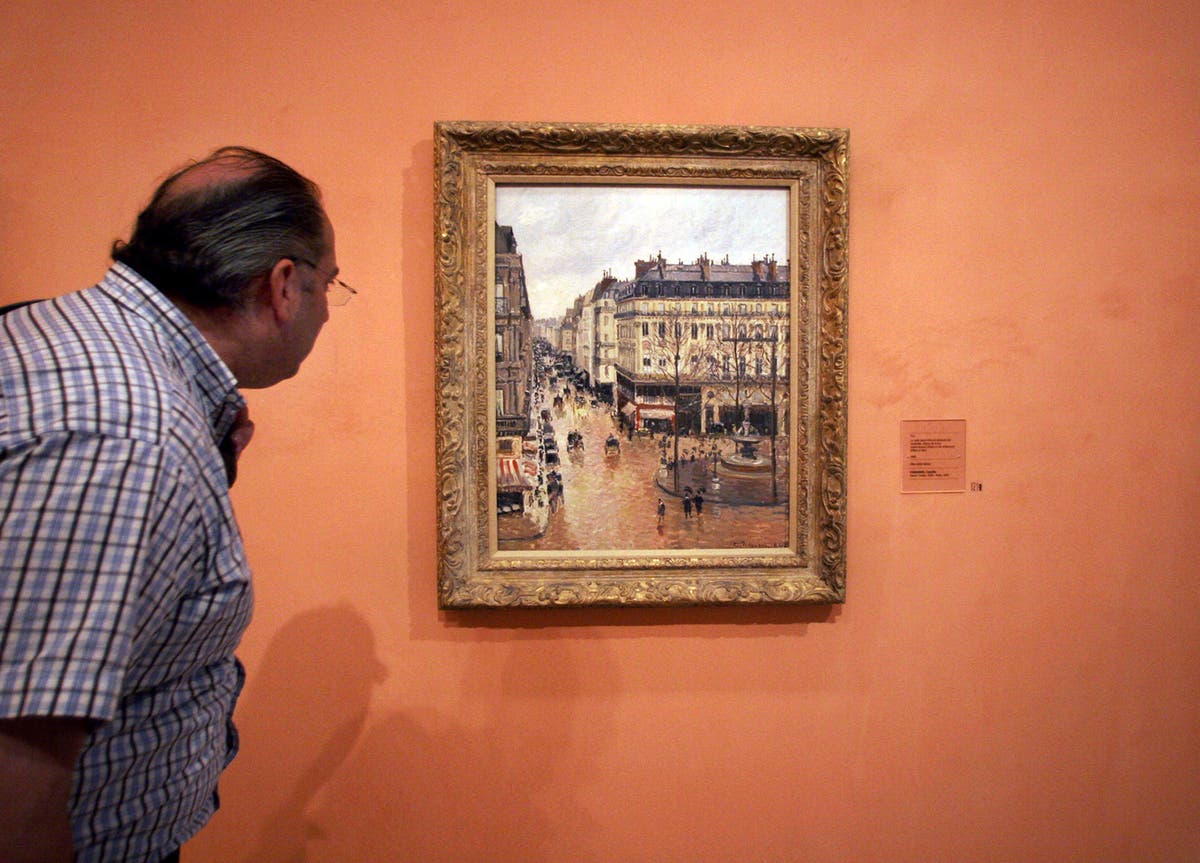
LOS ANGELES, CA —Trial is set to begin in Los Angeles Tuesday in a case that could decide the fate of a $30 million painting allegedly looted by the Nazis during the Holocaust.
The legal battle over Camille Pissarro's "Rue Saint-Honore: Afternoon, Rain Effect" has garnered international attention because of its historic import. The San Diego heir of a Jewish art collector forced to flee Berlin in the 1930s is suing the the Thyssen-Bornemisza Museum in Spain, seeking to have the painting returned on the grounds that the museum should have investigated the artwork's tainted provenance. Spain has fought against having to return the masterpiece for nearly two decades.
Lilly Cassirer, whose Jewish family owned a prominent Berlin art gallery before the war, was forced her to surrender the painting to a Nazi official in exchange for the exit visa she needed to escape the country, according to a lawsuit filed by her descendants in 2005. She was among the last of the family to flee ahead of the Holocaust. Her sister, who remained, was later killed in a Nazi death camp.
Find out what's happening in Studio Cityfor free with the latest updates from Patch.
The Nazis sold the painting to an anonymous buyer during the war, and it seemed lost to the Cassirer family for more than half a century.
"My grandmother never knew what happened to the painting," Lilly's grandson Claude Cassirer told the Los Angeles Times in 2010 before his death.
Find out what's happening in Studio Cityfor free with the latest updates from Patch.
But the painting depicting 19th century Paris ended up in the Madrid museum, where it has been since 1993. Then one day 18 years ago, a friend of the Cassirer family saw it, and called Claude Cassirer with the news.
“I was in shock,” he told The Times in 2010.
According to court documents, the Swiss industrialist Baron Hans Heinrich Thyssen-Bornemisza purchased the painting in 1976 from a St. Louis art collector. Then Spain bought Thyssen-Bornemisza's collection to hang at his namesake museum, which repeatedly refused to return the painting to the Cassirer family, according to the lawsuit.
Five years after Claude Cassirer, Lilly's grandson — a part-time resident of Coronado — filed suit, a judge dismissed the case. That decision was overturned in 2013 by a federal appeals court, setting the stage for the non-jury trial scheduled to begin Tuesday. Since Claude has died, his 64-year-old son, David Cassirer, has become the plaintiff, along with the United Jewish Federation of San Diego County.
The Cassirer family originally filed the lawsuit following a Supreme Court decision allowing U.S. citizens to sue foreign governments in federal court over art plundered by the the Nazis. The main issue at trial is expected to be the provenance of the piece: What did the museum know about the painting's tangled history and when did they know it?
David Boies, who represented Al Gore in the fight over the 2000 presidential election and argued on behalf of gay marriage before the Supreme Court, is representing David Cassirer. In an interview, he told the Los Angeles Times that he'll argue at trial that the failure on the part of the baron and Spanish officials to heed clues pointing to the painting's history amounted to "willful blindness."
Most telling, Boies said, are the remains of labels on the back of the painting, which have been torn or fallen off over the years. One of the partial labels, which are typically affixed to track ownership as a painting changes hands, is from the art gallery Lilly Cassirer's father and a relative ran in Berlin. Boies also highlighted records from the baron's archives that, he said, show the baron deliberately falsified where he bought the painting in an effort to conceal its history.
To win the case, Boies must convince the judge the baron or museum officials were so negligent that under Spanish law they amount to being accessories, however distant, to the Nazis' theft of the painting.
City News Service and Patch Staffer Paige Austin contributed to this report. Photo: This May 12, 2005 file photo shows an unidentified visitor viewing the Impressionist painting called "Rue St.-Honore, Apres-Midi, Effet de Pluie" painted in 1897 by Camille Pissarro, on display in the Thyssen-Bornemisza Museum in Madrid. A Jewish woman's acceptance of a settlement from the German government for the Pissarro painting looted from her by the Nazis did not bar her grandchildren from suing to try to get the masterpiece back, a U.S. federal appeals court said Monday, July 10, 2017. (AP Photo/ Mariana Eliano, File)
Get more local news delivered straight to your inbox. Sign up for free Patch newsletters and alerts.