Jun. 13, 2013 The Californian.com
Long before the meeting was opened up to public comment, criticisms from audience members questioned the wisdom of some of the DPR proposals. Most of the pointed comments and questions revolved around the buffer zones and the acceptable level of exposure.
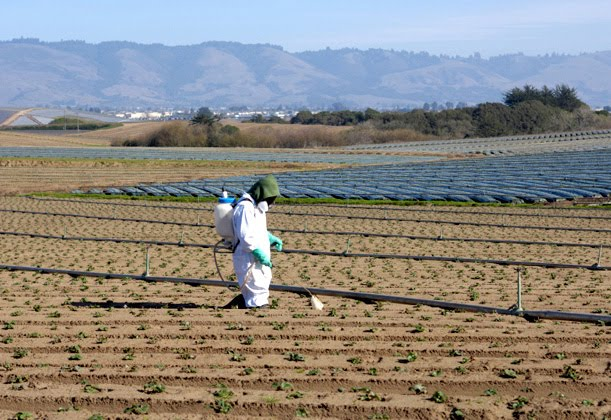
For example, the DPR presented multiple thresholds of allowable exposures, ranging from the 80th percentile to the 95th percentile within a given buffer zone. Buffer zones are areas surrounding a strawberry field where no person can be in for a set number of hours following application of chloropicrin. The buffer zones vary depending on such factors and wind direction, number of acres treated and the method of application.
Find out what's happening in Watsonvillefor free with the latest updates from Patch.
At the 80th percentile, standing on the edge of the buffer zone, it would be acceptable to inhale amounts greater than the 73 parts per billion the DPR has established as a maximum 20 times out of 100 applications. At the 95th percentile, the goal would be that a person would inhale amounts greater than 73 ppb five times out of 100 applications.
“But wouldn’t you want your airplane to land 100 percent of the time?” asked Michael Marsh, an attorney with the Salinas office of California Rural Legal Assistance.
Find out what's happening in Watsonvillefor free with the latest updates from Patch.
The exact percentile that will be implemented has not been decided yet, DPR officials said. That decision will ultimately be a policy decision rather than a scientific determination, which prompted audible groans by some members of the audience. It will also be a factor in determining the depth of buffer zones.
“The decision won’t be based on toxicology reports,” said Lisa Ross, a scientist who is the branch chief of DPR’s Worker Health and Safety Branch. “Other things come into play.”
Growers are hoping that one of the things that come into play is the economic impacts associated with chloropicrin.