Neighbor News
2017 Farmington Valley Landscape Desing & Architecutre Trends
2017 gardening trends, Farmington valley landscaping, stone wall landscaping, Organic gardening, jared paul rozborski, Connecticut valley

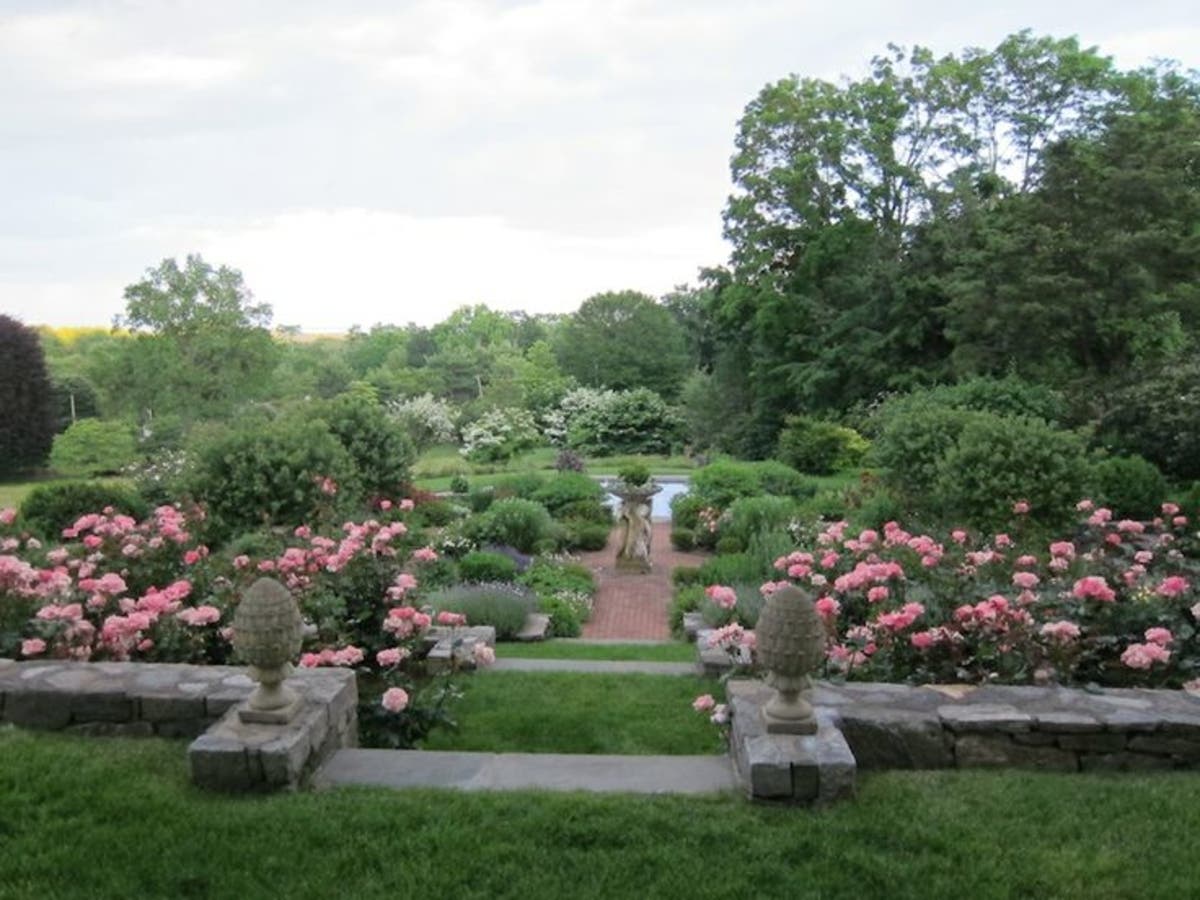


Connecticut Valley Home Services LLC Presents
Farmington Valleys 2017 Most Influential Trends this season
Call Jared for your consultation today 860-294-6854
Find out what's happening in Avonfor free with the latest updates from Patch.
If you want to stay ahead of the curve it’s always a good idea to keep an open mind towards new colors, textures & species to brighten your new beds. If your like most of us have no idea where to start hire a local landscape professional who is familiar with the local shrubs, trees and plantings that will be most successfully incorporated into your properties design. I've always found the local nursery is abundant with helpful knowledgeable people who know the local professionals.
Sustainability
Yes, that ever-present buzzword is going to be a major concern for clients this year. While customers are very interested in sustainability, it will be up to you to decide how to be sustainable this year.
Find out what's happening in Avonfor free with the latest updates from Patch.
“Sustainability has become a bit overused as a word, so to get people’s attention I think we need to break it into components – for example, ‘saving bees,’ ‘creating diversity,’ or using the word ‘ecology’ or ‘ecological,’“Being more specific about what sustainability actually is works better than just a difficult-to-define buzzword.” Remember the definition of Sustainability: avoidance of the depleation of natural resources in order to achieve maintaining ecological balance.
Some of the recent sustainable projects I have designed are an increase in include turf healthcare, vegetable gardens, orchards, green roofs, smart irrigation controllers and honeybees. Whenever possible, advises landscapers to partner with experts in bee keeping, vegetable gardening and green roofs.* Remember its always better to hire a certified, insured professional for one cost than a couple different semi-pros who overlap and undercut quality..”
Another option landscapers have is to look at cleaner fuels, such as propane, or opting to use battery-powered equipment in certain situations to reduce their use of gas. Surveys have shown that consumers place a premium on eco-friendly companies and are willing to pay a higher price as well.
Redesigned lawns
In the mindset of sustainability, the traditional lawn is now being seriously reconsidered.
“Lawns are the ecosystem that bring people together,” says Jared Paul Rozborski, owner of Connecticut Valley Home Services. “They welcome people into the landscape. I’m not a hardliner who is anti-lawn but two elements that desperately need to change are the vast expanses of lawn no one goes on and how lawns are managed.”
Most residential lawns are saturated with synthetic chemicals & unnecessary toxins, that defeats the purpose of a Sustainable lawn. These synthetic products have a secondary effect downside, one that threatens the environment and the very future of food production. Chemical fertilizers, herbicides and pesticides poison our waters, our soils, other living creatures and our own bodies. Their effectiveness, touted by big budget, corporate-driven marketing plans, isn’t all it’s cracked up to be. In light of these trade-offs, and the fact that healthy and potentially more effective organic alternatives exist, why should we risk our soils, our water and the health of our children
For this shift to take place, it is stressed that an education phase must occur for both landscapers and their customers.
“All of us (landscapers and landscape designers) have a responsibility to educate our clients about the consequences of what we do with clients’ gardens, and the role of organic lawn fertilizers have on our ecosystem”. It means being well-educated about what it means to be sustainable to do that. When I talk with clients – often about their lawn – I give them information they often do not hear from anyone else so they can make an educated decision. I don’t just say ‘You shouldn’t do this’ I tell them why they shouldn’t do it.”
Aside from shifting to more organic maintenance practices, lawn-like alternatives are also being selected to create a less demanding expanse of green that can still be enjoyed.
“There are many groundcovers and other types of grass seed that are combined with complementary plants that create either a beautiful-looking sea of green or can create a tough green surface.
Natural materials
Outdoor living spaces have become a given for the landscape, but the materials used to construct them often varies. For 2017, customers are straying from man-made materials and looking for natural substances for an organic look in garden.
“Natural stone is a great option,” Jared Paul said. “It’s sustainable in the truest sense. It’s durable, weatherproof and adds an earthy authenticity to the scene.”
This focus on natural materials is because of the promise of quality it brings. Retaining walls, outdoor fireplaces and outdoor kitchens built with natural stone give the appearance of being there from the beginning and lend a sturdy feel to the space.
By repurposing elements found on the property, such as rocks and logs into a pergola or seating, landscaping companies can cut down on waste while saving the customer some money.
“There is also a greater interest in staying away from man-made materials and using local, natural materials like stone and recycled materials like composted wood from the lumber industry,” Jared Paul said. “But harvesting natural materials can have its own consequences. .”
Dwarf plant varieties
As property sizes are continually shrinking, large trees and massive shrubbery are being replaced by more suitable dwarf varieties. Landscapers can expect to see many more compact versions of their favorites now that breeders have caught up to the trend.
“Miniature conifers are some of my favorites (like Cryptomeria ‘Little Diamond’) because they only grow about 1-2 inch per year,” Jared Paul said. “Also dwarf cultivars of trees, perennials, grasses, and shrubs like these: Cornus ‘Arctic Fire,’ Buxus x ‘Glencoe,’ Callistemon citrinus ‘Little John,’ Miscanthus sinensis ‘Yakushima,’ Lagerstroemia Plum Magic™, Eupatorium dubium ‘Little Joe’ are wonderful for small gardens.”
Some of Jared's favorite dwarf varieties to use include hostas, hellabores, and evergreens.
“Hostas are known as large leaf plants, but small hostas can thrive in shady areas where other plants can’t,” she said.
We enjoys using diminutive plants like phlox to fill in spaces around larger plant material because of the natural look it creates.
Edible gardening
According to the National Gardening Association, one in three households are now growing their own food and this trend is not showing signs of diminishing.
Now as edible gardening becomes more mainstream, landscapers can expect to see more blended gardens, instead of keeping ornamentals and edibles strictly apart.
“I think it’s great people are connecting with their landscapes,” Jared Paul said. “It’s great that it can be both beautiful and practical.”
Between vegetables, fruits, and herbs, it’s a good idea to suggest herbs to curious customers first as they are fast-growing and take up minimal space.
“There is a very strong subgroup of people who love their herbs,” “More landscapers will look to herbs because they are deer resistant".
For those who still don’t a lot of garden space but want to grow vegetables, dwarf cultivars of tomatoes, beans, peas, and cucumbers are all available so property size is no longer an issue.
“It seems as though a lot of clients want vegetables on their property of some sort,” Jared Paul said. “Even the clients that don’t put a vegetable garden on their property are incorporating herbs into their decorative pot displays during the growing season. I think this will continue to get stronger.”
We look forward to all your gardening ideas and achievements. To contact Jared Paul Rozborski directly please email jaredroz@gmail.com c: 860-284-6854