Health & Fitness
Exposing Bones: Secrets in the Ivy (Part 1)
Did you know that Connecticut is home to the most notorious secret society in America?
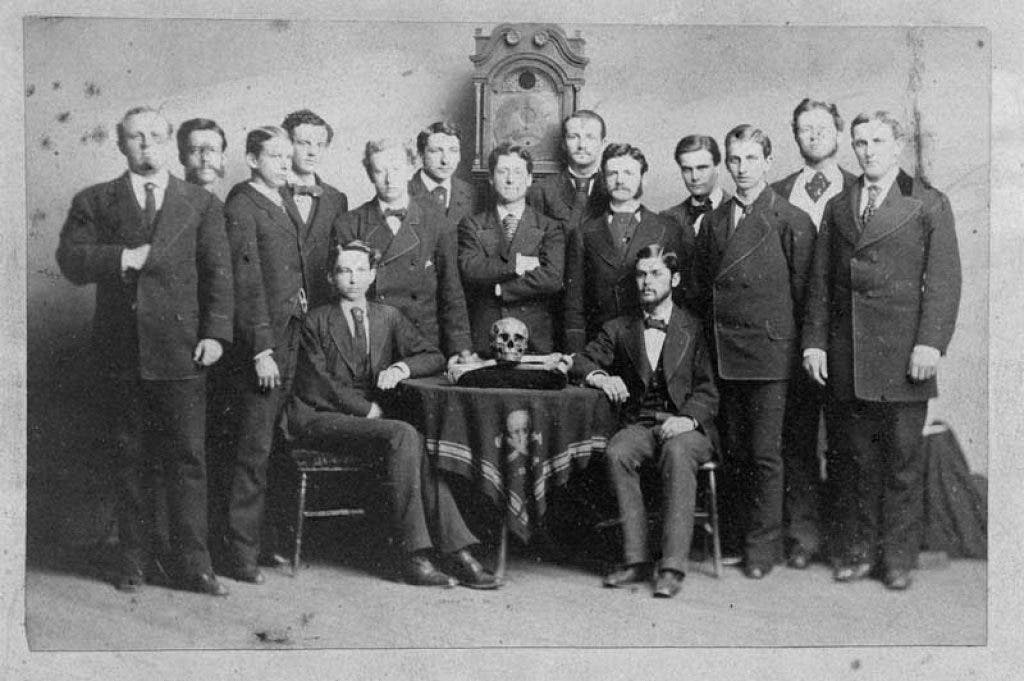

When archeologists uncover a skeleton they start a process of investigation to reveal the identity of the remains that often involves looking for clues in the surroundings. The reason for this is that many times investigators can find out as much about bones by examining what is around them than by looking at the skeleton itself. A similar process of searching for clues is used by researchers who are digging into a completely different kind of bones – one which certainly has many skeletons in its closet.
On a quiet stretch of High Street in downtown New Haven, wedged between Yale University’s Art Gallery and Jonathan Edwards College, stands a dark brownstone building that is cast in shadows on even the brightest of days. The huge 12 foot high doors, iron barred windows, and foreboding appearance is a perfectly fitting home for the “Order of Skull & Bones,” better known simply as the Skull & Bones society. This “secret society” may not be much of a secret, since its existence has been known about since it was established, but don’t let the fact that Bones isn’t as strange as it may first seem fool you. There are still many secrets tucked away inside the walls of its “tomb,” and those secrets are what stir the greatest controversies that surround the society.
Bones is not the only society like it at Yale, but none of the others boast a reputation or a history that is nearly as nefarious. The story begins back in 1832 when two Yalies, William Huntington Russell and Alphonso Taft, became dissatisfied with the way existing societies on campus were being run and decided to start their own that they could run as they saw fit. The secrecy of the group came not from concealment of its existence or its membership – in fact, until 1971 its roster was openly published in several places, including the New York Times – but from the fact that once behind the doors of its vault-like headquarters, the activities of the society was shrouded from the outside world. Inside, only its members, called “Bonesmen,” were educated in the cryptic rituals and history of the society.
Find out what's happening in Bethwoodfor free with the latest updates from Patch.
From the very beginning Bones sought to fill their society with Yale’s most elite students, and within the first few years the roster included some of the most influential family names in America such as Rockefeller, Vanderbilt, Lovett, Kellogg, Sloane, Whitney, and now probably the most famous Bones family, Bush. As Bones grew there was also an increasing number of Yale students and faculty who felt that the society had gained too deep of an influence on the administration of the university. Many pointed to the lack of restrictions and oversight that the administration placed on Bones as a concern, in addition to the fact that there were clear links between the society and the finances and management of Yale itself. It seemed that Bones was free to do and act as they wished, despite the society operating on university property. In 1856, when Bones constructed their headquarters on the heart of Yale property, the university took no oversight or involvement in the business of the society, which added to the apprehension about the group.
Being “tapped” to join Bones stood for far more than just becoming part of another university club, it brings with it an association that no other society could match. Bones gives you instant access to a lineage of influence in every professional sector be it financial, industrial, and most distinctly political, and Bonesmen stuck together long after their days at Yale ended. These bonds become unmistakably evident when examining the associations between Bonesmen and the major business and political undertakings including presidential administrations, U.S. affairs, financial partnerships, and many other sectors that have been dominated by Bonesmen. It’s not hard to find major points in our country’s history where the influence of Bones can be observed.
Find out what's happening in Bethwoodfor free with the latest updates from Patch.
Even though Bones is now in its 180th year at Yale many people had never heard of the society until the 2004 presidential elections when President George W. Bush (Bones class of 1968) and Massachusetts Senator John Kerry (Bones class of 1966) were facing off against one another. For the first [known] time in history the two candidates running for the highest office in the country were known members of an organization that neither of them would answer questions about. Instantly Bones was thrust into the national media – with the exception of outlets founded or led by Bonesmen – and the press descended on its High Street tomb. Yet even in the spotlight of the press, the society retained its most guarded secrets, and after journalists prodded and dug as much as they were willing, the cameras and reporters slowly slipped away, leaving Bones to continue as they always have.
The media attention may have dwindled, but those of us who had been digging into Bones long before the 2004 excitement were never dissuaded. While Bush and Kerry were playing the artful game of dodging questions about their time and involvement in Bones, we were doing what archeologists have done for years and looking to the surroundings for clues to the true nature of the skeletons we were digging up. On the surface Bones appears to many to be an overzealous college club, but a look into the surroundings reveals that the influence and controversy can be found hidden in plain sight… especially here in Connecticut.
Does the link between Bones and many prominent events in American history demonstrate that there is a lot more at work here?
Is the influence of this home-state society a cause for concern, especially after it became evident just how high the Bones reach?
If the activities of the society are still concealed inside its tomb, what can we find in the surroundings that can lead us to learning about its true nature?
The connections and influence of the society continues to be one of the leading modern conspiracies, and is one of the most popular topics that I receive questions about. But exposing these Bones will requires more than just a single article (or it would be a very long article!), so throughout the month we will be publishing a series of “Exposing Bones” articles where we will discuss these. This series will include both research and documents contained in the SGRA archives, as well as insider interviews and information that we have not published before. We also welcome your questions, and hope to provide readers with a look behind the walls of this society.