Schools
Classroom Food Fight; the Battle to Balance Food Safety and Health in a "Cupcake Culture"
Bethany BOE controversial "food policy" slated for a vote at Dec. 8 meeting

Flashback: a first grade class in 1966. It's lunchtime and the students are told to get their lunches and bring them back to their desk. Metal lunchbox lids clatter against the wooden desks as each child removes their thermos filled with whole milk and a sandwich on white bread; at least half the sandwiches contain peanut butter and jelly. Some children also have a plastic bag of chocolate chip cookies and an apple while others have pretzels or graham crackers and an orange. The very lucky child, the envy of their peers, has a pre-packaged Twinkie or Yodel. Everyone eats lunch without worry or fear.
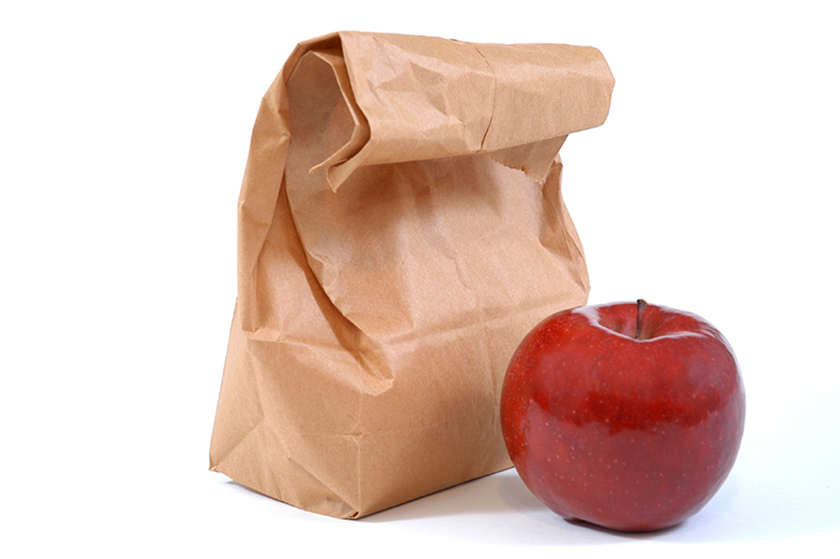
Flash forward: A first grade class in 2010. The children file into the cafeteria where some of them line up for a hot lunch made in facilities free from tree nuts or peanuts, while others unpack their brown bags from home. No one has a peanut butter sandwich, but if they do, there is a peanut-free table available to keep those children with peanut allergies at a safe distance. Some children have brought an aseptic container of soy or rice milk from home as they are allergic to milk. Others munch on gluten-free bread, while still others eat lunches prepared without a hint of egg. In the nurse's office there is a stash of carefully labeled epinephrine pens, just in case a child is accidentally exposed to an allergen and has a reaction. Students and staff alike have been educated about food safety and everyone is vigilant about making sure there is no accidental exposure. For some, lunch time is now just a little scary.
The world has changed dramatically in just a few generations. According to a study published by the Center for Disease Control (CDC):
Find out what's happening in Bethwoodfor free with the latest updates from Patch.
- In 2007, approximately 3 million children under age 18 years (3.9%) were reported to have a food or digestive allergy in the previous 12 months.
- From 1997 to 2007, the prevalence of reported food allergy increased 18% among children under age 18 years.
- Children with food allergy are two to four times more likely to have other related conditions such as asthma and other allergies, compared with children without food allergies.
- From 2004 to 2006, there were approximately 9,500 hospital discharges per year with a diagnosis related to food allergy among children under age 18 years.
Professionals have been trying to identify the causes of this onslaught of allergies, and have bandied about a long list of hypotheses including:
1. We are introducing children to potential allergens too early,
Find out what's happening in Bethwoodfor free with the latest updates from Patch.
2. We are introducing children to potential allergens too late, or,
3. The Western World raises children in such a sterile environment it leaves their systems unable to cope with the stress of new entities entering their digestive tracts.
No consensus has been reached, and the only agreement is that those with allergies need to be protected. Few, however, agree on how to address the problem; all recognize it is here to stay.
It's a government issue
In response to the increasing risk of food allergy related reactions, the State of Connecticut has published a 78-page document titled "Guidelines for Managing Life-Threatening Food Allergies in Connecticut Schools." Cheryl Resha is the Education Manager of the Connecticut State Department of the Education Bureau of Health, Nutrition, Family Services and Adult Education. According to Resha, a state law requires every school system to publish guidelines on managing food allergies in schools.
"Local schools have to adopt a local policy," Resha said. "There is a growing desire to address healthy foods in schools, and it's not only around managing allergies; it's about promoting healthy foods and habits."
The state makes recommendations in its guidelines, such as limiting food brought into classrooms from home for celebrations, and substituting non-food oriented activities for special occasions. They also recommend establishing a peanut-free table in the cafeteria.
"In the guidelines we talk about pros and cons of bringing food into schools," Resha said, "but how do we monitor it? How do we make it safe for all kids? It takes a lot of collaboration from schools, families and communities to reach the overall goal."
Resha admits it's almost impossible to make everyone happy. Some parents protest that their children only eat peanut butter, making it nearly impossible to feed them in a peanut-free school. Some parents are angry their school system banned birthday cupcakes in the classroom, robbing their child of their special day. In the end, Resha said, it boils down to this; "There is a growing recognition that health and education are linked and children who are unhealthy do not do well for a variety of reasons. We need to promote health to promote academics."
It's a local issue
Bethany is far from immune to the controversy. At a recent school board meeting, one parent stood during the public commentary period and said the school should rethink their ban on celebratory food in the classrooms and bring back the cupcakes, while another spoke of the need to educate all children about healthy eating and food allergies.
At the recent Board of Education Public Forum, BOE member Chris Pittenger explained that the board developed a policy back in June that fazed out all food in classrooms, but people were uncomfortable with it so the policy came back for more tweaking.
"It's a very complicated issue," Pittenger said, "and at the board level there is no strict policy in place at this time."
BOE member Maura Harrigan admitted the task-at-hand is daunting.
"We're not trying to police everyone to death," Harrigan said, "but we have a big picture to look at and whatever we decide won't make everyone happy."
But decide they must as the state has mandated a "food policy" be in place, specifically to address allergies.
"People use the term 'policy' when they really mean a set of procedures," said Bethany School Superintendent Tim Connellan, adding that the recommendations in the current draft of the policy are undergoing a renovation.
Some recommendations in the current document were suggested by the BOE Wellness Committee, which was formed to look at options that could help better develop the health and welfare of students. While the BOE considered all recommendations from the Wellness Committee, the committee is only in an advisory position and cannot make policy.
The rampant "Cupcake Culture," as Connellan described it, was not only unhealthy for the students who sometimes had as many as three cupcake-oriented celebrations in a week, it also caused disruptions in the classroom.
"It was not just about the cupcakes," Connellan said, "it's also about the interruptions in the day."
While the policy attempts to limit food brought into the school for celebrations, Connellan said birthdays continue to be acknowledged and children are given a coupon to use for a healthy snack from the cafeteria.
"They are certainly not neglected," Connellan said, "but it has helped to cut down on cupcakes in school."
The policy only applies to food sent in for consumption in classrooms, while food sent in for lunch in the cafeteria is up to the discretion of parents.
As far as the actual draft of the document is concerned, the BOE did not start from scratch when they developed it. There are companies that provide sample "food policies" to use as guidelines, and other samples are provided by BOE attorneys as well as other school districts.
"From that we try to craft the language so it fits in with our school district and community," Connellan said.
However, as one board member commented after the recent public forum, "We are trying to accommodate everyone, but with 14 different allergies in the school, it's impossible."
Connellan said despite the controversy the BOE will continue to emphasize the importance of ensuring the safety of all students.
On Dec. 8 the policy will come before the BOE for a vote for, "at least the third time," Connellan said.
He expects it will be the final time and that the board will vote to accept it. In preparation, Connellan will send a letter out to all parents via the e-notify system letting them know when the final draft is ready, and he will ask them to read it in its entirety.
"If they have any questions, they can, as always, pick up the phone and call us," he said.
The policy in its draft form is available on the school website at http://www.bethanyed.org/uploaded/Board_of_Ed/2010_2011/Policy_and_Regulation_5141_25_Accommodating_Students_with_Special_Dietary_Needs_Draft_2.pdf.
Get more local news delivered straight to your inbox. Sign up for free Patch newsletters and alerts.