Neighbor News
Lengthening Tweed Airport's Runway: Are Boeing 747's next?
What does the lengthening of Tweed New Haven Airport's runway mean? Are Boeing 747's and 777's next? Ask a Pilot, not a Hawk.

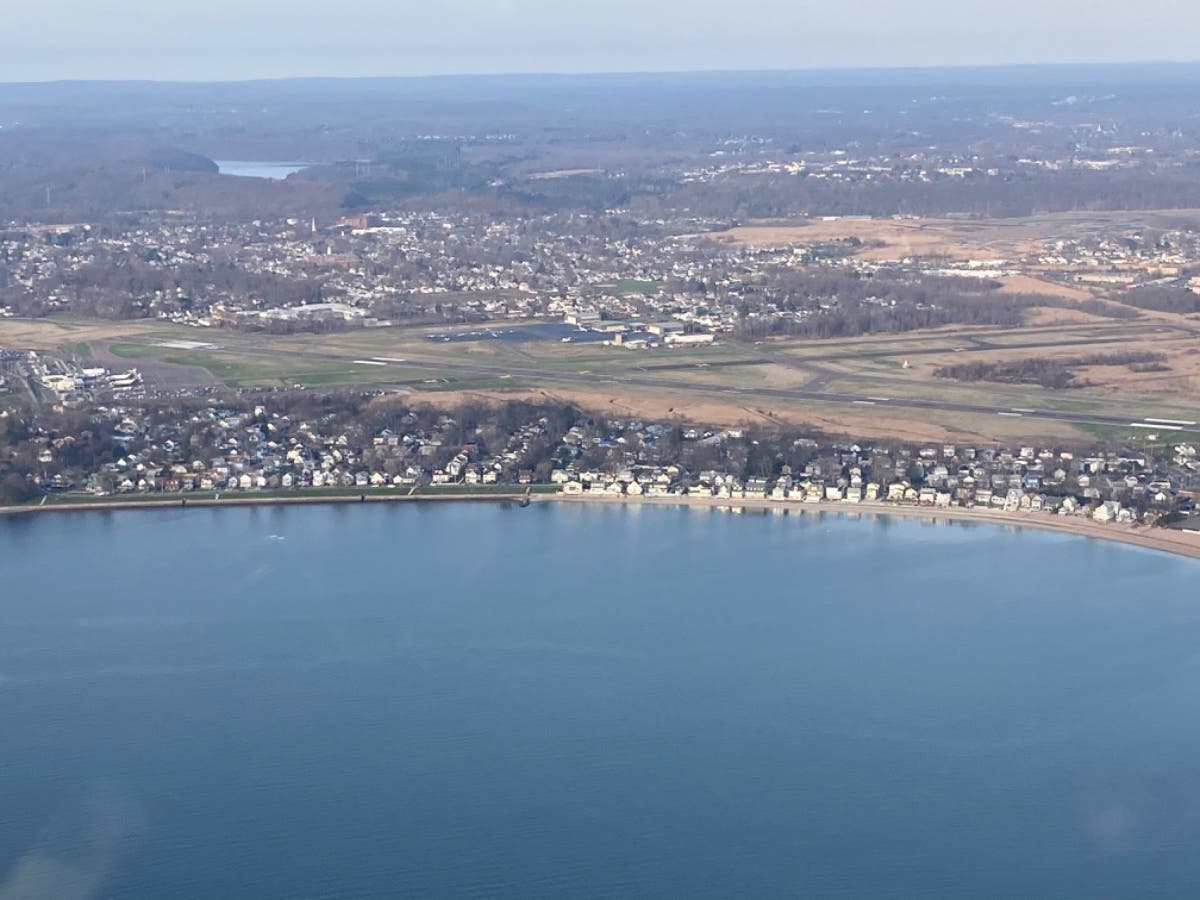
Why a longer runway at Tweed is not necessarily a gateway to larger jets.
A 6,635 foot runway (lengthened from the current 5,600 feet) , as proposed by the Tweed Airport Master Plan , gives operational advantage, flexibility (and yes Martha) improved safety to the current 737 jets utilized at Tweed.
In this article, I am going to briefly explain performance factors that go into Takeoff and Landing calculations that pertain to the kinds of jets that Avelo uses at Tweed. As the reader, you can consider the words of a Pilot who has done thousands of these calculations and been trained accordingly or you can listen to a Hawk.
Find out what's happening in East Havenfor free with the latest updates from Patch.
Temperature, wind and other weather conditions matter to your flight!
In simplest terms, the weight of the airplane (fuel and passengers), the temperature, wind, atmospheric pressure and if the runway is covered by snow, ice, slush or water all combine to affect the performance of the airplane for takeoff and landings, i.e. how much runway the airplane will use for takeoff and landing.
Find out what's happening in East Havenfor free with the latest updates from Patch.
How much fuel we carry for a flight depends not just on how long the flight is but on the weather (cloud height and visibility) at our destination. The worse the weather is, the more fuel we have to carry. And as you know, fuel equals additional weight. When the weather is good where we are going, we carry less fuel. When it's worse, we carry more. Prudence and Federal Aviation Regulations dictate this practice. At times, we carry what is called "contingency" and "holding fuel". In simplest terms, this is "what if" fuel.
And so it goes, long story short, when winds are light, temperatures are high and the weather is bad, airplane performance is at its worse or most restrictive...this is when a longer runway is better.
All this said, believe it or not, the performance of an airplane is different every day for a given, same flight from A to B for the reasons I just described above. So while one day we can operate from a given runway to destination A, on others we cannot. To reiterate, high temperature, light winds, heavy weights (passengers and fuel), wet runways and low atmospheric pressure are all the worst for airplane performance. By lengthening Tweed's runway to 6,635 feet, this issue is mitigated...not eliminated...but mitigated.
This is why the longer runway is better!
By lengthening the HVN runway, operational parameters are greatly improved for the 737 jets that currently fly from Tweed's 5,600 foot runway. With a longer runway, the current stable of jets will be able to operate with less “performance penalties" or under a wider range of atmospheric conditions when it comes to weight carrying capability and runway performance.
On this note:
A runway of 6,635 feet is not long. As airplanes the size of 737's go, it can still be a restrictive runway length under a range of conditions as described above. And guess what? If you tried to fly larger airplanes into to Tweed as the "10,000 Hawks" perpetually bemoan, these larger planes would be severely limited in terms of their operational performance capabilities for the very reasons I already described!
With this in mind, the runway length as proposed is better suited for the kinds of airplanes currently using Tweed, not for bigger airplanes. Also, given Tweed's market potential, bigger airplanes are not even necessary. The 737 and others just like it in size and performance are the "gold standard" when it comes to aircraft size. Given the passenger market for Tweed and the proposed runway length, Boeing 737, Airbus 220 and 320 aircraft are the only aircraft that would be suited for Tweed.
In closing.
My hope in writing about this subject was to help you see the issues that go into aircraft performance. It was not a promotion or advocacy for a bigger airport. My description was meant to be a description of technical issues related to aircraft performance and runway length. These are issues I feel qualified to describe. If you like, look up on the net for yourself how weather affects the performance of an airplane. You don't have to take my word for it as I am confident you will see truth rather than fanfare in what I am describing.