Neighbor News
Tweed-New Haven Airport: Seeing through the FOG! Almost.
As HVN hustles and bustles, operational concerns are raised. Namely, I will discuss ILS or Instrument Landing Systems.


Seeing your our way through.
Tweed-New Haven Airport has an Instrument Landing System (ILS). This system transmits radio signals to give the pilot the ability to line up with the runway (centerline) and the ability to follow a glide slope to the runway. The ILS gives the Pilot electronic lateral and glide slope guidance to the runway. (This means left, right and up and down). This ILS procedure is meant to be done in the clouds with no visibility…but up to a point. This point (called a Decision Altitude) is usually 200-300 feet above the runway. Our Decision Altitude point at Tweed is 294 feet (287 feet above the runway threshold). At this point, the pilots have to see the runway or certain runway lights in order to land. Part of the ILS instrument system includes runway approach lights. (ALS = Approach Lighting System). That’s what this article is about.
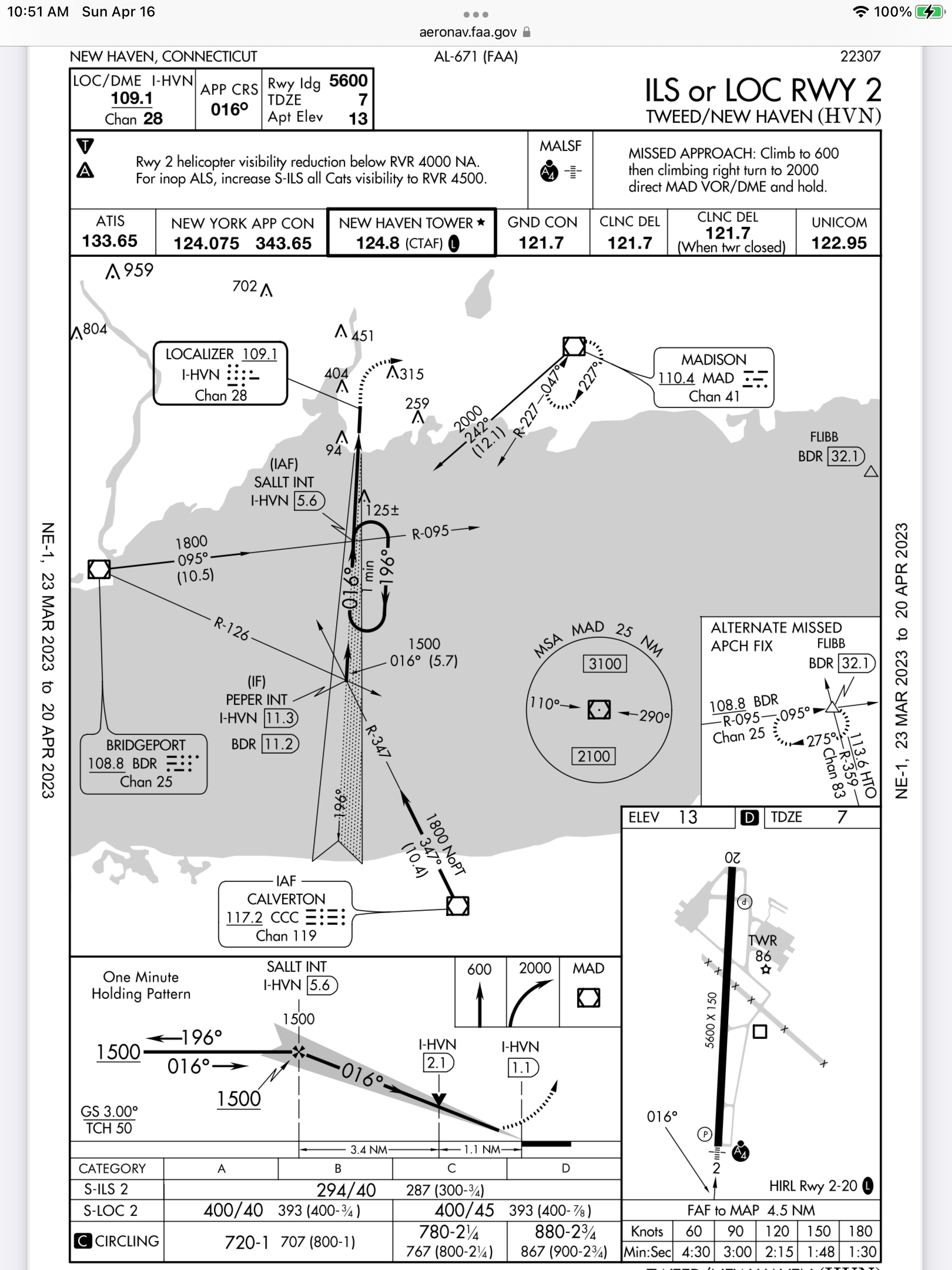
The Runway Approach lights are the visual component of the ILS. These lights are very important in allowing pilots to land. This component of an Instrument Landing System is visual, because again, the pilots have to see the runway in order to land at some point…even if it is just a few seconds before, we still need to see the runway. These lights are built on frangible towers that extend 1,400 feet or more from the runway depending on the version at a given airport. This light system is meant to “extend” the runway so the pilots’ chances are increased in order to see the runway and therefore land.
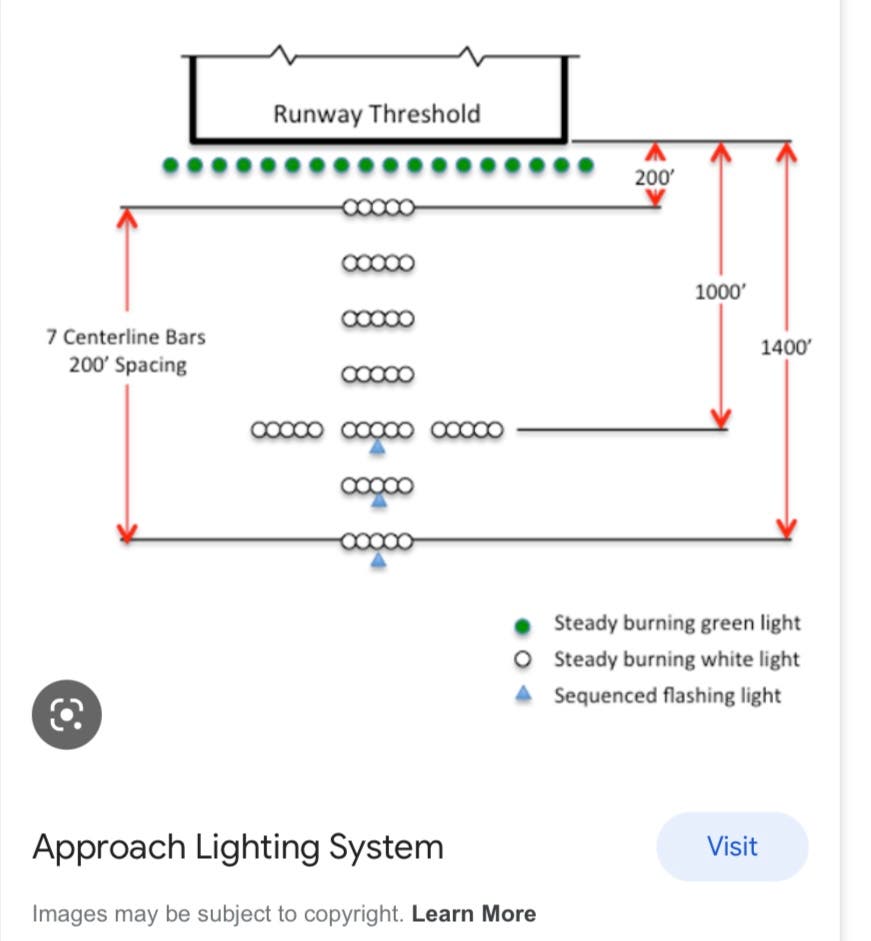
These lights ‘bring the runway closer’ to the pilot. At Tweed, we have a system that is 1,400 feet long (MALSF) and it helps the pilots to see the runway in the way described above. This said, there are different lighting systems at different airports. Some airports have no system at all, some have the “best”.
Find out what's happening in East Havenfor free with the latest updates from Patch.
Larger ALS systems (longer systems) exist at other airports, and as such, their ILS approaches have better “minimums”…meaning the pilots can descend lower before needing to see the runway. Again, some airports don’t have the approach lighting systems at all…and their decision altitude and visibility minimums are higher than ours. In our case, Tweed is somewhere in the middle…we could have “better” decision minimums, we could have “worse”.
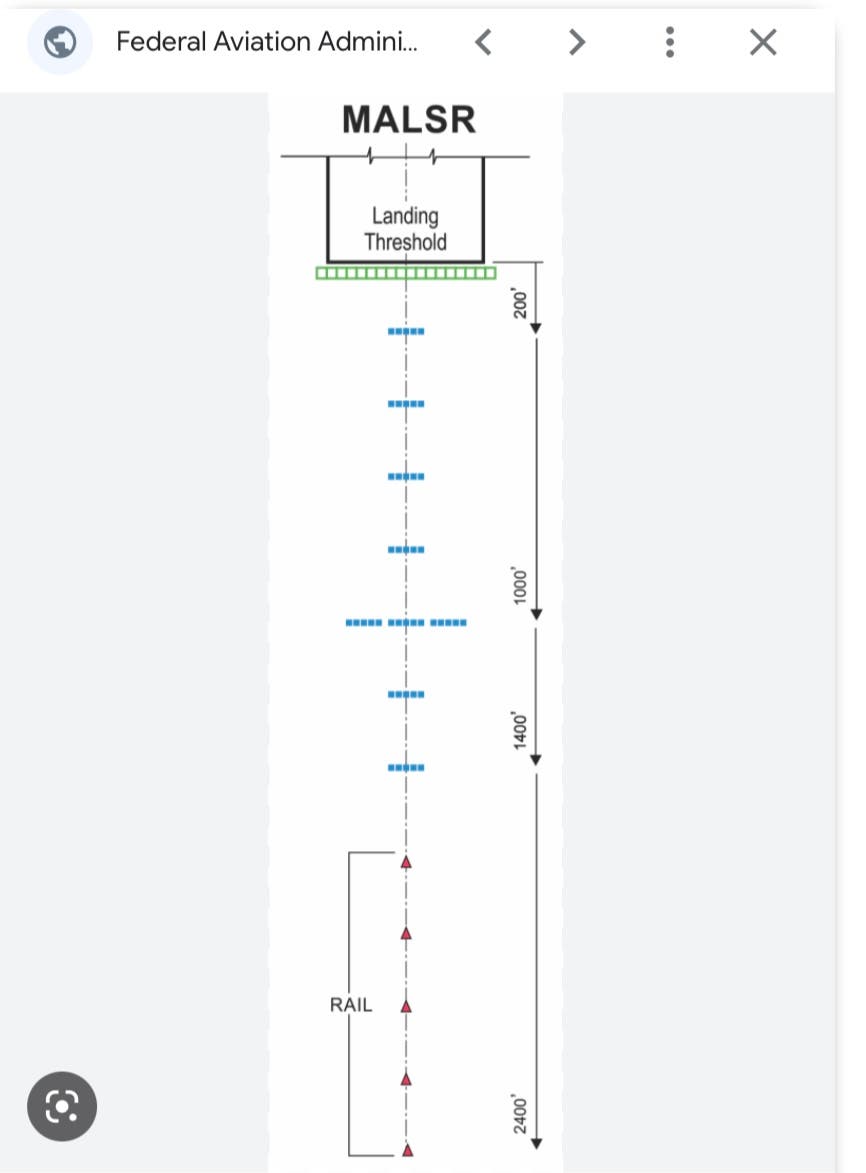
Because we don’t have lower minimums (than if we had the larger MALSR system for example), we do see the Missed Approaches and Diversions that are the topic du-jour as of late. This said, if we had an upgraded lighting system, we would still see missed approaches and diversions…just less so. This is 100 % fact as there are different airports with different operational records in this regard.
Find out what's happening in East Havenfor free with the latest updates from Patch.
A summary way to think of all this jargon is this…
ILS Approaches are designed in 3 ways:
CAT III
Category III is the highest level of Instrument Approach lighting and affords flight crews the greatest opportunity to land in poor visibility. You can land in as little as 600 feet of visibility with this system! This category requires special aircrew and aircraft certification. This category is not available to every aircraft or airline. Only certain airlines and aircraft are certified for this kind of ILS approach. Only a handful of US airports even have this capability as there are facility requirements (approach [ALSF] and other kinds of runway lights).
CAT II
Category II is the second highest level of Instrument Approach lighting and affords flight crews a slightly “lesser” opportunity to land in poor visibility. This category allows you to land in as little as 1,200 feet of visibility. This category requires special aircrew and aircraft certification as well. This category is not available every aircraft or airline. Only certain airlines and aircrew are authorized to conduct this kind of Instrument Approach. Only a handful of US airports even have this capability as there are facility requirements (approach [MALSR] and other kinds of runway lights).
CAT I
Category I is the third highest level of automation and affords the flight crew the “basic” level of opportunity to land in poor visibility. This category allows you to land in as little as 2,400 feet of visibility (1/2 sm).
This category is the basic standard for all instrument approaches and all Instrumented Rated Pilots* and Equipped aircraft are authorized to conduct these approaches. The majority of US airports have this capability as this is the standard level of Instrument Approaches. Tweed-New Haven Airport meets this standard **.
*Don’t worry by the way, Pilots still have to receive a specific Pilot Rating for his kind of operation. All professional pilots and all airlines can conduct this kind of approach.
**Note: without too much detail, there are slight variations to the above descriptions. Rest assured, I gave you the major details of all the Categories of Instrument Approaches and simply spared you the minutia. I want you to be informed, not my certified co-Pilot!
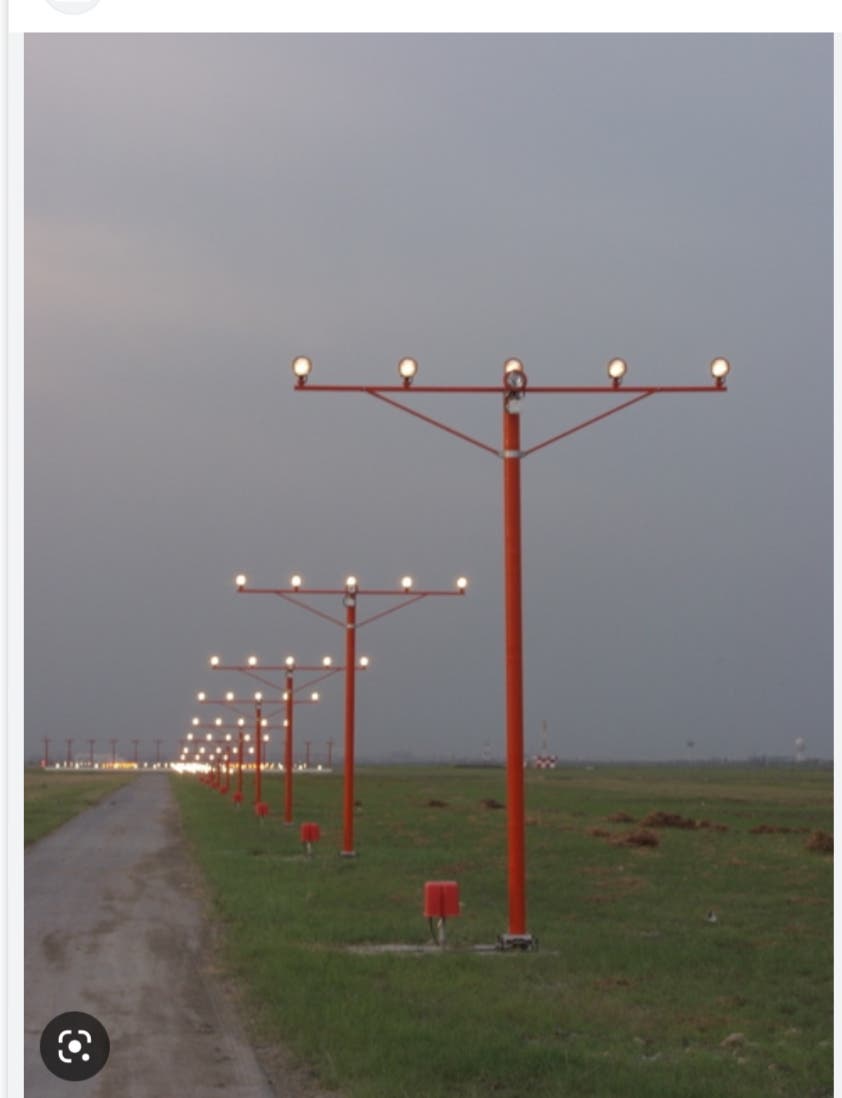
Light at the end of the tunnel!
Avelo 737 aircraft and aircrews can DEFINITELY BE CERTIFIED to Category II ILS approaches. This said, if the airport they are using does not have a Category II ILS (Tweed has Category I), there is no benefit.
In order for Tweed to be certified to Category II ILS minimums, we would need to upgrade our lighting system. This is not impossible. But there is a catch:
The trouble in doing this kind of upgrade often remains with environmental concerns and false assertions brought about anti-airport groups. When airports try to improve themselves, misinformed and self-interested organizations mobilize against the very projects that would benefit (not expand) the local airport. While these individuals and groups are not the cause of operational concerns at airports…THEY NEVER HELP THE CAUSE.
While plants are important, so are people’s lives. Maybe one day we could choose the lives of humans over plants? This, BY PUTTING INTO PERSPECTIVE the consequences of airport improvements as they relate to the environment and the direct benefit humans experience by an improved airport. Plants and animals are important. So are people.
This article is meant to be somewhat in-depth, but not all encompassing. I’ve shared with you the REAL FACTS about aeronautical technologies. While there are many other details to share, and this is by no means an “authority” piece on the subject, I’ve done my best to share REAL FACTS THAT ALL REAL PILOTS and REAL AVIATION PROFESSIONALS know first-hand.
As always, I eagerly await the retort of 10,000 Hawks and their staff of aeronautical experts.
Toni Lorenti, Captain
Airline Transport Pilot
ERJ 135,145 ATR 42,72 CE 680, E-Jet*
Flight & Ground Instructor